New York District Redefinition Sparks Political Uncertainty
In a significant development for New York City’s political landscape, a judge has nullified the existing boundaries of the city’s sole Republican-held congressional district. This decision could potentially favor Democrats in the ongoing national redistricting battles. However, the final outcome remains to be determined, as the process of redrawing the district lines is fraught with complexity and potential legal challenges.
The judge has mandated a swift redrawing of the district lines, with primary elections only five months away. Despite the urgency, experts caution that the task is far from simple, and the Republican party has vowed to challenge the decision in court. Consequently, the future configuration of U.S. Rep. Nicole Malliotakis’ district may not be settled anytime soon.
Blair Horner from the New York Public Interest Research Group summed up the situation with a single word: “chaos.” Nonetheless, the ruling provides a potential strategic advantage for Democrats.
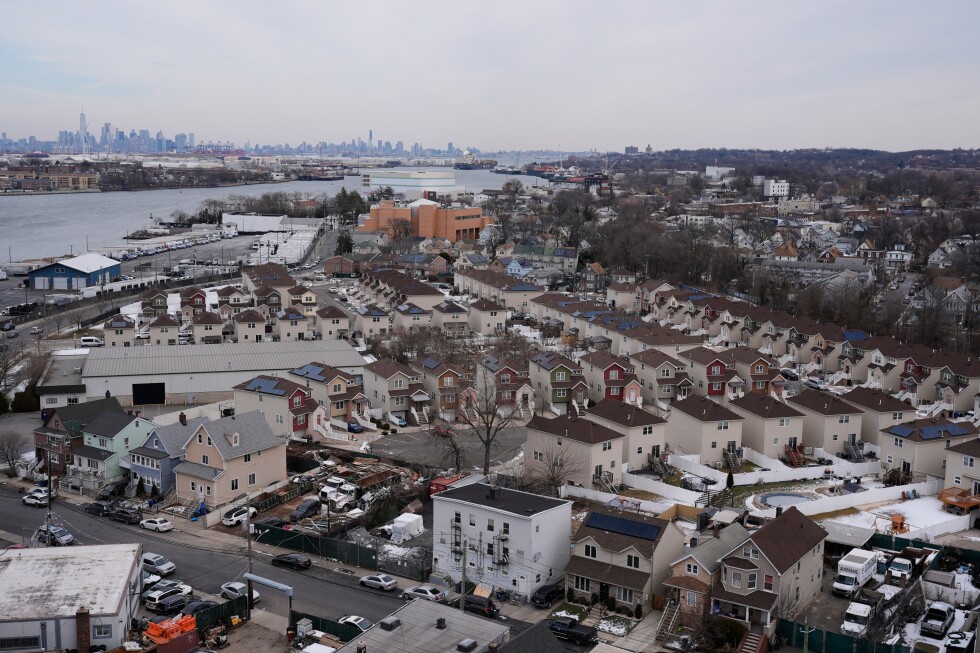
The lawsuit prompting the judge’s decision was filed by a Democratic-aligned election law firm. It proposed reshaping Malliotakis’ Staten Island district to incorporate parts of Manhattan, including Tribeca, the West Village, and SoHo. Such a reconfiguration would likely create a more liberal district, enhancing Democratic prospects in the upcoming election amid the battle for control of the House.
Malliotakis has criticized the move as a Democratic attempt to “tilt the scale to give their party an advantage.” However, the responsibility for drafting new district lines falls to a redistricting commission, pending any interventions by an appeals court.
Judge Cites Voter Representation Concerns
The lawsuit is part of a broader national debate on gerrymandering, heightened after former President Donald Trump sought to devise congressional districts in Republican-led states like Texas to maintain his party’s slim House majority. On Wednesday, Justice Jeffrey Pearlman invalidated the current district configuration, arguing that it unconstitutionally diminishes the voting power of Black and Hispanic residents. Pearlman noted that the district’s current boundaries contribute to minority voter underrepresentation.
He ordered the state’s Independent Redistricting Commission to produce a new congressional map by February 6, aligning with state election officials’ requests due to the impending candidate petition process. The commission, composed of Democratic and Republican appointees from the state Legislature, faces a tight deadline of 16 days to undertake this politically sensitive task, which could alter several district boundaries.
Future of Redistricting and Political Implications
While the commission has expressed readiness to meet the court’s deadline, Republicans plan to appeal, potentially delaying the enforcement of Pearlman’s ruling until higher courts address the matter. “This is a political gerrymander masquerading as a voting rights case,” commented John Faso, a former Republican congressman involved in his party’s redistricting efforts.
The case could ultimately reach New York’s Court of Appeals, which has previously ruled on redistricting matters. In 2022, the court struck down new congressional maps favoring Democrats, later rejecting a court-appointed expert’s redrawing of those maps.
The feasibility of the redistricting commission completing its task within the given timeframe is still in question due to past difficulties in reaching consensus. The Democrat-controlled legislature also holds the power to dismiss the commission’s proposals to modify district lines in their favor. Horner remarked on the commission’s inherent “gridlock” potential due to its bipartisan composition.
Jeffrey Wice, a professor at New York Law School, noted, “It’s doable. The question is whether it’s possible in the time frame given.”
Potential Democratic Gains
While the judge dismissed the lawsuit’s suggested district reconfiguration, citing the state constitution’s delegation of this responsibility to the Independent Redistricting Commission, Democrats hope to reshape the district to their advantage. This could involve reallocating the southern Brooklyn area currently represented by Malliotakis into a neighboring district that extends from Brooklyn into Manhattan’s Chinatown.
U.S. Rep. Dan Goldman, a Democrat representing lower Manhattan and Brooklyn, voiced support for any changes that could assist his party in reclaiming the House majority. “Our top priority must be to retake the majority and make Hakeem Jeffries Speaker of the House, and I will always place that goal first,” Goldman stated.
Historically, Staten Island has mostly been a Republican stronghold in Congress since the 1980s, with a few exceptions. Democrat Max Rose held the district for one term before Malliotakis defeated him in 2020. In the 2024 election, Malliotakis won against her Democratic challenger by a 28-point margin.