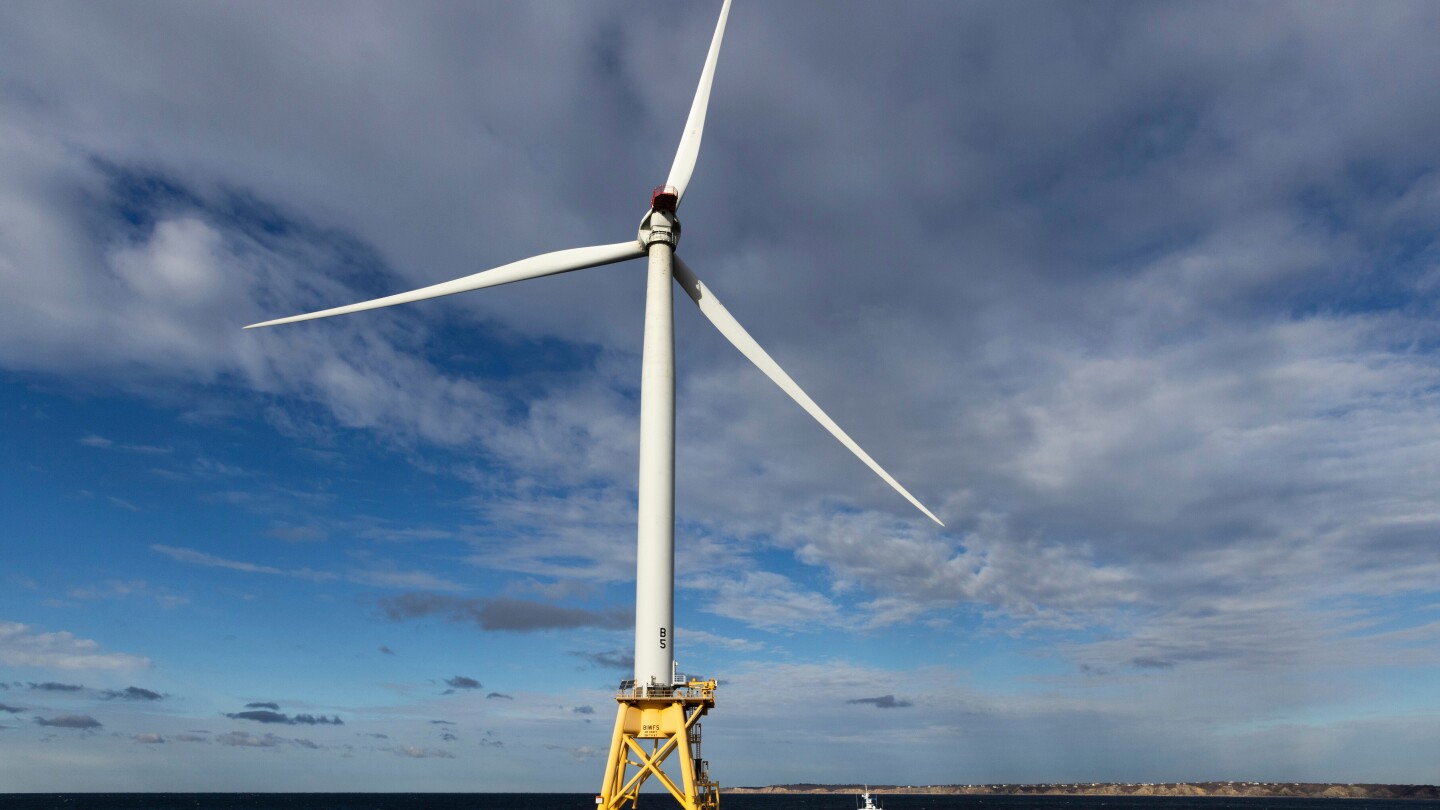
Federal Judge Overturns Trump’s Ban on Wind Energy Projects
In a significant legal decision, a federal judge has invalidated former President Donald Trump’s executive order that sought to halt wind energy projects on federal lands and waters. The ruling by Judge Patti Saris of the U.S. District Court for the District of Massachusetts deemed the order, which aimed to prevent leasing for wind farms, as “arbitrary and capricious” and in violation of U.S. law.
The legal challenge was spearheaded by a coalition of state attorneys general from 17 states, along with Washington, D.C., led by New York Attorney General Letitia James. The coalition opposed Trump’s executive action, arguing it overstepped presidential authority and threatened state economies, energy diversification, and climate objectives.
Massachusetts Attorney General Andrea Joy Campbell celebrated the court’s decision, emphasizing the protection of substantial investments in offshore wind energy. “Massachusetts has invested hundreds of millions of dollars into offshore wind, and today, we successfully protected those important investments from the Trump administration’s unlawful order,” Campbell stated.
New York Attorney General Letitia James expressed gratitude for the judicial intervention, highlighting the necessity of expanding energy sources amid rising costs. “Wind energy is good for our environment, our economy, and our communities,” said James.
The Trump administration had previously expressed a preference for fossil fuels over renewable energy sources, a stance that critics say hindered the development of projects like offshore wind. In contrast, a spokesperson for the White House, Taylor Rogers, claimed that the Biden administration had favored wind energy projects to the detriment of other energy sectors by imposing burdensome regulations.
The legal battle argued that the executive order unfairly targeted wind energy, potentially impacting states’ plans and investments in renewable infrastructure. Among the states involved in the lawsuit were Arizona, California, Colorado, and Connecticut, collectively investing in wind energy and upgrading transmission lines for integration into the power grid.
While the government defended the order as a temporary pause for environmental assessments, opponents maintained that it constituted an unlawful barrier to progress in renewable energy. Judge William Young had previously allowed the legal proceedings to focus on claims related to the Administrative Procedure Act, setting aside constitutional challenges.
Wind energy plays a vital role in the United States’ renewable energy landscape, contributing approximately 10% to national electricity generation, as noted by the American Clean Power Association. Marguerite Wells, executive director of the Alliance for Clean Energy New York, praised the ruling for allowing projects to advance based on merit.
Kit Kennedy of the Natural Resources Defense Council described the court’s decision as beneficial for consumers, workers, and environmental goals. “From the beginning of its time in office, the Trump administration put a halt to the wind energy projects that are needed to keep utility bills in check and the grid reliable,” Kennedy commented.