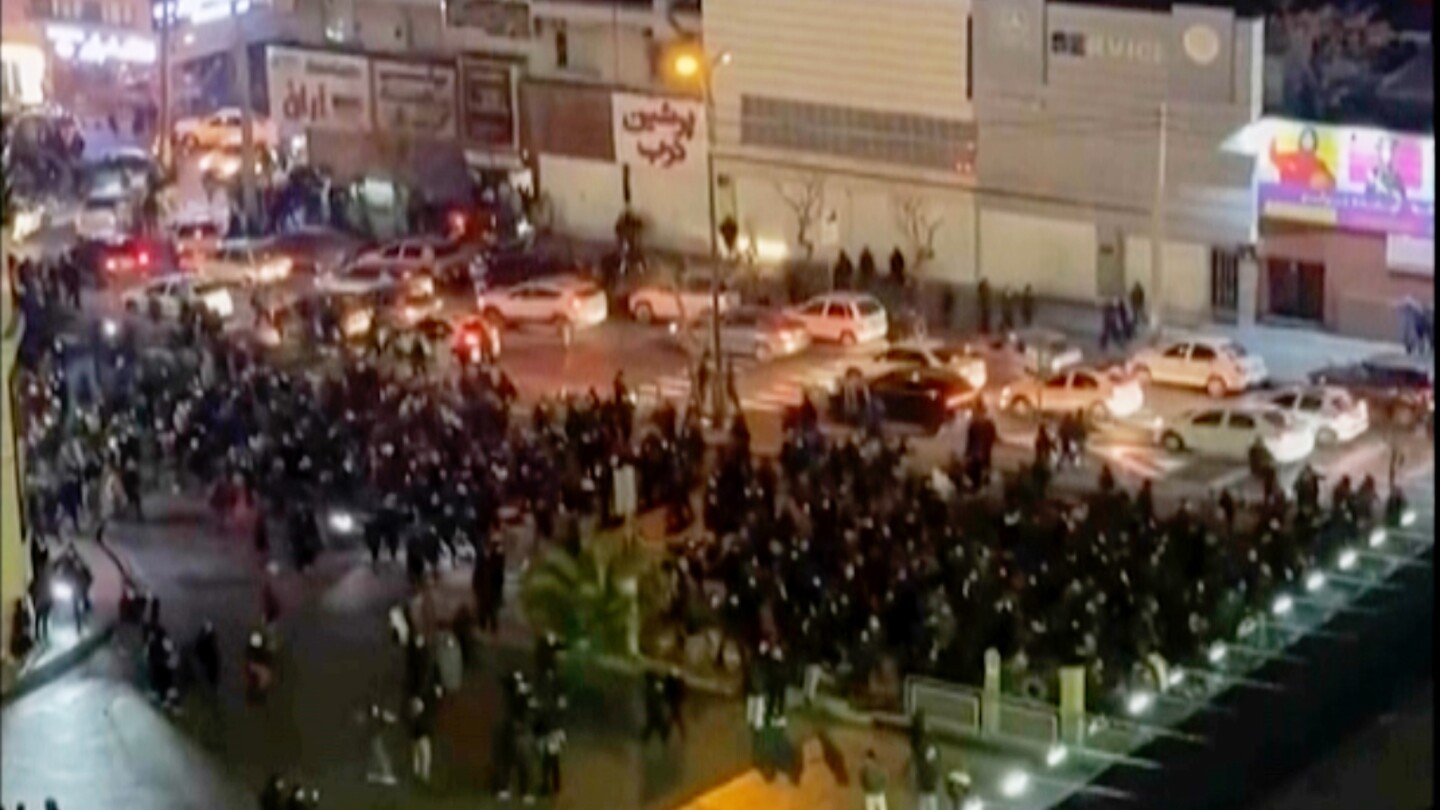
Protests have erupted in Iran, with videos circulating online showing significant unrest in the nation despite the government’s threats to suppress the demonstrations. These protests, which started over economic concerns in late December, have become a major challenge for Iran’s government, resulting in at least 65 deaths.
Iran’s Supreme Leader, Ayatollah Ali Khamenei, criticized U.S. President Donald Trump, accusing him of having “hands stained with the blood of Iranians,” as state television broadcasted footage of Khamenei’s supporters chanting “Death to America!” The Iranian media labeled protesters as “terrorists,” setting the stage for a potential harsh crackdown reminiscent of past protests, even as Trump promises support for peaceful protesters.
Khamenei addressed a crowd in Tehran, condemning the protesters for “ruining their own streets … in order to please the president of the United States.” He challenged Trump to focus on his own country instead.
Gholamhossein Mohseni-Ejei, Iran’s judiciary chief, announced that the punishment for those involved in the protests would be “decisive, maximum and without any legal leniency.”
In response to the unrest, German Chancellor Friedrich Merz, British Prime Minister Keir Starmer, and French President Emmanuel Macron released a joint statement on Friday night, condemning the violence against protesters and urging Iran to allow its citizens to peacefully express themselves.
Shirin Ebadi, an Iranian Nobel Peace Prize laureate, called for more Western governments to speak out against Iran’s leadership, accusing it of using cruelty as a method of governance.
President Trump has reaffirmed his commitment to intervene if protesters are harmed, referencing the U.S. military’s past actions in Venezuela. He warned Iran’s leaders against using violence, saying, “I tell the Iranian leaders you better not start shooting because we’ll start shooting too.”
Internet Disruption
Despite the government-imposed internet blackout and restrictions on international calls, videos shared by activists showed ongoing protests in Tehran and other locations. Demonstrators defied security warnings to stay home, with scenes of street fires and chants against the government. However, the scale of the protests on Friday night remains unclear.
In one video, a fire was visible in the Saadat Abad area of Tehran, accompanied by chants of “Death to Khamenei!” The unrest also posed a test for Crown Prince Reza Pahlavi, who had encouraged protests, calling for demonstrations at 8 p.m. on both Thursday and Friday.
According to the U.S.-based Human Rights Activists News Agency, the protests have resulted in the deaths of at least 65 people, with over 2,300 arrested.
Holly Dagres, a senior fellow at the Washington Institute for Near East Policy, remarked that Pahlavi’s call for protests marked a turning point: “Per social media posts, it became clear that Iranians had delivered and were taking the call seriously to protest in order to oust the Islamic Republic.”
Protests and Communication Blackout
On Thursday evening, as the clock struck 8 p.m., Tehran neighborhoods erupted with chants against the regime. Protesters shouted slogans like “Death to the dictator!” and “Death to the Islamic Republic!” before Iran’s communication networks were severed.
Pahlavi appealed to President Trump to support the demonstrators, stating Khamenei “wants to use this blackout to murder these young heroes.” He urged Trump to be ready to intervene, highlighting the Iranian leader’s past support from Israel, which has been controversial.
The internet shutdown has affected Iran’s state-run and semiofficial news outlets, while state TV claimed the protests resulted in violence and casualties. Reports indicated deaths in Hamedan and Qom and continued unrest in other regions, including Zahedan in Sistan and Baluchestan province. Meanwhile, pro-government forces were seen patrolling Tehran on motorcycles Friday night.