Indiana Senate Rejects Proposed Redistricting Favoring GOP
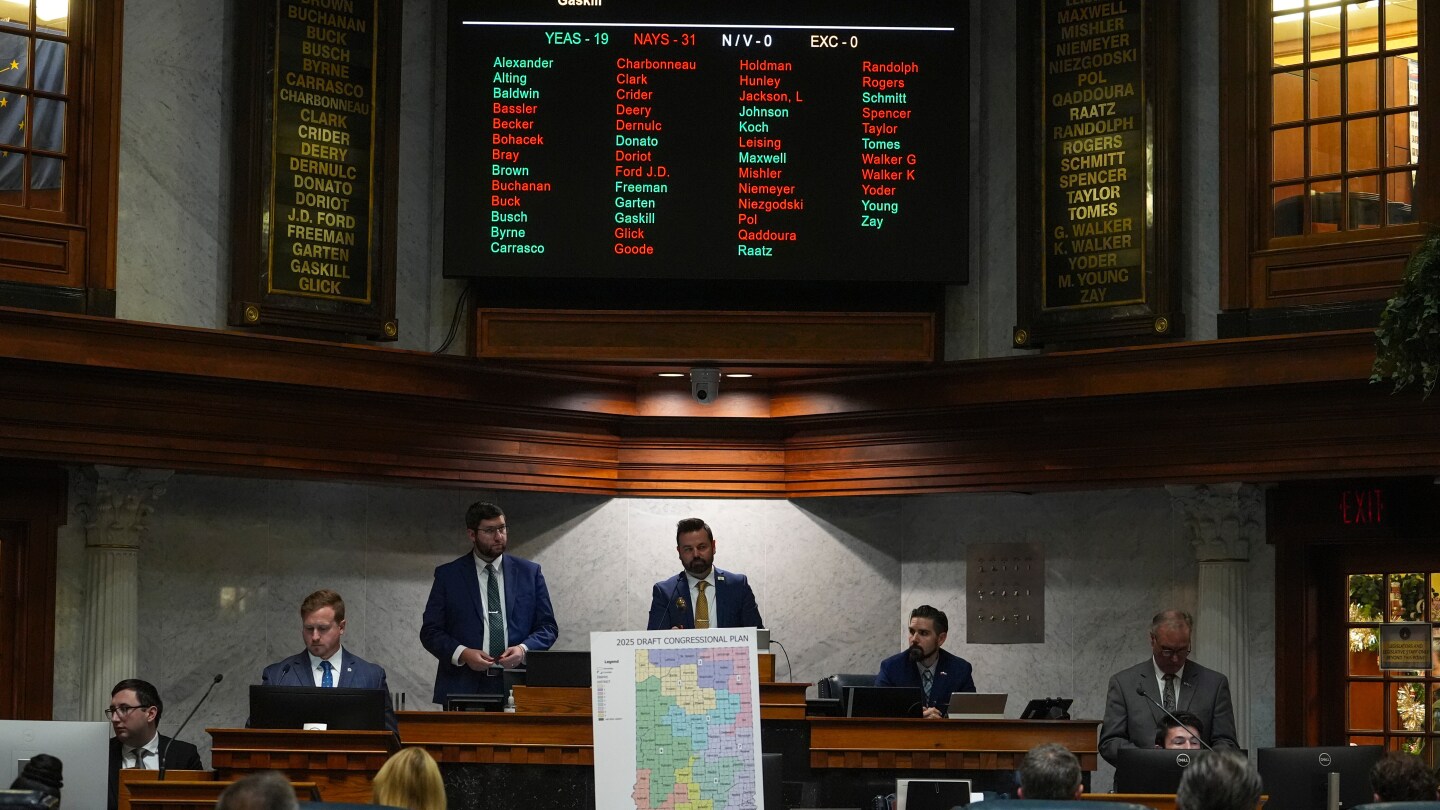
In a surprising turn of events, the Indiana Senate, controlled by Republicans, rejected a proposed congressional map that would have favored their party. Despite intense pressure from former President Donald Trump, the decision marks a significant setback for the White House ahead of the midterm elections. The proposal was defeated with a significant portion of Republicans opposing it, highlighting the limits of Trump’s influence even in traditionally conservative states like Indiana.
The push for redistricting has been part of a broader campaign by Trump to maintain the Republican majority in the House of Representatives. While states like Texas, Missouri, Ohio, and North Carolina have followed Trump’s lead in redrawing their maps, Indiana has chosen a different path, despite the risk of primary challenges and presidential disapproval.
Senator Spencer Deery, one of the Republicans who voted against the measure, stated, “The federal government should not dictate by threat or other means what should happen in our states.” Following the 31-19 vote, cheers erupted in the Senate chamber amid concerns of possible violence, as some lawmakers had reportedly received threats.
Potential Impact on Indiana’s Political Landscape
The rejected map aimed to secure Republican control over all nine congressional seats in Indiana, up from the current seven, by dismantling two Democrat-held districts. This plan involved dividing Indianapolis into four districts extending into rural areas, effectively dissolving the safe district of U.S. Rep. André Carson and eliminating the northwest district held by U.S. Rep. Frank Mrvan.
Redistricting typically follows the decennial census, but Trump has emphasized its importance for the Republican party’s future. He warned on social media that failure to act could lead to a Democratic stronghold, urging that those opposing the plan should lose their seats. With half of Indiana’s senators facing reelection, groups like Turning Point Action have pledged to support challenges against dissenters.
David McIntosh, president of Club for Growth, criticized the vote as a rebuff to Trump’s influence. Conversely, former Indiana Governor Mitch Daniels commended the Senate for its “courageous principled leadership,” stating the decision was a significant setback for Trump and his allies.
Divided Opinions Among Republicans
Despite the push from Trump and other conservative entities, support within Indiana’s Senate was uncertain. Key figures like Republican Sen. Greg Goode voiced dissatisfaction with the plan, citing constituent concerns over county divisions. Though he expressed “love” for Trump, Goode criticized the “over-the-top pressure” exerted on lawmakers.
Sen. Michael Young defended the necessity of redistricting, citing the precarious Republican majority in Washington. Meanwhile, Sen. Mike Gaskill, who sponsored the legislation, argued for playing by the same rules as other states engaged in gerrymandering.
The proposal had initially passed a Senate committee but faced opposition in the state House, where 12 Republicans joined Democrats against it. State Rep. Ed Clere, targeted by a hoax threat, attributed such incidents to Trump’s campaign and highlighted the consequences of political rhetoric.
As redistricting efforts continue nationwide, Indiana’s decision stands out as a notable deviation from the Republican strategy, emphasizing the complexities within party dynamics and the broader electoral implications.