ISLAMABAD (AP) — Following intense diplomatic negotiations led by the United States, India and Pakistan have reached an agreement to cease hostilities. The agreement marks the end of the most severe military tension between the two nuclear-armed nations in recent history.
The conflict, which involved cross-border skirmishes, missile exchanges, and drone attacks, began after a tragic attack on tourists last month. India accused Pakistan of involvement, a claim that Islamabad denies. The violence resulted in numerous civilian casualties on both sides.
U.S. President Donald Trump first announced the ceasefire on Truth Social, expressing his satisfaction: “Congratulations to both Countries on using Common Sense and Great Intelligence. Thank you for your attention to this matter!”
In Pakistan, Foreign Minister Ishaq Dar confirmed the ceasefire on Geo News, crediting Saudi Arabia and Turkey for their crucial roles in facilitating discussions.
Indian Foreign Secretary Vikram Misri reported that military leaders from both sides communicated on Saturday afternoon, agreeing to halt all military actions on land, at sea, and in the air. He added that further talks between top military officials are scheduled for May 12.
Continuing Hostilities Prior to Ceasefire
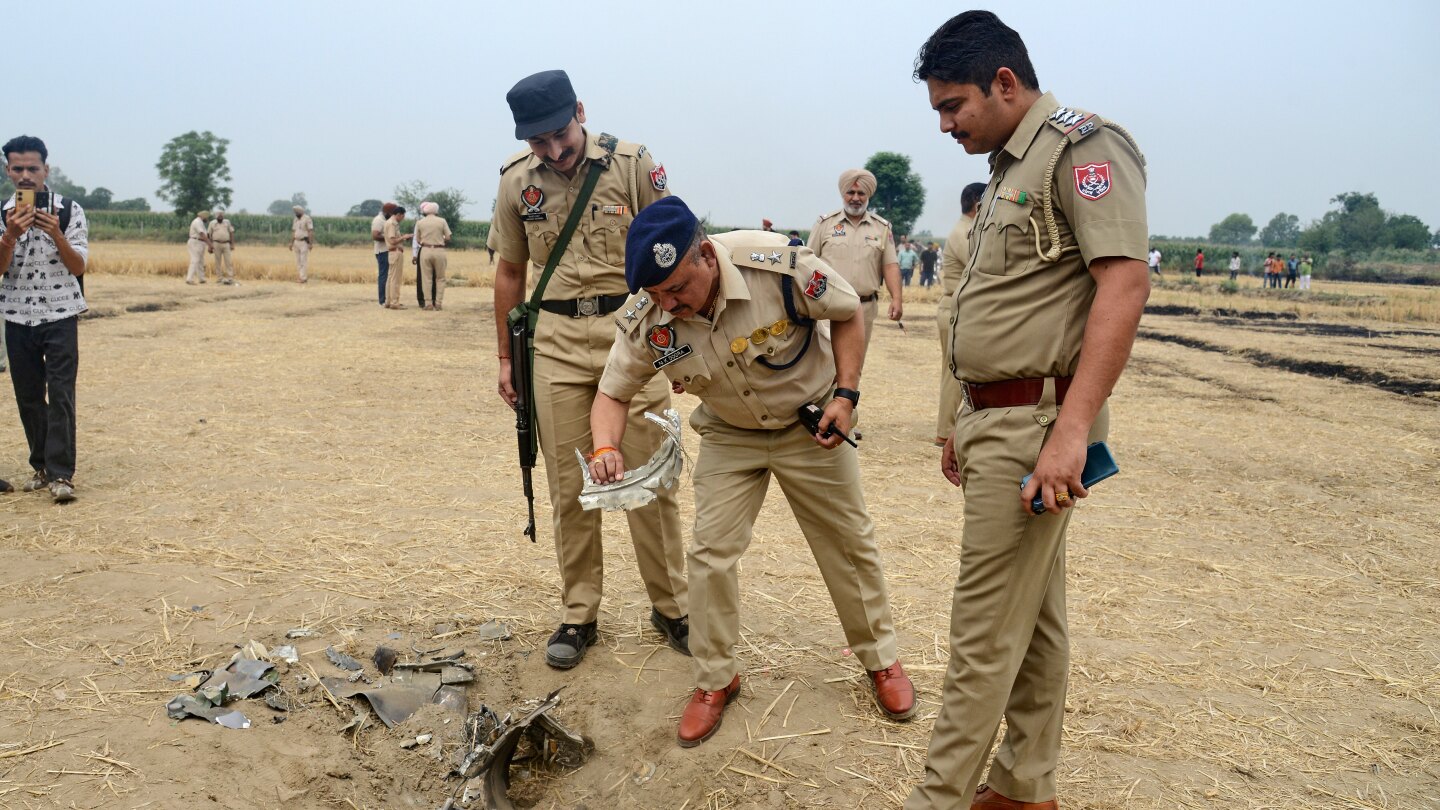
Prior to the agreement, India launched strikes on Pakistani air bases in response to missile attacks on its military and civilian targets in Punjab state. Pakistan claimed it intercepted most of these missiles and retaliated with strikes on Indian targets.
At a press conference in New Delhi, Indian military officials stated that Pakistani forces targeted health and educational facilities at Indian air bases in Kashmir. Col. Sofiya Qureshi declared that India had responded appropriately to Pakistan’s actions.
Wing Commander Vyomika Singh emphasized India’s commitment to non-escalation, provided Pakistan reciprocates. However, she noted Pakistani troop movements toward frontline positions, suggesting a possible escalation.
Pakistan, meanwhile, reported using medium-range Fateh missiles to hit Indian military sites in Pathankot and Udhampur. Lt. Gen. Ahmad Sharif stated that Pakistan’s air force assets remained secure following the Indian offensive.
Escalating Tensions in Kashmir
The conflict escalated after an attack at a tourist site in Indian-controlled Kashmir resulted in 26 deaths, mostly among Indian tourists. India accused Pakistan of supporting the attackers, an allegation Pakistan rejects.
In retaliation, Indian missiles targeted Pakistani air bases in Rawalpindi, Chakwal, and Jhang. Residents of Rawalpindi reported no immediate effects from the strikes. In contrast, Pakistanis expressed approval of their military’s response against India.
Kashmir Residents Caught in Crossfire
Residents in Indian-controlled Kashmir reported hearing explosions following Pakistan’s retaliatory actions, especially in Srinagar, Jammu, and Udhampur. Shesh Paul Vaid, a former police official, described the situation as resembling warfare.
Explosions were reportedly concentrated around military installations. In Srinagar, residents living near the airport, which doubles as an air base, were shaken by the blasts.
Srinagar resident Mohammed Yasin described the impact of the explosions on his family, saying, “I was already awake, but the explosions jolted my kids out of their sleep. They started crying.”
Praveen Donthi, an analyst with the International Crisis Group, noted the ongoing conflict as a relentless pursuit of military dominance without clear strategic objectives, highlighting the difficulty in finding a peaceful resolution.
Amidst the violence, both regions experienced significant damage. Buildings in Indian-controlled Kashmir suffered major destruction, while in Pakistan-controlled Kashmir, rescuers searched through debris from Indian shelling.