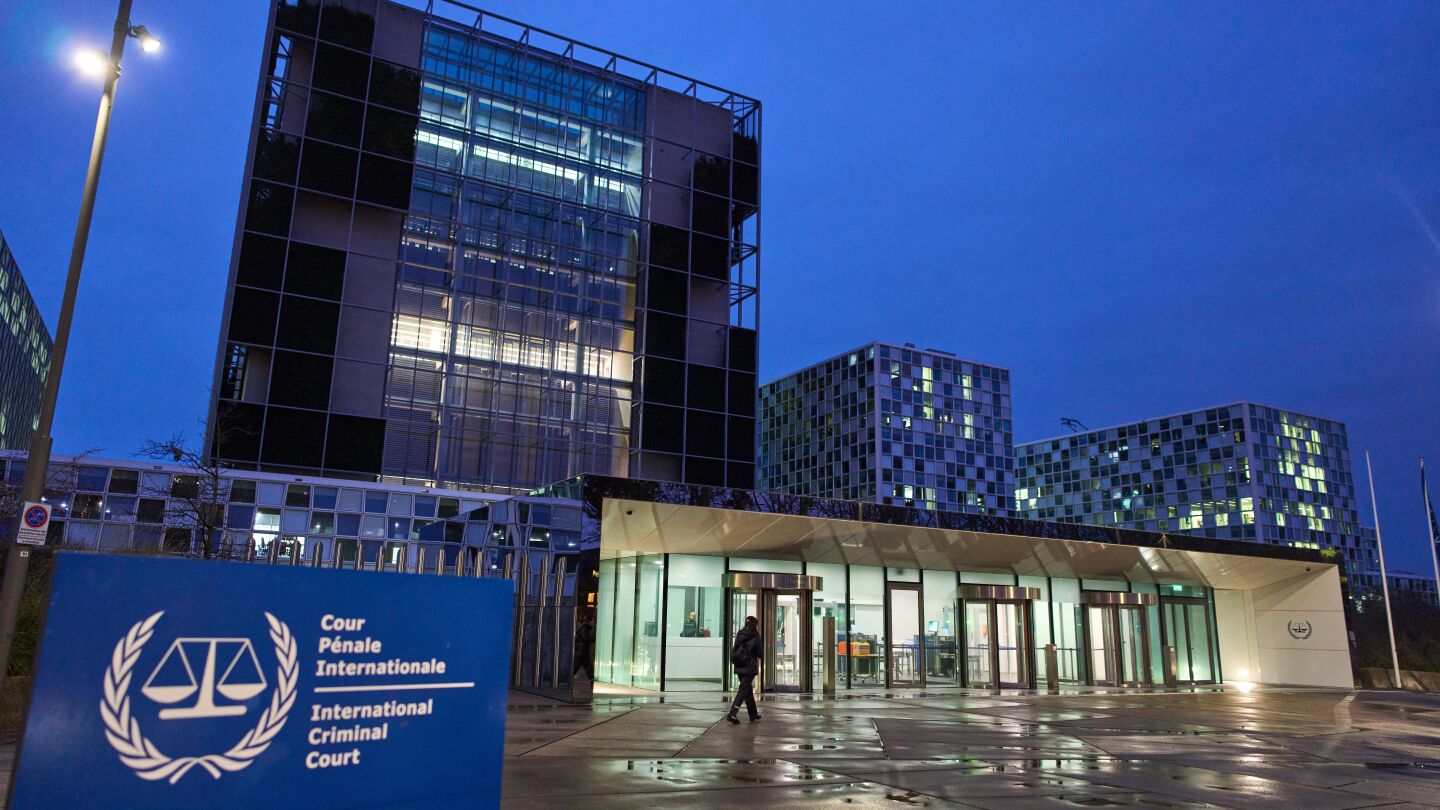
The Hague, Netherlands (AP) — Officials at the International Criminal Court (ICC), including judges and prosecutors, are currently experiencing the effects of U.S. sanctions, akin to those previously imposed on figures like Osama bin Laden and Russian President Vladimir Putin.
A total of nine ICC staff members, among them six judges and the chief prosecutor, have been placed under sanctions by then U.S. President Donald Trump. This action was taken in response to the ICC’s investigations into alleged misconduct by U.S. and Israeli officials, even though neither country is among the ICC’s 125 member states.
Sanctions of this nature, which are typically reserved for high-profile individuals such as autocrats, can have severe consequences. They restrict travel to the United States, limit access to financial services, and disrupt daily activities for those affected. Karim Khan, the court’s chief prosecutor, has faced significant disruptions, including the closure of his bank accounts and the revocation of his U.S. visa. Similarly, Canadian judge Kimberly Prost has encountered financial hurdles, including the loss of credit card access and unexpected technical issues with services like Amazon’s Alexa.
“Your whole world is restricted,” Prost shared with The Associated Press.
The Impact of U.S. Sanctions
The sanctions have placed additional strain on the ICC’s operations, which are already facing challenges due to increasing demands and internal leadership issues. Earlier this year, Karim Khan temporarily stepped down amid an investigation into allegations of sexual misconduct, which he denies.
Businesses must navigate the complexities of sanctions compliance, as they face substantial penalties for providing support to sanctioned individuals. This has led to unpredictable disruptions for those affected.
Prost recounted a moment of inconvenience when an e-book she purchased unexpectedly disappeared from her device, illustrating the sporadic nature of these sanctions. “It’s the uncertainty,” she explained. “They are small annoyances, but they accumulate.”
Concerns for Families
Luz del Carmen Ibáñez Carranza, a Peruvian judge also affected by the sanctions, expressed concerns about the implications for her family. Her daughters are unable to attend professional events in the United States due to the restrictions. Deputy prosecutor Nazhat Shameem Khan also noted the unpredictability surrounding financial transactions, which could be attributed to the sanctions.
The ICC staff, some of whom also face arrest warrants in Russia, worry that an escalation could lead to broader sanctions impacting the entire court’s functionality.
The ICC, established in 2002, serves as a permanent tribunal for prosecuting severe offenses such as war crimes and crimes against humanity. It acts when national jurisdictions are unwilling or unable to prosecute such crimes.
The court relies on member states to enforce arrest warrants, which complicates the pursuit of officials from non-member states like the U.S. and Israel. Notably, individuals like Vladimir Putin face potential arrest during international travel due to ICC warrants.
Justification from the Trump Administration
Explaining the rationale behind the sanctions, the Trump administration characterized the ICC’s actions as “illegitimate and baseless,” targeting the United States and its ally Israel. State Department spokesman Tommy Pigott stated, “The United States will not tolerate efforts to violate our sovereignty or to wrongfully subject U.S. or Israeli persons to the ICC’s unjust jurisdiction.”
Despite the challenges, ICC staff remain committed to their mission. Ibáñez, experienced in prosecuting serious crimes in Peru, asserted that the sanctions would not deter her work in The Hague. Prost echoed this determination, emphasizing that the sanctions have not diminished their resolve.