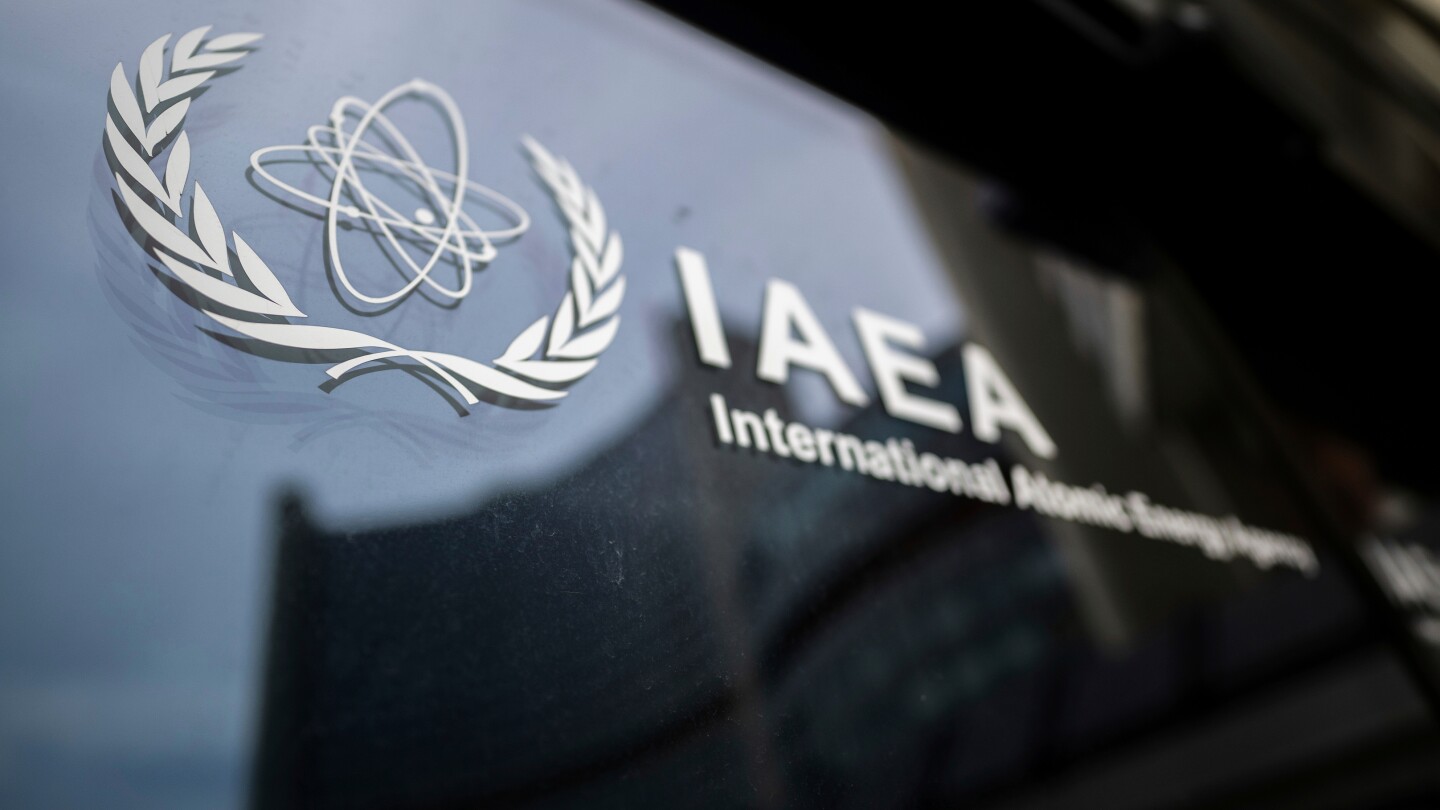
VIENNA — A confidential report from the International Atomic Energy Agency (IAEA) reveals significant challenges in verifying Iran’s uranium stockpile, following a conflict involving Israel and the United States. This report, viewed by The Associated Press, emphasizes the agency’s inability to track Iran’s near weapons-grade uranium since the June conflict.
The IAEA has raised concerns about the “continuity of knowledge” regarding nuclear materials in Iran, stressing the urgency of resolving this issue. The agency noted that verification, a standard safeguard practice, is overdue due to a five-month lapse in access to these materials.
According to the agency’s previous report in September, Iran’s stockpile contains 440.9 kilograms of uranium enriched to 60% purity. This level is close to the 90% required for weapons-grade uranium, potentially enough for up to 10 nuclear bombs, should Iran choose to weaponize. IAEA Director General Rafael Grossi cautioned in a recent interview that while Iran has the capability, it does not necessarily mean it possesses nuclear weapons.
Iran continues to assert the peaceful nature of its nuclear program, a claim met with skepticism by the IAEA and Western nations, citing a historical weapons program that was active until 2003.
IAEA Requests Detailed Report from Iran
Under its agreement with the IAEA, Iran is required to submit a “special report” detailing the status and location of nuclear materials, particularly after significant incidents such as attacks. This report must address the condition of facilities impacted by the June conflict.
The IAEA underscored the importance of this report to confirm that Iran’s nuclear activities remain peaceful and the facilities are not being misused. However, Iran’s November 11 communication to the IAEA stated that cooperation hinges on the decisions of Iran’s Supreme National Security Council.
Despite the requirement, Iran has not permitted IAEA inspectors access to the affected sites but allowed inspections of undamaged facilities following an agreement between Grossi and Iranian Foreign Minister Abbas Araghchi in Cairo. Facilities inspected include the Bushehr Nuclear Power Plant and several others in Tehran, with further inspections planned at the Isfahan Nuclear Technology Center.
During the conflict, the Isfahan site was a target of Israeli strikes, including its uranium conversion facility, and was also hit by U.S. missiles. This facility, located southeast of Tehran, houses thousands of scientists and includes Chinese-operated research reactors.
Impact of Sanctions on Tehran
Following the conflict, Iran halted cooperation with the IAEA. An agreement in September, facilitated by Grossi, aimed to resume inspections but was disrupted by the reimposition of U.N. sanctions in late September. These sanctions, prompted by Iran’s lack of engagement with the U.S. and the IAEA, have further strained Iran’s economy.
Under the Treaty on the Non-Proliferation of Nuclear Weapons, Iran is obligated to cooperate with the IAEA. However, European powers reinstated sanctions using the snapback mechanism due to Iran’s non-cooperation and lack of clarity regarding its uranium stockpile.
The sanctions freeze Iranian assets, suspend arms deals, and impose restrictions on Iran’s ballistic missile development, further isolating Tehran economically and politically.
———
The Associated Press receives support for nuclear security coverage from the Carnegie Corporation of New York and Outrider Foundation. The AP is solely responsible for all content.
___
Additional AP coverage of the nuclear landscape: https://apnews.com/projects/the-new-nuclear-landscape/