The U.S. House narrowly defeated a resolution supported by Democrats, aiming to restrict the deployment of American troops to Venezuela. The decision followed a tied vote that fell short of the required majority.
The outcome highlights the fragile control Republican House Speaker Mike Johnson holds over the majority, coupled with emerging resistance within the GOP-led Congress against President Donald Trump’s actions in the Western Hemisphere. A similar measure in the Senate was deadlocked until Vice President JD Vance cast the deciding vote.
To ensure the resolution’s defeat, Republican leaders extended the voting period by over 20 minutes, allowing Rep. Wesley Hunt to return to Washington from a campaign trip in Texas to cast the crucial vote.
During the session, Democrats accused Republican leaders of procedural violations. Notably, Republicans Reps. Don Bacon and Thomas Massie joined Democrats in supporting the resolution.
The proposed war powers resolution aimed to mandate President Trump to withdraw U.S. forces from Venezuela. Despite assurances from the Trump administration that no American troops are stationed in the country, Democrats argued for the resolution’s necessity, citing a U.S. operation targeting Venezuelan leader Nicolás Maduro and Trump’s expressed intentions to control Venezuela’s oil industry.
The Impact of Trump’s Foreign Policy
The recent vote illustrates the ongoing debate in Congress over the latitude given to President Trump, whose campaign was initially against foreign entanglements but has increasingly resorted to military strategies in the Western Hemisphere. Most Republicans have refrained from restricting Trump via war powers legislation.
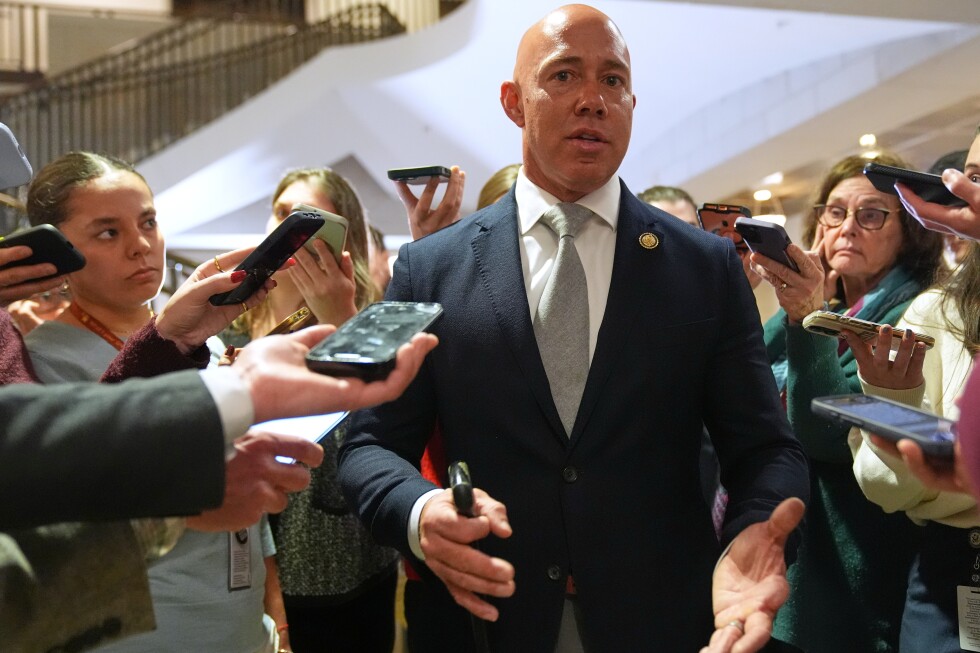
Rep. Brian Mast, chair of the House Armed Services Committee, accused Democrats of pursuing the resolution out of animosity towards Trump, claiming, “It’s about the fact that you don’t want President Trump to arrest Maduro, and you will condemn him no matter what he does, even though he brought Maduro to justice with possibly the most successful law enforcement operation in history.”
Democrats, however, remain adamant about Congress’s role in authorizing presidential use of wartime powers, prompting a series of legislative challenges in both chambers. Rep. Gregory Meeks emphasized during the debate, “Donald Trump is reducing the United States to a regional bully with fewer allies and more enemies. This isn’t making America great again. It’s making us isolated and weak.”
In the Senate, Republican support for the Venezuela resolution was marginally overturned after the Trump administration convinced two senators to retract their initial support. Secretary of State Marco Rubio committed to briefing the Senate Foreign Relations Committee next week.
Trump’s recent actions, including his stance on Greenland, have sparked dissent among some Republicans. His backing off from military threats towards European allies, coinciding with discussions on Arctic security with NATO, reflects a shift in strategy.
Rep. Don Bacon, frustrated with Trump’s aggressive foreign policy, supported the resolution, stating, “I’m tired of all the threats.”
The debate over Trump’s military moves and potential future actions has reignited discussions around the War Powers Act, a 1970s law designed to reassert congressional authority over military engagements.
The War Powers Discourse
The War Powers Resolution, established amidst the Vietnam War, sought to ensure presidential collaboration with Congress before deploying troops unless a formal war declaration exists. It also empowers lawmakers to mandate troop withdrawal from hostilities.
Presidents, including Trump, have historically tested these boundaries, with Democrats alleging that Trump has expanded these limits significantly during his second term. The Trump administration’s covert operation to capture Maduro and its use of evolving legal justifications for actions near Venezuela have further fueled these concerns.
Controversy Over Venezuelan Oil Licenses
As the Trump administration manages Venezuela’s global oil sales, Senate Democrats are scrutinizing the beneficiaries of these transactions. Vitol, a leading independent oil broker, was granted a $250 million license, raising questions due to senior partner John Addison’s significant donations to Trump-aligned political groups.
In a letter led by Sen. Adam Schiff, 13 Democratic senators called for transparency regarding any agreements related to Venezuela that might benefit Trump’s campaign donors. The White House maintains its commitment to safeguarding Venezuelan oil for the benefit of both the country and the U.S.