Historic Election for Arkansas Supreme Court Chief Justice
The upcoming election for the Chief Justice of the Arkansas Supreme Court is set to make history, even as it maintains the court’s conservative leanings. Despite the race not attracting heavy spending from Republican groups as in previous years, its significance remains undiminished.
Justices Karen Baker and Rhonda Wood are vying to succeed Chief Justice Dan Kemp in a nonpartisan runoff. After finishing as the top two candidates in the March four-person race, neither secured the majority vote necessary to win outright.
Although officially nonpartisan, the Arkansas Supreme Court currently has a Republican-backed majority of 4-3, which will increase to 5-2 regardless of the election outcome. This shift is facilitated by GOP Governor Sarah Huckabee Sanders, who is set to fill two upcoming vacancies.
Both Baker and Wood are poised to become the first elected female Chief Justice in Arkansas, a milestone previously reached only through appointment by Betty Dickey in 2003.
Justice Wood, first elected in 2014 and reelected in 2022, has endorsements from prominent Republicans, including Governor Sanders and U.S. Senator Tom Cotton. The Arkansas Republican Party’s state committee also supports her bid. Despite these endorsements, Wood emphasizes her judicial independence, stating, “I think I have made decisions consistently with the law, but not necessarily maybe one party or another would agree with.”
Justice Baker, on the court since 2011, has not engaged with media requests but has highlighted her nonpartisan track record. In past statements, Baker has argued that her opponent’s campaign support from Sanders’ political action committee suggests a lack of impartiality.
Historically, conservative groups have invested significantly in Arkansas court races to influence the judiciary’s direction. This year, however, their focus has shifted to higher-profile contests in battleground states like Ohio and Michigan.
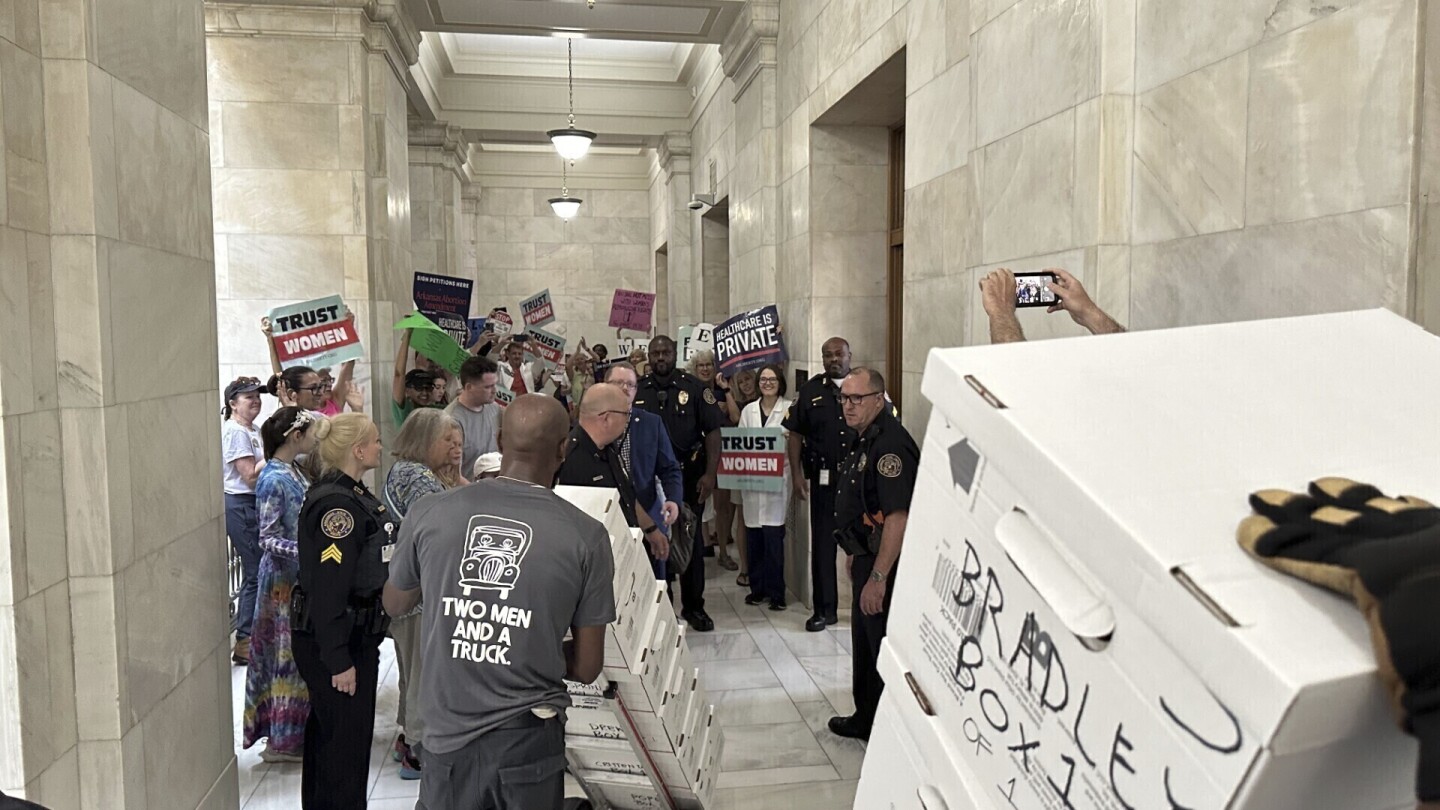
The candidates recently diverged on a case concerning an abortion rights measure that sought to modify a state ban following the overturning of Roe v. Wade. Wood authored the majority opinion upholding the rejection of petitions supporting the measure due to procedural non-compliance. Baker’s dissent questioned the majority’s motivations, asking, “Why are the respondent and the majority determined to keep this particular vote from the people?”
Both candidates have articulated their visions for the court’s future. Baker aims to enhance attorney licensure processes, while Wood advocates for increased accessibility through initiatives like text notifications and virtual court options, stating her goal is to make the system “way more transparent and citizen-friendly.”
Regardless of the election’s outcome, both candidates will remain on the court. A vacancy created by Justice Courtney Hudson’s election to a different position will allow Governor Sanders to appoint another justice next year.