WASHINGTON (AP) — On Wednesday, a lawsuit was filed against the Environmental Protection Agency (EPA) by a coalition of health and environmental organizations. The suit challenges the EPA’s recent decision to revoke a scientific finding that has been crucial for U.S. efforts to manage greenhouse gas emissions and combat climate change.
The EPA’s rule, finalized last week, rescinded the 2009 declaration termed the endangerment finding. This finding recognized carbon dioxide and other greenhouse gases as threats to public health and welfare. It served as the legal basis for numerous climate regulations under the Clean Air Act, governing emissions from vehicles, power plants, and other sources contributing to global warming.
The repeal could nullify all vehicle emissions standards and potentially dismantle broader climate regulations concerning stationary emissions sources like power plants and oil facilities, experts suggest.
The legal action, initiated in the U.S. Court of Appeals for the District of Columbia Circuit, argues that the EPA’s withdrawal of the endangerment finding is unlawful. The 2009 finding backed essential measures to reduce climate pollution, particularly from automotive sources. The lawsuit asserts that clean vehicle standards under the Biden administration were set to achieve a historic reduction in U.S. carbon emissions, improve public health, and save consumers money on fuel.
Brian Lynk, senior attorney at the Environmental Law & Policy Center, emphasized that the agency’s decision is inconsistent with nearly two decades of scientific consensus supporting the 2009 endangerment finding. “This reckless and legally untenable decision creates immediate uncertainty for businesses, guarantees prolonged legal battles and undermines the stability of federal climate regulations,” Lynk remarked.
In 2007, the Supreme Court ruled in Massachusetts v. EPA that carbon dioxide and other greenhouse gases are classified as “air pollutants” under the Clean Air Act. Since this landmark decision, courts have consistently dismissed challenges to the endangerment finding, with the D.C. appeals court upholding it as recently as 2023.
According to EPA spokesperson Brigit Hirsch, the agency reevaluated the legal foundation of the 2009 Endangerment Finding, taking into account recent court decisions, including a 2022 Supreme Court ruling that restricted the use of the clean air law to cut carbon emissions from power plants. Hirsch noted, “EPA is bound by the laws established by Congress, including under the Clean Air Act,’’ adding that Congress never intended for the EPA to regulate greenhouse gases from vehicles.
Trump Administration’s Perspective on the Finding
The plaintiffs in the lawsuit include various health organizations such as the American Public Health Association and the American Lung Association, along with environmental groups like the Center for Biological Diversity. The suit names the EPA and its administrator, Lee Zeldin, as defendants.
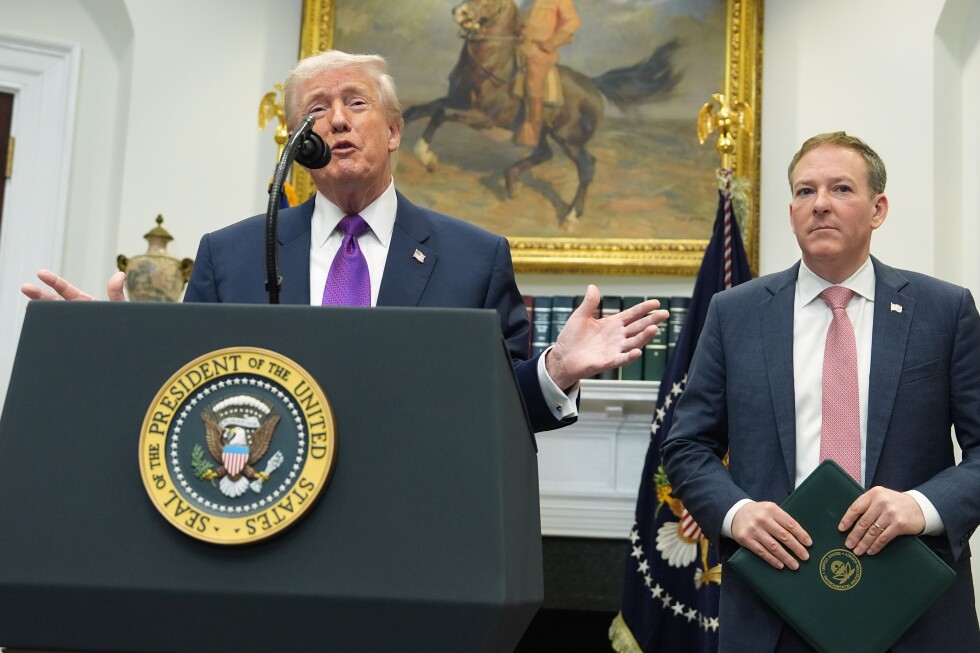
Former President Donald Trump heralded the repeal as “the single largest deregulatory action in American history, by far,” while Zeldin criticized the endangerment finding as “the Holy Grail of federal regulatory overreach.” He stated that it led to excessively burdensome regulations, impacting sectors like the automotive industry.
Conversely, environmental advocates viewed the repeal as a significant attack on federal climate change authority. They argue that evidence supporting the endangerment finding has only strengthened since its inception 17 years ago.
Impact of the Endangerment Finding
The Clean Air Act mandates that the EPA regulate any air pollutant that poses a threat to public health or welfare. The 2007 Supreme Court decision required the EPA to determine, based on scientific evidence, whether greenhouse gases endanger human health and welfare, leading to new vehicle standards and other regulations.
Gretchen Goldman, president and CEO of the Union of Concerned Scientists, criticized the EPA’s repeal as a neglect of its mission to protect public health and fulfill its legal obligations. “This shameful and dangerous action … is rooted in falsehoods, not facts, and is at complete odds with the public interest and the best available science,” Goldman stated, emphasizing the ongoing rise in greenhouse gas emissions and global temperatures due to fossil fuel consumption.
While the White House and Zeldin assert that the new rule will save taxpayers $1.3 trillion over three decades, the EPA’s own analysis suggests that the elimination of vehicle standards may lead to increased gas prices. The analysis projects $1.4 trillion in additional costs by 2055 due to higher fuel prices and related expenses.
Democratic Inquiry into the EPA’s Decision
In response to the lawsuit, Senate Democrats have announced an investigation into the decision. They argue that public comments from Zeldin and other officials indicate that the repeal was a predetermined goal, disregarding the regulatory review process, which included consideration of nearly 600,000 public comments.
Rhode Island Sen. Sheldon Whitehouse, along with 40 other senators, is spearheading the inquiry. They criticized the EPA’s approach, stating that it undermines the integrity of the rulemaking process, rendering public participation meaningless.