Key West Businesses in Limbo as Work Permits for Haitian Employees Expire
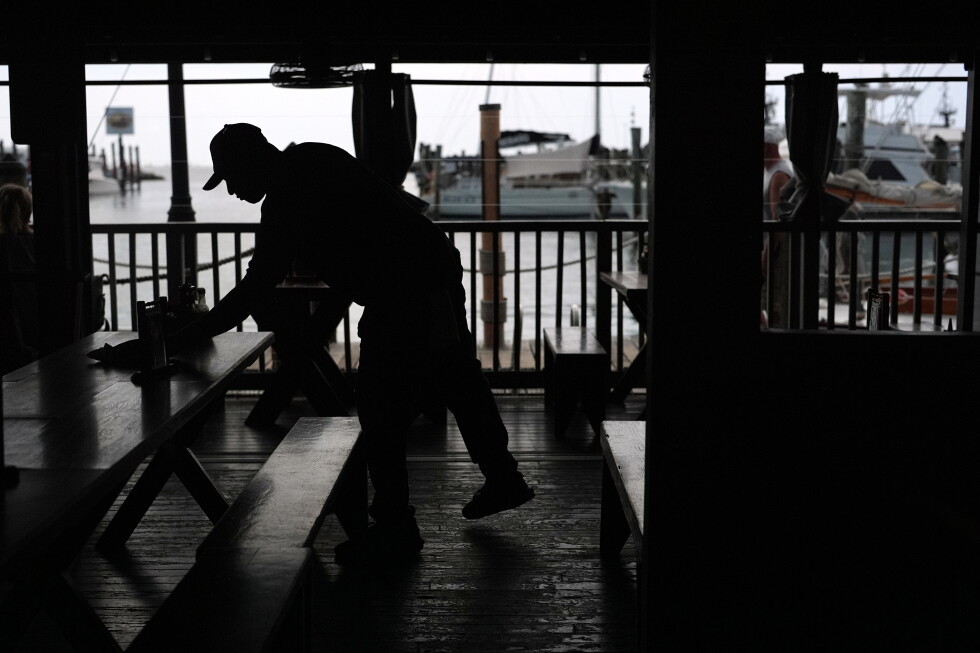
In Key West, Florida, Bobby Kuchinsky, a restaurant manager, has been dealing with ongoing concerns about his Haitian employees’ ability to continue working legally in the U.S. For over a month, he arrived each day at his establishment, fearing the potential loss of his staff, many of whom have served as reliable cooks, busboys, and oyster shuckers for over ten years. Recently, he had to suspend six employees after their work permits expired.
The uncertain status of Temporary Protected Status (TPS) for Haitians has left thousands of business owners in a state of confusion. The Trump administration’s immigration policies terminated TPS for approximately 1 million individuals from various countries, including 350,000 Haitians who had legally lived and worked in the U.S. since 2010. Although the decision was contested in courts, the Supreme Court eventually upheld the termination, pushing cases back to lower courts, which typically take around 32 days to reach a decision.
Uncertainty Over Work Authorizations
Initially, the U.S. Citizenship and Immigration Services (USCIS) extended work permits temporarily, often granting extensions only on the day of expiration. Recently, however, permits were not extended, heightening fears of job losses and deportation among workers, as well as concerns for their safety upon return to Haiti—where gang violence has displaced 1.5 million people, according to the United Nations.
The Department of Homeland Security reiterated that TPS is intended as a temporary program and encouraged Haitians to take advantage of a “free flight home” offer, underscoring the program’s impermanence.
Impact on Businesses and Workers
Kuchinsky checks government databases daily for updates on his employees’ work authorizations. The suspension of his employees is seen as a temporary measure, allowing for easier rehiring if their work status changes. He provided his staff with information on their rights and necessary documents in case of detention, planning to offer severance pay if the situation remains unchanged.
Miriam Singer, CEO of Jewish Community Services of South Florida, expressed the difficulty faced by organizations reliant on TPS workers, noting the emotional toll on both employees and employers. Industries such as construction, hospitality, and long-term care, which heavily depend on foreign workers, find it particularly challenging to navigate the frequent changes in immigration policy.
Katie Smith Sloan of LeadingAge, representing nonprofit long-term care facilities, mentioned the persistent uncertainty affecting providers and patients, predicting an impending crisis.
Personal Accounts of TPS Holders
For many TPS holders, returning to Haiti poses significant risks. One worker, who requested anonymity, shared his fears about deportation and the consequent threats to his safety. Having arrived in the U.S. to escape gang violence, he is now uncertain about his future ability to support his family in Haiti.
Concerns extend to asylum seekers as well. Bendy Gabriel, having sought refuge in the U.S. after facing threats in Haiti, continues working under a permit valid until 2030 but remains uneasy about the possibility of deportation. His earnings support his family in the U.S. and Haiti, and the loss of his job could have severe repercussions for his dependents.