Secret Service’s $1 Billion Security Proposal for White House Under Scrutiny
Republican senators are seeking more information on a proposed $1 billion security enhancement plan for the White House, which includes $220 million earmarked for securing President Donald Trump’s newly constructed East Wing ballroom. The details were discussed during a closed-door meeting with Secret Service Director Sean Curran, who provided a breakdown of the request to the senators.
The ballroom security measures involve the installation of bulletproof glass, drone detection technologies, and advanced threat filtration systems, as outlined in a document obtained by The Associated Press. The remaining funds are allocated for additional security improvements, such as a $180 million visitor screening facility and $175 million for Secret Service agent training.
This funding request follows an incident involving an attempted assassination of President Trump at the White House Correspondents Association dinner. While the construction of the ballroom is reportedly funded by $400 million in private contributions, the security costs had not been disclosed until now.
Republican Senators Demand Clarity on Funding Details
Although Republican senators generally support enhanced security for the president, many, including Florida Sen. Rick Scott, have voiced concerns about the vagueness of the proposal. “I want more information,” Scott stated, emphasizing the need for detailed justifications for the billion-dollar expenditure.
The proposal has been included in a partisan spending bill aimed at restoring funding for immigration enforcement agencies, a measure Republicans are pushing forward without Democratic support. Questions about the White House’s security expenditure could potentially undermine the bill’s progress.
Senate Appropriations Committee Chairwoman Susan Collins and Indiana Sen. Todd Young have expressed similar concerns, seeking additional data to understand how the proposed figures were determined. Senate Homeland Security Committee Chairman Rand Paul prefers that the funding be sourced privately, questioning the necessity of the current request.
Additional Security Needs and Democratic Opposition
The Secret Service has also requested $175 million for protectee security enhancements, $150 million for addressing evolving threats such as drones, and $100 million for securing national events. The current budget bill provides only broad categorizations for these funds, leading to further scrutiny.
Democrats have expressed their opposition to the security funds in the bill. Senate Democratic Leader Chuck Schumer plans to challenge the inclusion of the security money through the Senate parliamentarian, arguing that Americans prioritize reduced costs over extravagant expenditures for presidential facilities.
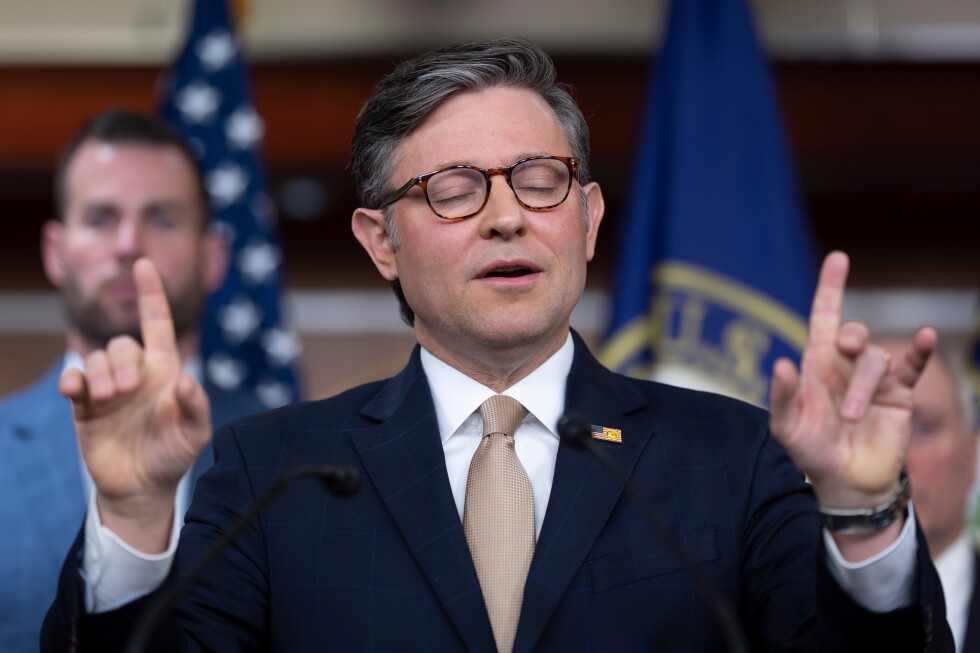
Further amendments are anticipated on the Senate floor, with Sen. Jacky Rosen proposing to redirect the security budget to criminal justice programs and law enforcement benefits. In the House, Speaker Mike Johnson stated they are awaiting the Senate’s decision before proceeding with their version of the bill.
Republican Sen. Mike Rounds suggested that the security plan could be scaled back, with parts deferred to subsequent budgets if the concerns persist. Nevertheless, he indicated that once comprehensive details are provided, the proposal might gain sufficient support for swift approval.
Senate Majority Leader John Thune advocates for the legislation, citing Democratic resistance to law enforcement funding as a key obstacle that needs to be addressed promptly.