Gerrymandering and the Narrow Path to Republican Control
In the aftermath of Donald Trump’s election victory, various factors have been identified as contributors to his success. These include rising inflation, global discontent with incumbents, institutional distrust, and a noticeable rightward shift among working-class voters across different racial groups. As analysts continue to dissect the data, the political landscape reveals a crucial element: the Republican control of the House of Representatives, which is precariously slim.
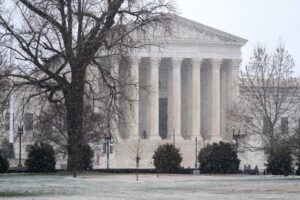
This narrow majority is reportedly built on a foundation of gerrymandering and map manipulation, practices that have been tacitly supported by the Supreme Court. The situation is reminiscent of a political anomaly, as it’s been 35 years since a new president entered office without possessing control over both the House and Senate. Indiana Rep. Victoria Spartz’s recent decision not to engage with the Republican caucus further emphasizes the fragile nature of this majority, which may hinge on a single vote.
Michael Li, in a recent analysis, highlights that Republicans secured a net advantage of 16 seats due to partisan map drawing. While Democrats also gained ground through gerrymandering, their advantage amounted to 7 seats, in contrast to the GOP’s 23-seat gain. This disparity arises from the Republicans’ control over the redistricting process in more states than their Democratic counterparts. Despite some states utilizing nonpartisan commissions or judicial interventions to ensure fairer maps, many politicians continue to pursue partisan gains.
North Carolina serves as a glaring example of this partisan manipulation. The state, with its fairly even distribution of Republican and Democratic voters, saw Trump win alongside Democrat Josh Stein’s gubernatorial victory. Yet, the state’s heavily gerrymandered legislature resulted in 10 Republican seats versus 4 for Democrats. Initially, the state supreme court blocked this gerrymandered map, supported by the U.S. Supreme Court in Moore v. Harper. However, a change in the North Carolina court’s partisan balance led to an endorsement of the previously banned map, granting the GOP an additional 3 seats crucial for House control.
The Republican majority, however, remains susceptible to internal challenges. Speaker Mike Johnson faces the task of managing a divided caucus where even minor defections could threaten the majority. The lack of electoral competition exacerbates this scenario, as only 27 districts nationwide witnessed margins under 5 percent. This situation increases the likelihood of lawmakers prioritizing primary challenges over general voter concerns.
The current political landscape did not arise in isolation. The Supreme Court’s 2013 decision to dismantle key Voting Rights Act provisions, coupled with a 2019 ruling that removed federal oversight on partisan gerrymandering, paved the way for the current state of affairs. Congressional efforts to address these issues narrowly failed in 2022, when the Freedom to Vote Act and the John R. Lewis Voting Rights Advancement Act fell two Senate votes short. These bills aimed to prohibit gerrymandering nationwide and mitigate other systemic issues like those highlighted by Citizens United, which opened the door for substantial campaign contributions from figures like Elon Musk.
This ongoing narrative underscores the significant impact of political regulations and warns against assuming mandates from recent electoral victories. Voter dissatisfaction with government performance is amplified by skewed rules that hinder Washington’s efficacy. Achieving meaningful governance reforms and fostering genuine competition are essential steps toward bridging the gap between power and a disenchanted electorate.