The Federal Reserve Reduces Interest Rates Amid Economic Concerns
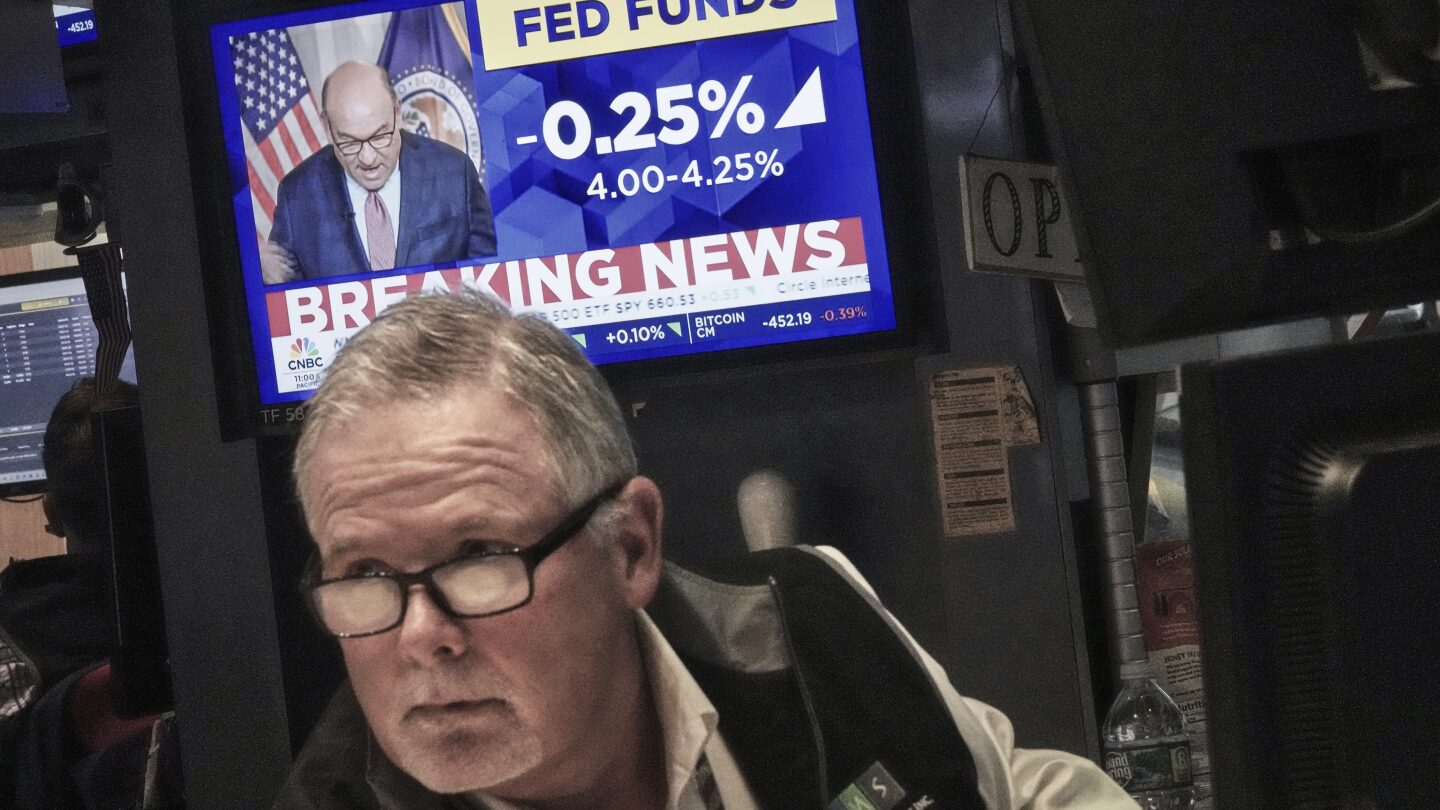
The Federal Reserve announced a reduction in its key interest rate by a quarter-point on Wednesday, lowering the rate from 4.3% to approximately 4.1%. This decision marks the first rate cut since December, as the central bank, led by Chair Jerome Powell, expresses growing concerns about the U.S. labor market’s health. The Fed also indicated plans for two more reductions within the year.
Having maintained a steady rate throughout the year, the Federal Reserve has now shifted its focus from inflation to employment, as recent months have shown a significant slowdown in hiring and a slight increase in unemployment rates. Powell stated, “It’s really the risks that we’re seeing to the labor market that were the focus of today’s decision,” during a press conference following a two-day Fed meeting.
The central bank’s decision aims to lower borrowing costs for various loans, potentially stimulating economic growth and job creation. However, Powell did not indicate a series of rapid cuts, which may disappoint some investors. According to projections released alongside the rate cut announcement, two additional rate reductions are expected this year, with just one forecasted for 2026.
Investor expectations prior to the meeting included five cuts through the end of next year. Powell emphasized that the projected cuts should be viewed as “probability” rather than “certainty.” Matt Luzzetti, chief U.S. economist at Deutsche Bank, commented that the Fed sought to remain noncommittal and data-dependent, keeping future policy options open.
The stock market’s response was mixed, with the S&P 500 index decreasing by 0.1%, while the Dow Jones Industrial Average saw a 0.5% increase. Only one policymaker, Stephen Miran, dissented from the decision. Miran, a recent Trump appointee, advocated for a more significant half-point cut.
The Fed’s rate-setting committee displayed a range of opinions on future rate changes, with seven officials opposing further cuts, two supporting one more, and ten favoring at least two more cuts. The divergence in views highlights uncertainty in the economic outlook, with stubborn inflation and faltering hiring complicating the Fed’s decision-making process. Powell noted, “There are no risk-free paths now. It’s not incredibly obvious what to do.”
Inflation remains a concern, standing at 2.9% in August, above the Fed’s target of 2%. This situation contrasts with other global central banks: the European Central Bank recently left its rates unchanged, while the Bank of England is expected to do the same.
President Trump’s administration has been critical of the Federal Reserve’s pace in cutting rates, with the President suggesting a three percentage point reduction. Trump’s attempt to dismiss Fed governor Lisa Cook, which legal scholars view as unprecedented, has been framed within this context of criticism.
Despite political pressures, Powell asserts that the Fed operates independently, stating, “I don’t believe we’ll ever get to that place. We’re doing our work exactly as we always have now.”