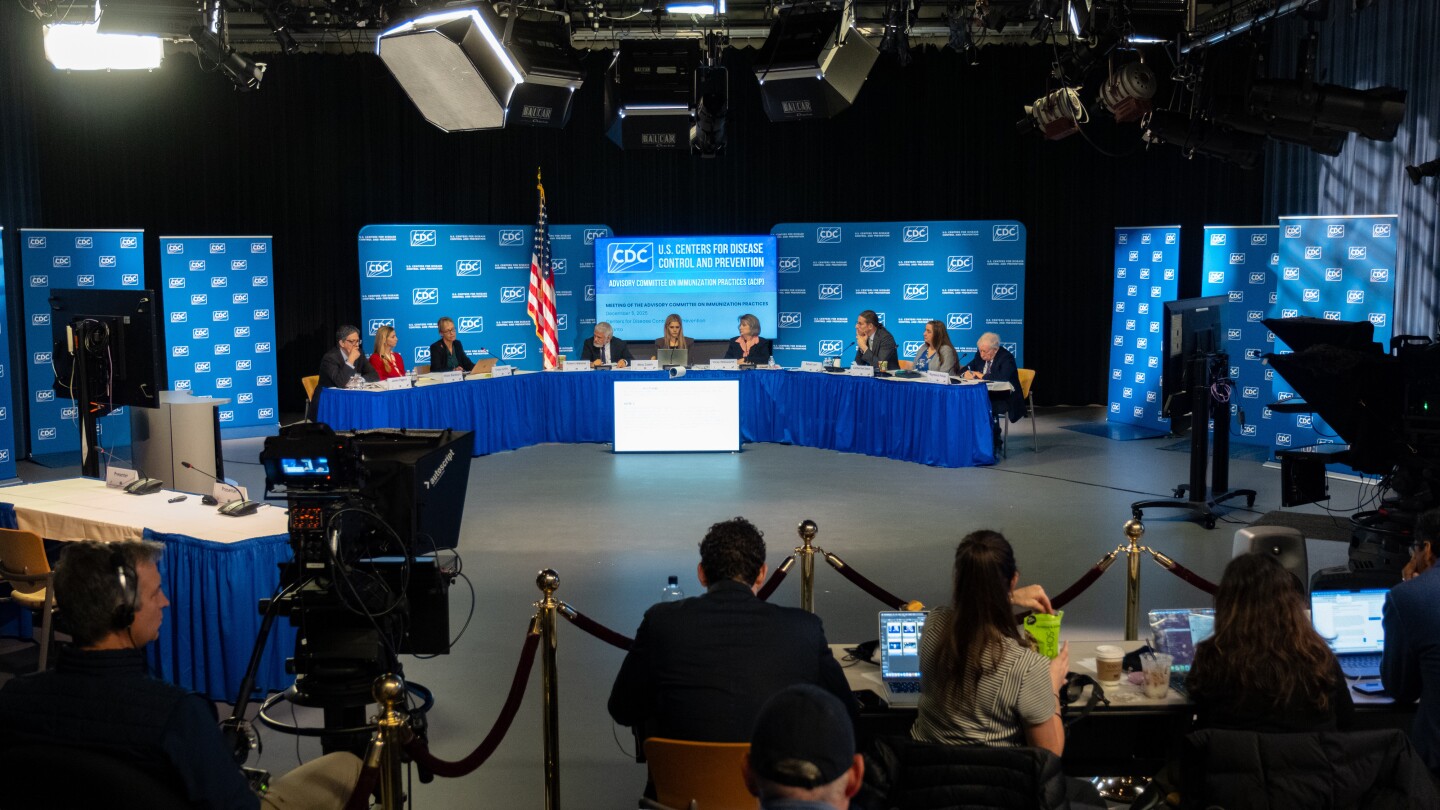
Federal Advisory Committee Revises Hepatitis B Vaccine Guidelines for Newborns
NEW YORK (AP) — A significant shift in U.S. health policy occurred Friday as a federal vaccine advisory committee, appointed by U.S. Health Secretary Robert F. Kennedy Jr., voted to change the recommendation that all newborns receive the hepatitis B vaccine on the day of birth. This decision has sparked considerable debate among health professionals.
Dr. William Schaffner, a vaccine expert from Vanderbilt University, expressed his disapproval, stating, “This is the group that can’t shoot straight.” Despite the committee’s recommendation, several medical societies and state health departments have declared their intention to continue advising the immediate administration of the vaccine. The trade group AHIP confirmed that its members would still cover the birth dose.
The longstanding guideline, which has been in place for decades, advocates for the immediate vaccination of newborns to prevent liver infections. The new recommendation suggests administering the vaccine only to babies whose mothers test positive for hepatitis B or in cases where the mother’s status is unknown. For other infants, the decision will rest with parents and doctors, with the committee proposing that the vaccination series should start at two months if the birth dose is skipped.
Implications and Reactions to the New Guidelines
President Donald Trump has praised the committee’s decision, calling it a “very good decision.” Meanwhile, acting CDC Director Jim O’Neill will decide whether to approve the committee’s recommendation, as the CDC typically follows the advisory committee’s guidance.
The advisory committee, newly appointed by Kennedy, has faced criticism for its composition, including several members associated with anti-vaccine movements. Health experts have expressed concerns that the committee’s focus has shifted from public health benefits to individual risk assessments.
Concerns Over Vaccine Safety and Public Health Impact
Hepatitis B poses a significant health risk, especially to infants and children, with potential long-term consequences like liver failure and cancer. The vaccine has been credited with drastically reducing infection rates among children since its introduction in 1991. Nonetheless, some committee members voiced concerns about the adequacy of past vaccine safety studies and suggested the need for more comprehensive research.
Dr. Joseph Hibbeln and Dr. Cody Meissner, among others, questioned the scientific basis for delaying the vaccine. Meissner criticized a proposal for parents to consider blood tests to assess vaccine effectiveness, calling it unsubstantiated.
Expert Opinions and Public Health Concerns
Critics, including Sen. Bill Cassidy and advocacy groups, argue that the revised guidelines could lead to increased disease spread. The committee’s decision-making process and the inclusion of anti-vaccine perspectives were also questioned. Elizabeth Jacobs of Defend Public Health labeled the meeting an “epidemiological crime scene,” emphasizing the shift away from evidence-based approaches.
Notably, prominent vaccine advocates like Dr. Peter Hotez declined to participate in the discussions, citing concerns over the committee’s current focus and approach.