Analysis of Trump’s Election Fraud Claims
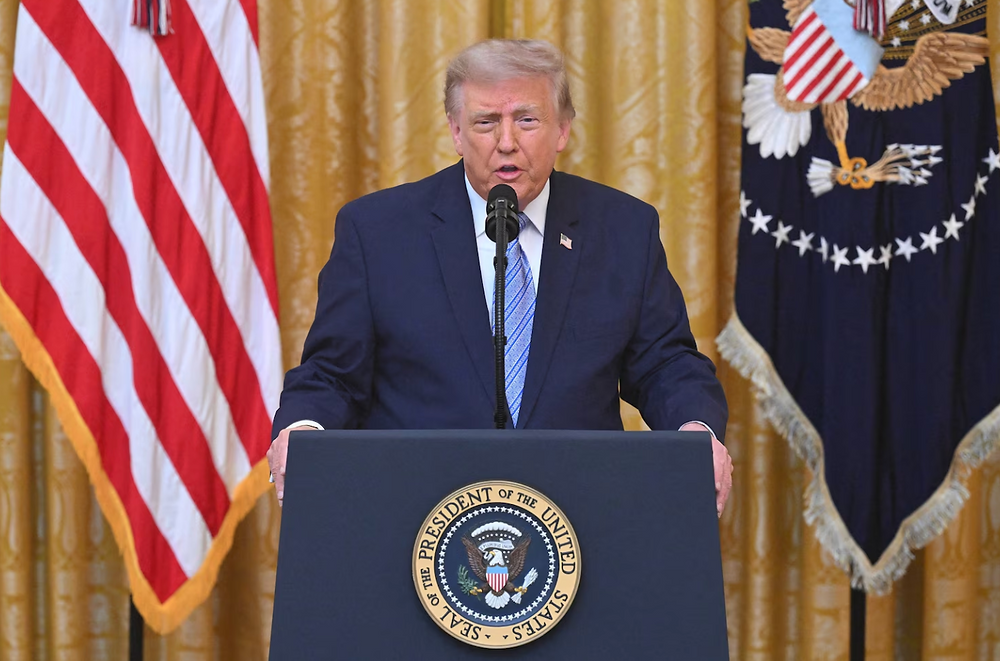
Yesterday, President Trump addressed the nation, asserting that China’s interference compromised U.S. voter data, that the election system is severely flawed, and that non-citizens and deceased individuals are filling voter rolls.
Examining the Claims
The claims made by Trump demand scrutiny. Here’s a breakdown of the evidence available.
China’s Alleged Voter Data Compromise
Trump accused China of executing “the largest compromise of election data in history” during the 2020 election, alleging that Beijing illegally obtained 220 million voter files from 18 states to influence the election outcome.
However, much of this voter information, such as names, addresses, and party affiliations, is public in many states. No evidence has been presented by Trump to show that China used this data to alter voting systems or outcomes. Both the FBI and the National Intelligence Council found no indications of Chinese interference in the 2020 election.
Concerns Over Election System Security
Trump contended that U.S. elections are far from secure, highlighting vulnerabilities in electronic voting and ballot-counting systems.
The specific vulnerability mentioned by Trump relates to a theoretical weakness in a voting system used in Venezuela, a system not employed in U.S. elections. The Cybersecurity and Infrastructure Security Agency (CISA) declared the 2020 election “the most secure election in American history.” Post-election audits in Georgia and Pennsylvania confirmed the accuracy of the 2020 results.
Non-Citizens and Deceased Individuals on Voter Rolls
Trump claimed “hundreds of thousands of non-citizens and dead people” are active on the voter rolls.
Contrary to this claim, the Heritage Foundation, a conservative think tank, documented only 68 instances of non-citizen voting over five decades. Instances of voting under a deceased person’s name are rare, with most states cross-referencing death records before elections. Ten states allow absentee ballots from voters who died before Election Day, and Connecticut counts ballots from deceased service members.
Mail-In Ballot Concerns
Trump labeled mail-in ballots as “inherently corrupt.”
Research contradicts this, indicating mail ballot fraud occurred in approximately 0.000043% of cases in the last four general elections. Notably, Trump voted by mail in a 2026 Florida special election.
Media Coverage of the Speech
Trump claimed NBC, ABC, and CNN did not broadcast his speech “because they know how corrupt our system is and they don’t want to reveal it.”
However, these networks covered the speech on their websites and YouTube channels. CBS aired it live with fact-checking before and after. The networks may have been cautious about broadcasting unverified election fraud claims due to potential legal risks; Fox News settled a defamation lawsuit for $787.5 million in 2023 for airing false claims about Dominion voting machines in the 2020 election.
Overall, the evidence from federal agencies, state audits, and independent research does not support the president’s claims on foreign hacking, voting machine vulnerabilities, voter fraud, mail-in ballots, and media coverage. The underlying data is publicly available for citizens to verify independently.