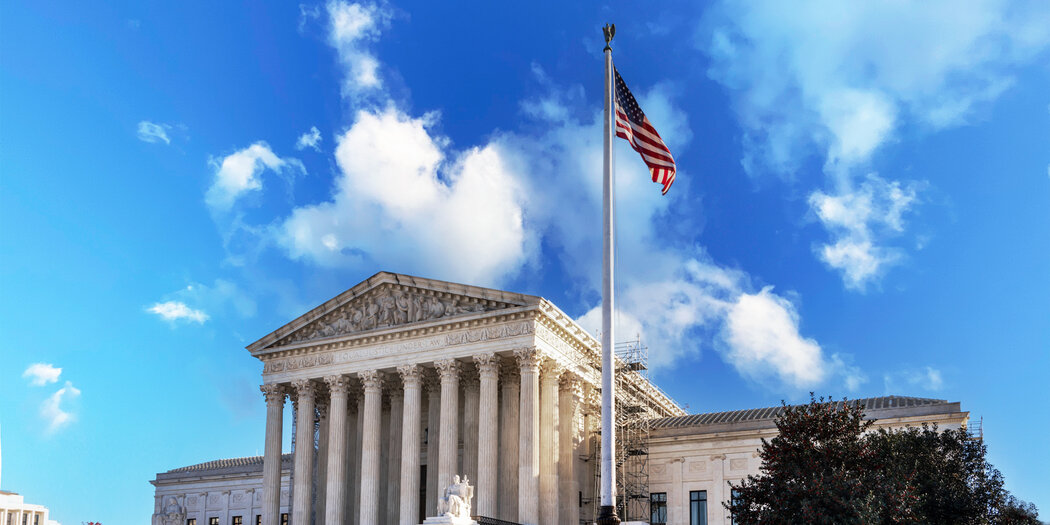
Supreme Court Justices and the Strategic Timing of Retirement
As the end of June approaches, discussions surrounding the potential retirement of Supreme Court justices intensify. This period marks the release of the Court’s final opinions for the term and the beginning of its summer recess. The decision of when a justice retires is crucial, as it can shape legal interpretations and societal norms for generations. Justices, appointed for life, hold the power to decide their departure, often influenced by the political alignment of the sitting president.
The strategic timing of retirements aligns with the political ideologies of the appointing president, as justices often aim to have a successor with similar views. However, such retirements challenge the concept that justices should decide cases based solely on the law, without personal or political bias. To counteract this, Congress could introduce term limits for justices, restricting each president to two nominations per term.
The implications of Supreme Court appointments are profound. The 2021 conservative supermajority, for example, culminated in the Dobbs v. Jackson Women’s Health Organization decision, which overturned Roe v. Wade, eliminating the constitutional right to abortion.
Federal judges, including Supreme Court justices, hold lifetime appointments, a system intended to ensure decisions are based on legal principles rather than political pressures. Yet, as justices live longer, their influence extends well beyond historical norms. Strategically timed retirements allow justices to potentially shape the Court’s future, influencing the likelihood of a like-minded successor based on the president and Senate’s political affiliations.
Strategic retirements are not confined to a specific ideology. It has been over three decades since a Supreme Court justice retired, knowing an opposing ideology would likely fill their seat, as seen with Justice Thurgood Marshall’s retirement under President George H. W. Bush. Studies indicate that judges appointed by Democrats are more likely to retire strategically, although conservative judges also exhibit this tendency.
These retirements enable justices to extend their influence, giving an impression that the Court serves political interests rather than upholding the rule of law. Strategic retirements also grant presidents varying degrees of influence over the Court, with some presidents nominating multiple justices while others, like Jimmy Carter, have none.
The perception of the Court as a political entity, where strategic retirements play a role, exacerbates the erosion of public trust. Trust in the Supreme Court is dwindling, affected by political polarization, ethics scandals, and contentious confirmation processes.
Reports have surfaced of justices engaging in discussions with presidents regarding their successors. For instance, during Trump’s presidency, it was reported that Justice Anthony Kennedy had a private conversation recommending a former clerk for a future vacancy. The Trump administration reportedly conducted a “quiet campaign” to encourage Kennedy’s retirement, resulting in Brett Kavanaugh’s nomination.
Public campaigns can also influence retirement decisions, such as the concerted effort to encourage Justice Stephen Breyer’s retirement, ultimately leading to Ketanji Brown Jackson’s confirmation.
Decisions against retirement carry consequences as well. Justice Antonin Scalia’s unexpected death in 2016 sparked a heated political battle over his replacement, with Senate Majority Leader Mitch McConnell preventing President Obama’s nominee from receiving a hearing. The position became a focal point of the 2016 presidential race, culminating in Trump’s nominations of Neil Gorsuch, Brett Kavanaugh, and Amy Coney Barrett.
To address these issues, Congress has the authority to reform the retirement process by implementing term limits and regularizing appointments. Proposals have been introduced in both the Senate and House, supported by constitutional scholars and retired judges. This system would not require a constitutional amendment and would ensure each president nominates two justices every four years. A similar model exists for lower federal courts.
Such reforms could enhance fairness and diminish the perception that control of the Supreme Court hinges on strategic retirements, fostering predictability and stability in the confirmation process.