
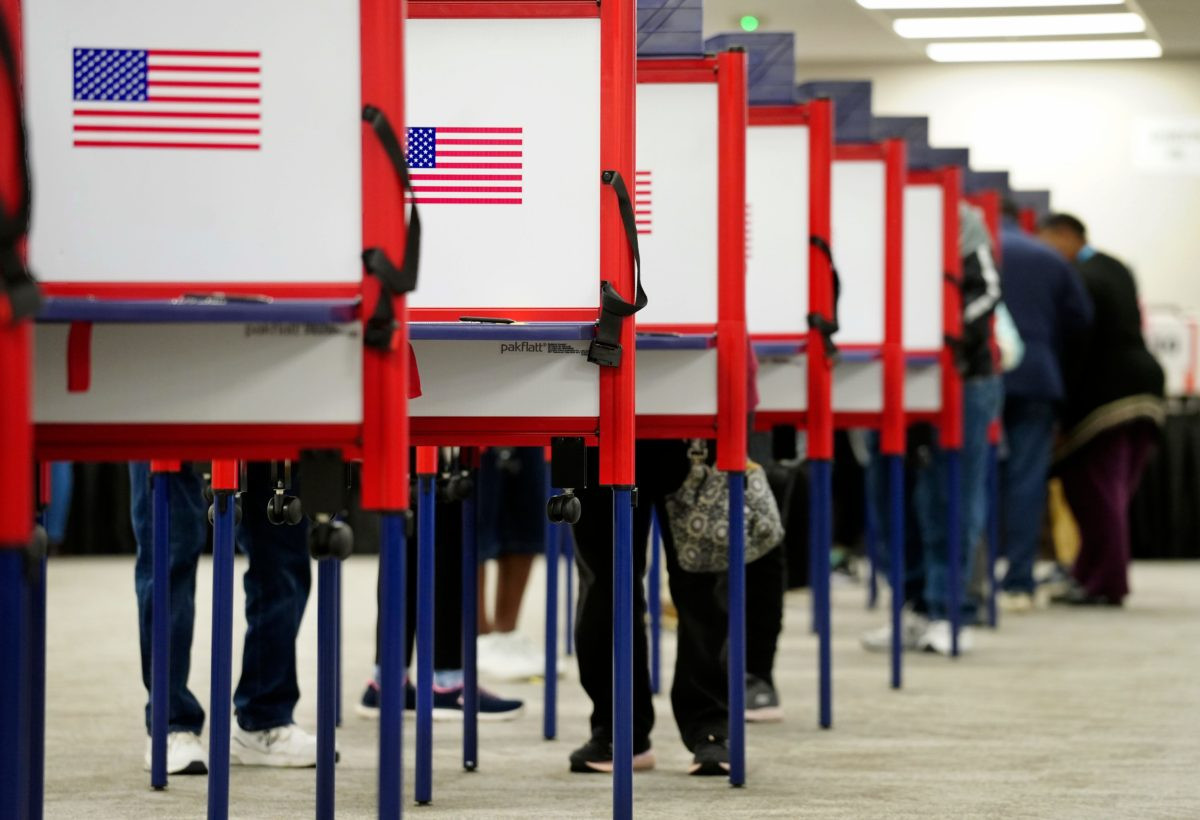

In recent years, concerns about election security have surged, fueled by misinformation and blatant attempts to overturn election results. Despite these challenges, U.S. elections remain robustly safeguarded. Read on to find out how!
Are U.S. elections secure?
Election misinformation and disinformation have run rampant in recent years, but elections in the United States are fair and secure.
Launched in 2020 before the presidential election, the National Council on Election Integrity consists of over 40 government, political, and civic leaders who investigate disinformation campaigns and fight for legislation that protects election workers, the electoral process, and voting rights in general.
You can learn more about how elections are kept safe and secure before, during, and after the election by visiting How Elections Work and clicking on your state.
The Voting Rights Lab is another nonpartisan organization that researches and analyzes elections to ensure their fairness and accuracy. It tracks voting rights legislation in all 50 states, plus the District of Columbia.
You can also find out more about understanding the election certification process and fighting against efforts to block certification of elections.
Which agency ensures a fair and secure electoral process?
The Election Assistance Commission (EAC) is a bipartisan commission that assists election officials in improving the administration of elections and helps Americans participate in the voting process.
The EAC also ensures election security by outlining best practices for local election officials to follow to safeguard the integrity of elections. Guidelines include securing voting systems with security measures such as using locks, tamper-evident seals, security cameras, system testing before and after elections, audits, and physical and cybersecurity access controls.
How are ballots verified?
Trained election officials take prescribed steps to make sure each ballot is legitimate and each vote has been cast by an eligible voter. This step is crucial to ensuring accurate elections, and the process varies by state. Find out more about the process here.

Who are poll workers and what do they do?
Poll workers are paid volunteers who set up and test voting machines, greet voters at their polling locations, and assist and support voters with any issues or questions during the voting process. They attend training sessions to learn about election rules and guidelines, and help ensure a fair and accurate voting process. Poll workers may also be referred to as election officials or poll clerks, depending on location.
Who can be a poll worker?
The Human Cost of U.S. Foreign Aid Cuts: A Year in Review
Behind every budget cut is a human story—a child without vaccines, a family without food, a community without water.
Nevada Audit Finds Shortcomings in Infant Opioid Care Under Lombardo
A legislative audit criticized Nevada Gov. Joe Lombardo’s oversight of care plans for opioid-affected infants, revealing lapses in service documentation and monitoring, risking both infant welfare and federal funding. The audit, released in April, highlights the administration’s failure to address these issues, amid Nevada’s minimal progress in reducing overdose deaths.
AJ News Offers Newsletter Subscription and Preference Management
Dan Sullivan allegedly accepted $95,000 from individuals accused of defrauding veterans, raising ethical concerns and potential legal repercussions.
John Sununu’s Telecom Ties and Privacy Law Controversy in Senate Run
John Sununu, ex-Senator and current candidate, served on Time Warner’s board post-2009, advocating against net neutrality and supporting bills threatening user privacy.