Elon Musk and Sam Altman Face Off in High-Profile AI Trial
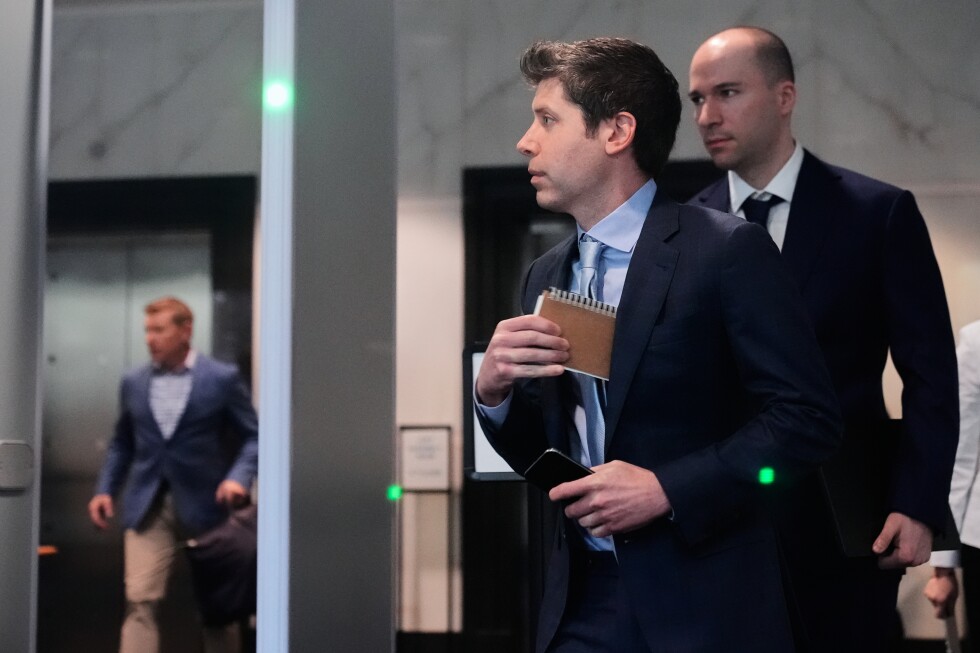
OAKLAND, Calif. (AP) — A significant legal confrontation is unfolding between Elon Musk and Sam Altman, the CEO of OpenAI, in a case that could have far-reaching consequences for the artificial intelligence sector. Altman, who is set to testify this week, stands to lose the most as scrutiny intensifies on his leadership of the ChatGPT developer.
Amid the trial, evidence from Altman’s leadership period has sparked online humor. A notable instance involved a 2023 text conversation with Mira Murati, a company officer, during Altman’s temporary removal as CEO. Altman inquired about the company’s direction, to which Murati replied, “Sam this is very bad.”
Musk, who is the world’s wealthiest individual, has filed a civil lawsuit seeking Altman’s removal from OpenAI’s leadership. Musk accuses Altman of deviating from their initial vision for the company, which started as a nonprofit with Musk as a key benefactor. Now, OpenAI has transformed into a major profit-driven entity, valued at $852 billion.
Even if Musk doesn’t prevail in court, the trial has brought intense examination of Altman’s role at a crucial time for OpenAI, as it competes with Musk’s AI ventures and Anthropic, a company founded by former OpenAI executives. All three firms are preparing for anticipated large-scale public offerings.
Jury to Decide Amidst Intense Testimonies
A jury that has listened to various testimonies about Altman’s leadership from former colleagues will be tasked with reaching a verdict. The trial’s impact could extend beyond the courtroom.
Sarah Kreps, head of Cornell University’s Tech Policy Institute, remarked, “This is not looking good for any of them and I think that that’s a little bit unfortunate for the AI industry at a time when the public perception of AI is quite negative and seems to be getting worse.”
Musk’s Lawsuit and Accusations
Elon Musk’s lawsuit against Altman and his deputy, Greg Brockman, centers on allegations of betrayal. Musk claims they shifted OpenAI’s mission from a philanthropic focus to a profit-driven approach without his knowledge.
Before the trial commenced, Musk dropped his personal damage claims, instead seeking funds for OpenAI’s charitable initiatives. He suggested in a text to Brockman that the trial could make Brockman and Altman “the most hated men in America.”
Jurors, familiar with Musk’s high-profile ventures like Tesla and SpaceX, were less aware of Altman before the trial, despite ChatGPT’s popularity.
During the trial in Oakland, California, jurors have heard from ex-OpenAI board members Helen Toner and Tasha McCauley, who explained their decision to dismiss Altman in 2023 before they themselves were ousted when Altman returned.
In video testimony, Toner mentioned that the decision stemmed from a “pattern of behavior” involving Altman’s honesty and transparency issues, relayed by OpenAI co-founder Ilya Sutskever.
Sutskever, who attempted to remove Altman but later retracted, expressed regret, citing concerns over the company’s future. He described Altman’s conduct as detrimental to OpenAI’s goals, including its mission to develop AI responsibly.
OpenAI’s Defense Begins
The trial also poses risks for Musk, who is planning an IPO for SpaceX, potentially propelling him to trillionaire status. Among the witnesses was Shivon Zilis, a former OpenAI board member and Musk’s undisclosed family connection, as noted in the trial.
OpenAI commenced its defense by calling Bret Taylor, board chair, who defended Altman’s performance, stating, “I think Sam has done a great job as CEO. He’s been forthright with me and the other board members.”
Shubha Ghosh, a business and technology law professor at Syracuse University, expressed skepticism about Altman’s long-term prospects as CEO, citing the trial’s progression and potential implications for his leadership.