Frederick Wiseman: Pioneering Documentary Filmmaker Passes Away at 96
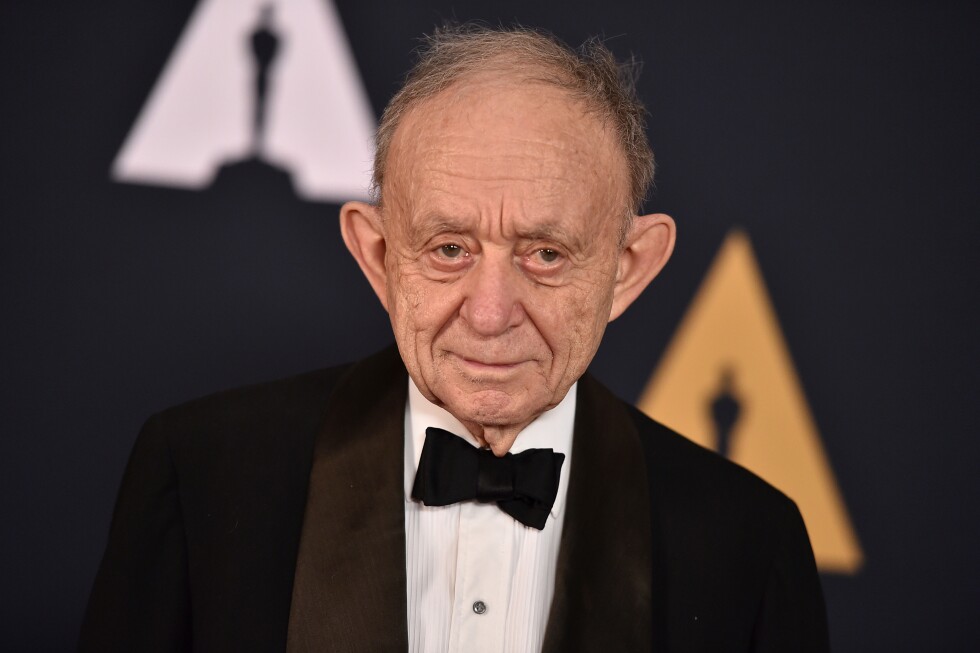
Frederick Wiseman, renowned for his incisive and unembellished documentaries about American institutions, has died at the age of 96. The news was confirmed by his family and Zipporah Films, his production company. The announcement noted the profound impact Wiseman had on audiences and filmmakers worldwide, stating, “He will be deeply missed by his family, friends, colleagues, and the countless filmmakers and audiences around the world whose lives and perspectives were shaped by his unique vision.”
Wiseman’s illustrious career included over 35 documentaries, earning him an honorary Academy Award in 2016. His films, ranging from explorations of suburban schools to horse racing tracks, were frequently showcased on public television and at film festivals. His work, acclaimed by critics and preserved by the Library of Congress, placed him among the most respected and influential filmmakers globally.
Entering the film industry in his mid-30s, Wiseman quickly rose to prominence, rivaling peers like D.A. Pennebaker and Robert Drew in defining modern documentaries. His groundbreaking approach, characterized by a minimalist crew and serving as his own sound engineer, resulted in films that often challenged societal expectations and led to significant discussions.
In a 2013 interview with Gawker, Wiseman remarked, “I don’t set out to be confrontational, but I think sometimes the content of the movie runs against people’s expectations and fantasies about the subject matter.” His documentaries, such as “High School” and “Titicut Follies,” were known for their unfiltered depiction of human behavior, often revealing deeper societal truths.
Exploring American Life Through Film
Wiseman’s vision was to document diverse facets of American life, creating films with straightforward titles like “Hospital,” “Public Housing,” and “Basic Training.” His works often focused on the human experiences within these institutional settings. Reflecting on his approach, Wiseman told The Associated Press in 2020, “The institution is also just an excuse to observe human behavior in somewhat defined conditions.”
One of his most controversial films, “Titicut Follies,” provided an unflinching look at the Bridgewater State Hospital for the criminally insane, capturing scenes so disturbing that Massachusetts state officials restricted its release due to privacy concerns. Conversely, “High School” offered a more relatable view of suburban life, depicting various everyday scenarios in a Philadelphia school.
Despite his films’ stark realism, Wiseman rejected the label of “cinema verite,” calling it a “pompous French term that has absolutely no meaning.” He was often mischaracterized by others, such as Errol Morris, who dubbed him “the undisputed king of misanthropic cinema.” Wiseman insisted his work aimed to capture both the positive and negative aspects of human spirit, saying, “I think it’s as important to document kindness, civility, and generosity of spirit as it is to show cruelty, banality, and indifference.”
Wiseman’s later works continued to explore varied themes, with films like “Crazy Horse” and “Monrovia, Indiana.” His versatility extended to theater, where he directed plays and adapted his film “Welfare” into an opera. In 2025, he even took on acting roles, appearing as a poet in “Jane Austen Wrecked My Life” and as a radio announcer in “Eephus.”
A Legacy of Observation and Insight
Born in Boston, Wiseman’s upbringing in a family involved in law and healthcare provided a unique perspective that informed his work. After studying at Williams College and Yale Law School, he pursued various roles, including working in the Massachusetts attorney general’s office and teaching at Boston Law School. His transition to filmmaking was driven by a desire to capture the truths and complexities of the world around him.
Wiseman’s first foray into film production was the adaptation of William Miller’s “The Cool World.” This experience gave him the confidence to embark on his directorial career, starting with “Titicut Follies,” a project that faced legal challenges due to its controversial content. Despite these hurdles, Wiseman remained committed to his craft, believing in the power of his films to convey significant social and historical insights.
Judge Andrew Meyer, in a ruling that eventually lifted the restrictions on “Titicut Follies,” acknowledged its importance, stating, “I also regarded ‘Titicut Follies’ as an outstanding film, artistically and thoughtfully edited with great social and historical value. Another observation about the film: It is true.”