RICHMOND, Va. (AP) — In a recent twist to the ongoing redistricting saga, Democrats faced a hurdle in Virginia while making progress in Maryland, even as challenges persist in implementing a new congressional map there.
In Virginia, a judge has declared a proposed constitutional amendment that would have allowed Democrats to redraw the state’s congressional districts as illegal. This decision hampers the party’s strategy to gain additional seats in the upcoming U.S. House elections. Meanwhile, Maryland saw a state House committee advance a new map that could potentially unseat the state’s sole Republican representative, following personal lobbying by Democratic Gov. Wes Moore.
These developments are part of a broader national conflict over mid-decade redistricting efforts initiated by President Donald Trump. Last summer, Trump encouraged Republican officials in Texas to redraw district maps favoring the GOP to maintain a slim House majority amid typical midterm advantages for the opposition party.
Virginia’s Legal Setback
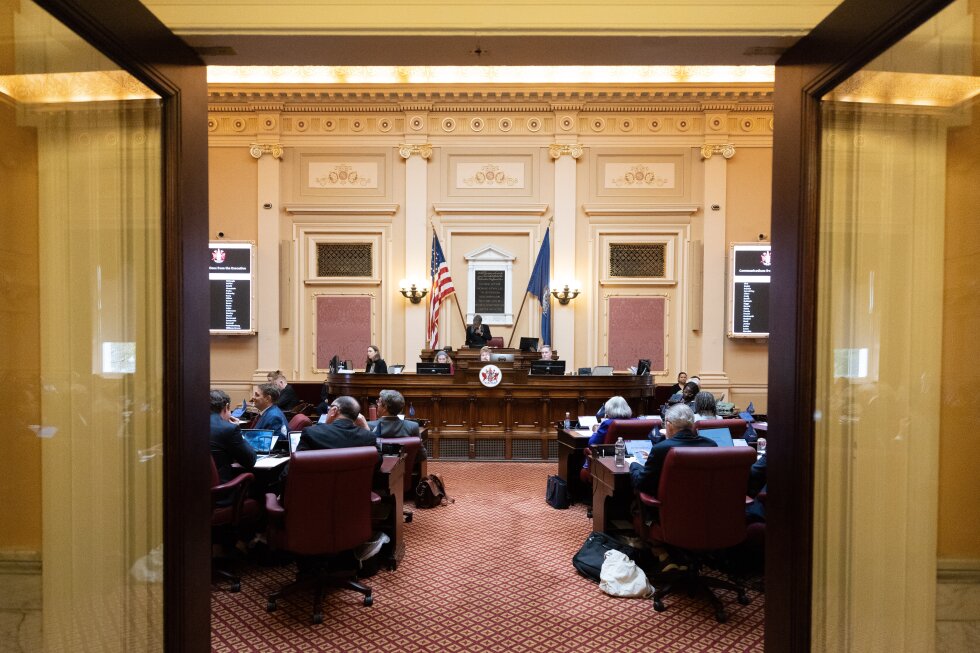
Tazewell Circuit Court Judge Jack Hurley Jr. invalidated the Virginia legislature’s actions, citing three violations including failure to adhere to procedural rules for introducing the redistricting amendment in a special session. The judge also noted that Democrats did not approve the amendment before last year’s general election and failed to publish it three months ahead of the election as legally required. Consequently, the amendment was deemed void.
In response, Virginia House Speaker Don Scott, named in the Republicans’ lawsuit, announced plans to appeal the ruling. “Nothing that happened today will dissuade us from continuing to move forward and put this matter directly to the voters,” Scott stated alongside other Democratic leaders.
Virginians for Fair Elections, an advocacy group for the redistricting resolution, criticized conservatives for filing the lawsuit in a Republican-friendly court, claiming, “Republicans court-shopped for a ruling because litigation and misinformation are the only tools they have left.”
The current congressional representation in Virginia includes six Democrats and five Republicans from court-imposed districts after a bipartisan commission failed to agree on a new map post-2020 census. Amending the state constitution is necessary to enable redistricting this year, requiring legislative approval in two sessions separated by an election, followed by a referendum.
Maryland’s Progress and Challenges
Governor Wes Moore, Maryland’s Democratic leader and the nation’s only Black governor, advocates for redistricting to counteract what he terms “political redlining” by Trump, which he argues undermines Black congressional representation. Moore likened Trump’s redistricting push to discriminatory housing practices, stating, “So no, I will not sit quiet.”
Despite Democrats’ 7-1 advantage in Maryland’s U.S. House delegation, Moore’s redistricting initiative faces opposition from a key Democratic figure, Senate President Bill Ferguson. Ferguson warns that new redistricting could backfire, potentially losing a Democratic seat, and cites a 2021 map rejected by a judge for extreme partisan gerrymandering.
Ferguson maintains that redrawing districts could instigate further legal challenges, leading to court-imposed maps. He asserted, “I understand that people have differences of opinion, but I don’t see that shifting here.” A Maryland House committee recently advanced the redistricting proposal after extensive public testimony.
Proponents and opponents of the map offered contrasting views. Julie Quick, residing in the contentious district, criticized the map for harming rural voting rights, while supporter Ben Vaughan emphasized an urgent need for change, describing democracy as “a house on fire.”
National Context
Nationally, the redistricting battle has resulted in nine additional seats Republicans believe they can secure in Texas, Missouri, North Carolina, and Ohio, and six potential Democratic gains in California and Utah. Democrats aim to offset this with potential gains in Virginia. However, ongoing litigation in several states leaves the final outcomes uncertain.
Republican Florida Gov. Ron DeSantis plans to convene a special session on redistricting in April.