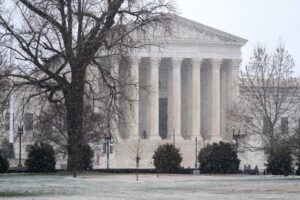
Courts Halt Legislative Challenges to Ballot Initiatives in Utah and Michigan
Recent judicial rulings in Utah and Michigan have put a stop to legislative efforts aimed at altering the ballot initiative procedure.
In Utah, a federal judge issued an injunction against a state law that imposed stricter requirements on the ballot initiative process. The law, which was passed in 2020, mandated that petition signatures be collected from a certain percentage of voters in each of the state’s 29 Senate districts. The court found that the law unfairly burdened the initiative process and violated the First Amendment rights of Utah residents.
Similarly, in Michigan, a state court struck down several provisions of a 2018 law that imposed new regulations on the initiative process. The law required that no more than 15% of petition signatures could come from any one of the state’s 14 congressional districts. The court ruled that the law was unconstitutional, arguing that it gave disproportionate influence to some voters over others.
These judicial decisions represent significant victories for advocates of direct democracy. Brian Brown, an attorney for the plaintiffs in the Utah case, noted, “This ruling ensures that the voices of all Utahns can be heard, regardless of where they live.”
Proponents of the blocked laws argued that the measures were necessary to prevent fraud and ensure a more equitable distribution of voter support across the states. However, critics contended that the laws were thinly veiled attempts to stifle grassroots political movements.
The battle over ballot initiatives is likely to continue as lawmakers and activists navigate the complex interplay between state regulations and constitutional rights. For now, the recent court rulings have reaffirmed the importance of preserving accessible pathways for citizen-led legislative efforts.