Court Approves Reinstallation of Interpretive Panels at Historic Philadelphia Site
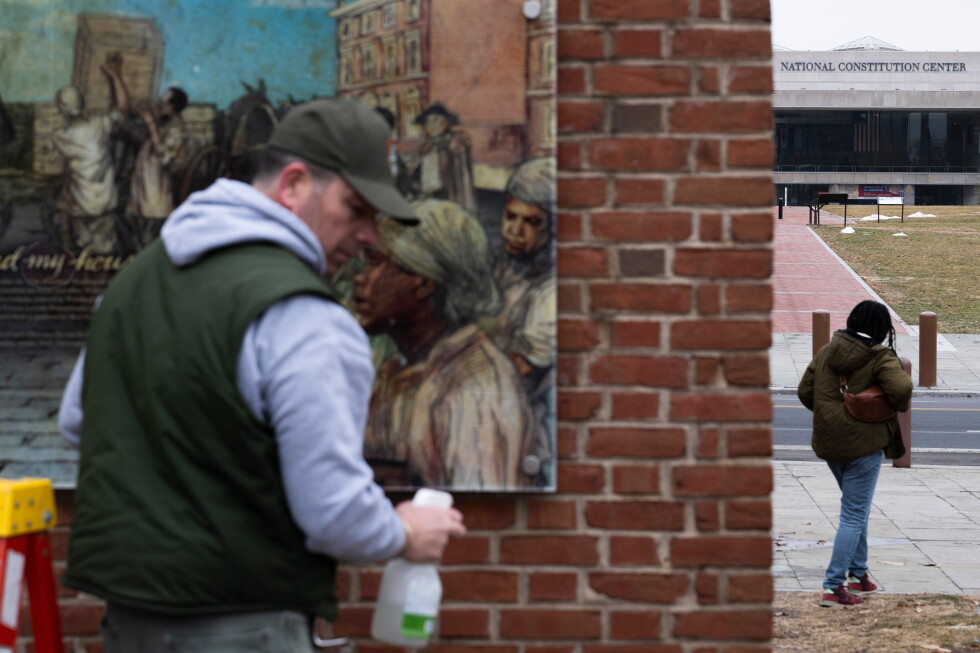
On Friday, an appeals court granted permission for the Trump administration to reinstall interpretive panels at President George Washington’s former residence in Philadelphia, a decision that has sparked significant debate. Critics argue that these panels might present a sanitized version of the history of slavery at the site, which is located near where the Declaration of Independence was signed on July 4, 1776.
The National Park Service has not yet commented on the ruling. The new educational panels are set to replace those installed in 2010, which detailed the lives of nine enslaved individuals who lived alongside George and Martha Washington during the 1790s, when Philadelphia served as the nation’s capital.
The controversy began after Trump’s 2025 executive order, which directed that federally owned or controlled historic sites should not display content that might “disparage Americans past or living” and should instead emphasize the “greatness of the achievements and progress of the American people.”
The U.S. 3rd Circuit Court of Appeals, located near the President’s House site, issued a technical ruling to enable the implementation of a previous decision made last month. The ruling, made by judges nominated by Presidents Trump, George W. Bush, and Barack Obama, overturned a lower court’s directive to remove the new panels.
The federal government has requested immediate reinstallation of the panels, claiming they are ready and should be placed “without further delay.” Court filings indicate that the new panels will still address the topic of slavery.
However, there is widespread concern among advocates and historians that the revised panels, adhering to Trump’s order, could present a less critical perspective on America’s historical challenges. A government website illustrates that the new panels include information on the lives of enslaved individuals, the abolitionist movement, the Constitution’s approach to slavery, the end of slavery in Pennsylvania, and perspectives on slavery from George Washington and his successor, John Adams. They also touch on the 20th-century Civil Rights movement. Notably, these panels omit certain elements from the previous version, such as a map of slave trade routes and a timeline of slavery, and avoid critical headings like “The Dirty Business of Slavery.”
Philadelphia has taken legal steps to halt the new installation, arguing that the site is of “exceptional importance” and the collaboration between federal and local entities over the years aimed to present a historically significant narrative. The city filed a motion on Friday to pause the appeals court’s decision, seeking time to respond to the Trump administration’s request.
Earlier this year, approximately half of the original panels were reinstalled before a court halted the process.
Sign up for Morning Wire: Our flagship newsletter breaks down the biggest headlines of the day.