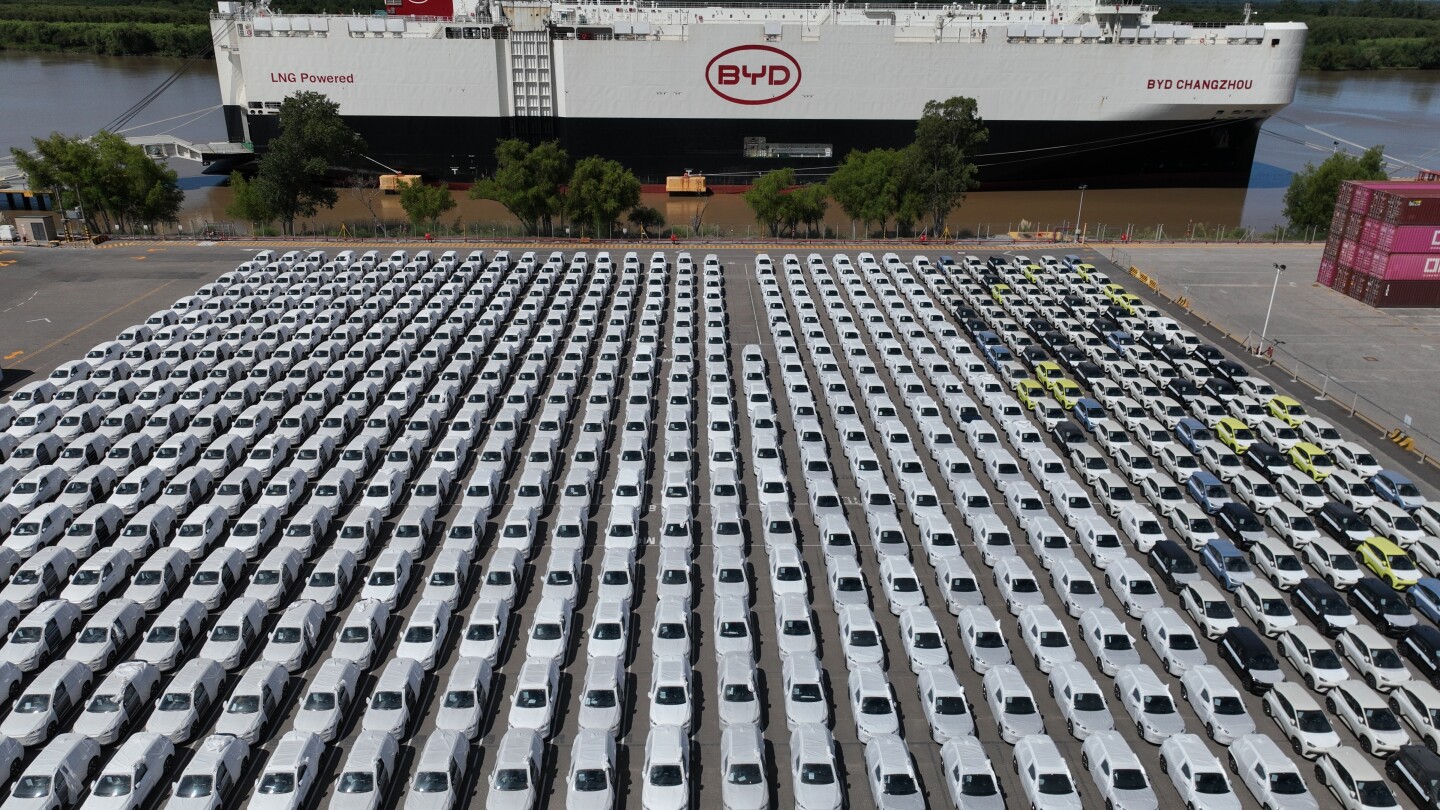
In Zárate, Argentina, a significant arrival of over 5,800 electric and hybrid vehicles marked a pivotal moment for the country’s economy this week. The BYD Changzhou, a Chinese vessel, delivered these vehicles at a river port, showcasing China’s increasing influence in the global electric vehicle market.
While the presence of Chinese electric vehicles is a common sight worldwide, their arrival in Argentina is notably significant. The Chinese automaker, BYD, has accelerated its exports, causing concerns among Western and Japanese automotive giants and local industries across various regions, including Southeast Asia, Africa, and Latin America.
In Argentina, a country with an economy historically protected by high tariffs and import restrictions, this event is unprecedented. Claudio Damiano from Argentina’s National University of San Martin commented, “For decades people in Argentina had this vision that everything here must be manufactured here,” highlighting the symbolic importance of BYD’s arrival.
The Economic Shift in Argentina
This development coincides with the European Union’s decision to delay ratification of a free trade agreement with the Mercosur group, which includes Argentina. This agreement aims to reduce trade barriers and enhance the consumption of European industrial imports, including German electric vehicles.
Damiano noted, “For the Europeans, there’s just no possibility of competing with the Chinese,” emphasizing the competitive advantage of Chinese manufacturers.
Argentina’s Economic Landscape
Argentina, under the influence of Kirchnerism, became one of the most closed economies in the region. The movement, led by former Presidents Cristina Fernández de Kirchner and Néstor Kirchner, resisted global trade and upheld high tariffs, which restricted consumer choices.
However, the economic scenario changed with the election of radical libertarian President Javier Milei in 2023. Known for his opposition to Kirchnerism and admiration for U.S. President Donald Trump, Milei has opened Argentina’s economy to imports, resulting in a 30% increase in imports last year, largely from Asian retailers like Temu and Shein.
Electrifying Changes in the Automotive Sector
Argentina has recently allowed 50,000 electric and hybrid vehicles to enter the country tariff-free, a move that Chinese automakers are capitalizing on. The arrival of the first shipment at Zárate Port after a 23-day journey marks the beginning of this new era.
Speaking at the World Economic Forum in Davos, Milei declared, “This is MAGA, ‘Make Argentina Great Again’,” referencing his deregulation measures aimed at boosting the economy.
China’s Growing Influence in Argentina
Despite ideological differences, Milei and Trump share similarities in their disdain for perceived “wokeness” and multilateral institutions. This has strengthened Milei’s position, with Trump supporting him with a $20 billion credit swap to aid in a crucial midterm election.
Nonetheless, China remains the main beneficiary of Milei’s free-market policies, with Chinese imports to Argentina increasing by over 57% last year. The Chinese investment has also surged in sectors like energy and mining.
Javier Lanari, a government spokesperson, stated, “Argentina has rejoined the world,” regarding the arrival of Chinese electric vehicles. He further commented on the outdated vehicles left by Kirchnerism as part of a “sad and dark past.”
The Race for Electric Vehicles
Chinese brands like BYD are poised to benefit from Argentina’s zero-tariff policy on electric vehicles priced under $16,000. Andrés Civetta, an economist, noted, “Chinese manufacturers have the technology and the ability to meet the price limits set by the government.”
While Western manufacturers express concerns over the competitive landscape, and opposition lawmakers critique the tariff exemption, Argentina’s infrastructure still lags behind. Pablo Naya of Sero Electric mentioned the country’s aging power grid and lack of service centers for Chinese vehicles as significant challenges.
“Honestly, we’re not worried,” Naya stated, though he acknowledged potential future complications as Argentina catches up to Chinese supply capabilities.