Arizona’s Proposition 314 Expands Police Powers, Echoing Past Controversies
In a decisive move, Arizona voters have passed Proposition 314, a measure that significantly expands police authority concerning individuals suspected of unlawful entry into the United States. This proposition is reminiscent of the controversial SB1070 law passed over a decade ago, which many residents recall as a period marked by fear and unease.
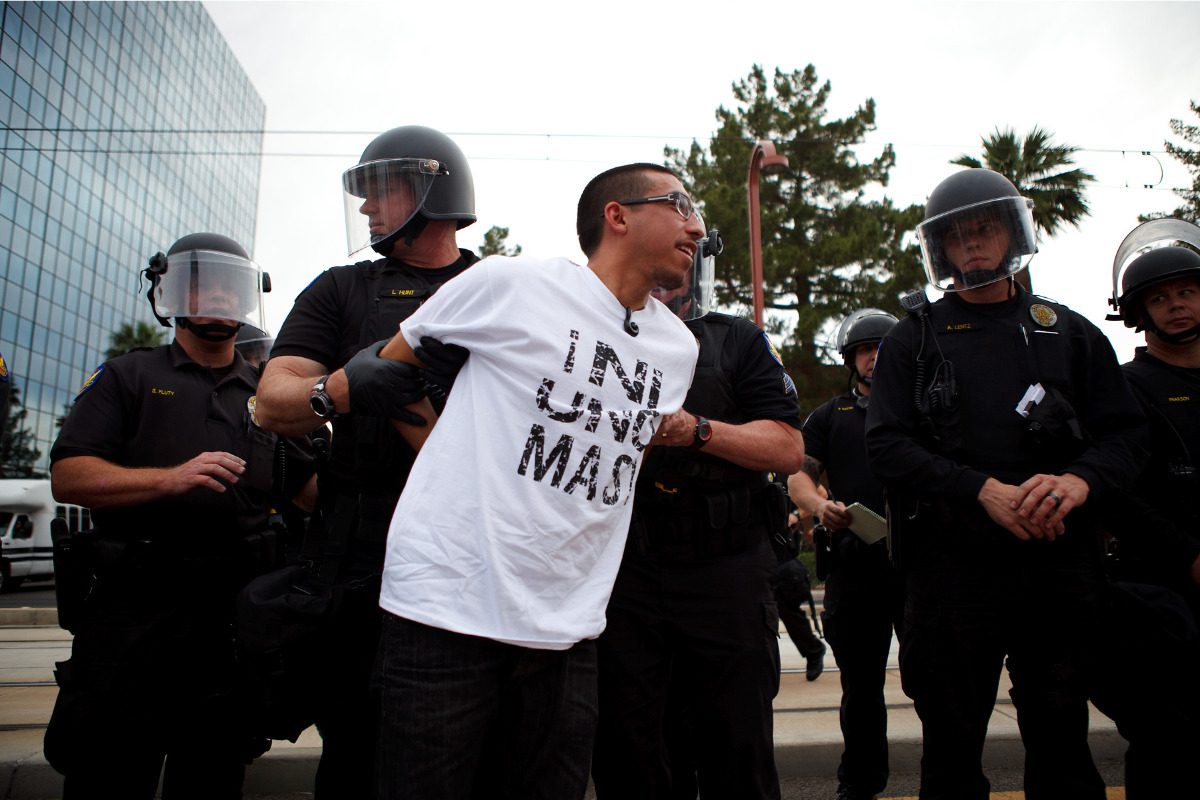
The newly approved law grants state judges the power to order deportations, imposes stricter regulations and penalties on businesses employing undocumented immigrants, and enforces severe punishments for those convicted of selling fentanyl leading to fatalities. These elements of Proposition 314 have drawn comparisons to SB1070, known colloquially as the “show me your papers” law. The latter, deemed unconstitutional in significant parts, enabled law enforcement to demand documentation from individuals suspected of being undocumented, resulting in extensive racial profiling.
Reyna Montoya, founder and CEO of Aliento, recalls the impact of this era on Arizona’s communities. Montoya’s organization, Aliento, focuses on supporting undocumented, DACA, and mixed-status families, offering mental health resources, career, and educational development. Reflecting on her own experiences as an undocumented child brought to the U.S., Montoya vividly remembers the actions of former Maricopa County Sheriff Joe Arpaio, who conducted mass roundups of undocumented immigrants during that time.
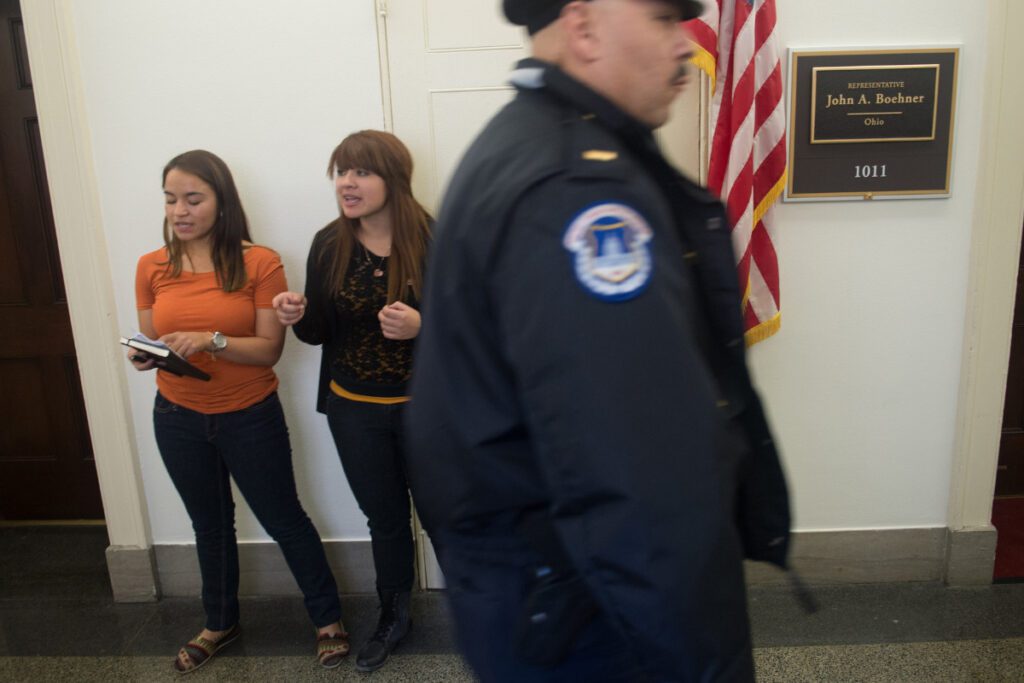
Monserrat Arredondo (left) and Reyna Montoya (center) lead protest songs in front of Speaker of the House John Boehner, R-OH, during a march by the Fair Immigration Reform Movement in Washington, D.C., Thursday, November 14, 2013. (J.M. Eddins Jr./Tribune News Service via Getty Images)
Now with protected status under the Deferred Action for Childhood Arrivals (DACA) program, Montoya is one of over 20,000 individuals in Arizona and more than 500,000 across the U.S. shielded from deportation under this initiative. However, before DACA’s establishment in 2012, Montoya and her family lived under constant threat of deportation, a reality exacerbated by SB1070.
“I was a college student, and my mom would not let me go to the movies with my friends, because she was afraid that we were going to get deported,” Montoya shared. She recounted purchasing a flip phone for her younger brother, ensuring he memorized family members’ phone numbers “just in case.”
Potential Consequences of Proposition 314
Montoya warns of the potential chilling effect Proposition 314 may have on immigrant communities, akin to the uncertainty wrought by SB1070. She illustrated a scenario where an undocumented mother, faced with a sick U.S.-born child, might avoid seeking medical help for fear of deportation, risking felony charges for providing false information.
Montoya expressed concerns about increased bullying among students affiliated with Aliento, citing instances of peers taunting, “are you ready to get deported?” In response, Montoya emphasized the importance of nurturing the human spirit and educating the community about their rights.
Contrasting perspectives arise as Arizona Sen. John Kavanaugh, a drafter of the bill leading to Proposition 314, stated the law would primarily impact border towns. However, the proposition’s language lacks geographical constraints, empowering statewide law enforcement, which Montoya fears could lead to racial profiling of both undocumented individuals and U.S. citizens.
Despite the challenges, Montoya calls for community solidarity. “To our undocumented community, especially our dreamers and our children of immigrants and their families, remember that you’re not alone,” she said. “Let’s focus on the people that showed up for us.”