
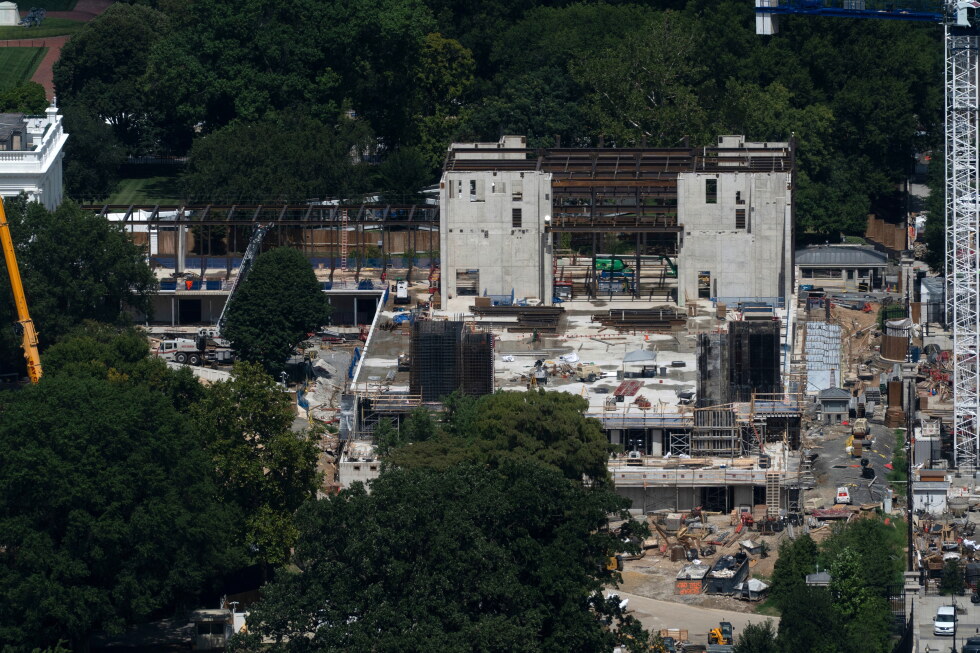
Supreme Court Sides with White House on Controversial Ballroom Project
In a closely contested decision, the U.S. Supreme Court has permitted the continuation of a $400 million ballroom construction project at the White House, despite ongoing legal challenges. The decision marks a significant victory for President Donald Trump, who has been advocating for the project as part of his broader initiative to reshape the capital.
President Trump expressed his satisfaction with the ruling on his Truth Social platform, stating, “I am pleased to report that the United States Supreme Court has just ruled in favor of the Ballroom/Military Complex being built without any further contingency, doubt, or threat.”
The ruling came with a 5-4 split, superseding a previous temporary order issued by Chief Justice John Roberts, who expressed his disagreement in a strong dissent. Roberts, along with the court’s liberal justices, argued that the project lacked necessary congressional approval, suggesting it might be unlawful.
“Today’s decision is no victory for the separation of powers,” Chief Justice Roberts asserted. Despite this, the majority opinion concluded that the National Trust for Historic Preservation probably lacked the legal standing to challenge the project.
The Supreme Court’s unsigned order did not address the project’s legality directly but returned the case to lower courts. However, court documents indicate that construction could progress rapidly, with key elements potentially completed within months.
The Trump administration had previously requested the Supreme Court’s intervention after lower federal courts ruled to halt the project due to the absence of congressional consent. The National Trust for Historic Preservation, which filed the lawsuit, argued that President Trump lacks the unilateral authority to proceed with the construction.
The administration has defended the project by asserting presidential authority over renovations to the White House and other federal buildings. They maintain that the new ballroom is essential for national security, as it would replace less secure tent structures with a fortified venue for large events, while also concealing an underground military installation.
U.S. District Judge Richard Leon had earlier ordered a halt to the aboveground construction in April, though work on underground facilities was allowed to continue. The appeals court was divided, with judges appointed by Democratic presidents affirming that the decision should rest with Congress, while a Trump-appointed judge questioned the legal standing of the preservationist group’s lawsuit.
Solicitor General D. John Sauer argued that the decision to halt the project was “extraordinary and unlawful,” emphasizing the importance of the project for national security. The administration has indicated that construction crews are working extensive hours to ensure the structure is complete by August 2028.
While the Supreme Court’s emergency docket has often favored the administration in recent months, several of President Trump’s policies have faced setbacks upon more thorough judicial review.
For comprehensive coverage of the U.S. Supreme Court, visit AP News Supreme Court Hub.


