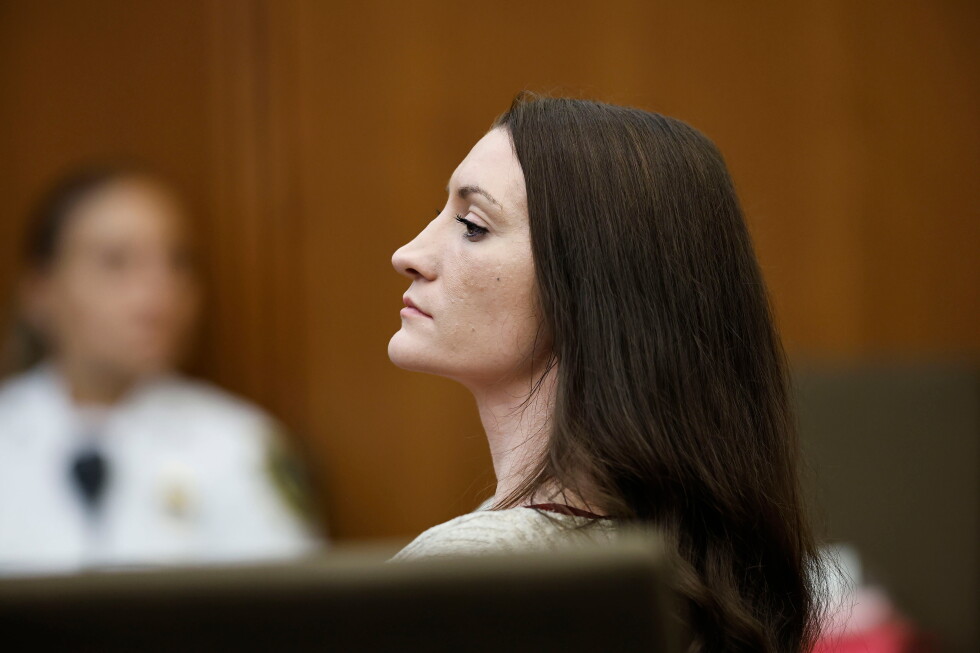
The jury is now deliberating in the murder trial of Lindsay Clancy, who is accused of killing her three children in 2023. The trial has drawn significant attention and sparked discussions about mental health and maternal well-being, both online and outside the courthouse. Closing arguments concluded Thursday, after which the jury began their deliberations around 12:30 p.m.
Background on Lindsay Clancy
Lindsay Clancy, a 36-year-old from Massachusetts, faces murder charges in connection with the deaths of her children: Cora, 5; Dawson, 3; and Callan, 8 months. Though she has not denied killing them, Clancy has entered a plea of not guilty, citing a lack of criminal responsibility. At the time of the incident, Clancy was on maternity leave from her role as a labor and delivery nurse, when the children were strangled on January 24, 2023. She has been detained since then.
Details of the Incident
The children were found strangled with exercise bands in their home in Duxbury, Massachusetts. Patrick Clancy, their father, discovered them in the basement after returning from errands he was asked to run by Lindsay Clancy. He also found her injured in the yard, having jumped from a second-story window, which left her paralyzed from the waist down and reliant on a wheelchair.
___
EDITOR’S NOTE: This story includes discussion of suicide. If you or someone you know needs help, the national suicide and crisis lifeline in the U.S. is available by calling or texting 988.
___
The Core of the Trial
The trial primarily focuses on Lindsay Clancy’s mental health and her understanding of her actions. Prosecutors argue that Clancy knew her actions were wrong, highlighting her engagement in routine activities on the day of the tragedy, such as taking her children to a medical appointment and playing outside with them. They also claim that she purposefully sent her husband away to facilitate the crime.
In contrast, Clancy’s attorney, Kevin Reddington, asserts that her mental illness was so severe that she cannot be held criminally responsible. The defense claims Clancy suffered from bipolar disorder and postpartum psychosis, which allegedly led her to believe she heard a voice instructing her to kill her children as part of a plan to end her own life.
Postpartum Psychosis Explained
Postpartum psychosis is a rare but serious condition characterized by symptoms such as disorganized thinking, delusions, and hallucinations. It affects approximately 1 to 2 out of every 1,000 women after childbirth, with a higher risk for those with pre-existing mental health conditions like bipolar disorder. This condition is distinct from postpartum depression, which is more common.
Clancy’s Efforts to Seek Help
Testimony revealed that Clancy’s mental health began to decline approximately three months after her youngest child, Callan, was born. Starting in September 2022, she sought assistance from various healthcare providers and programs, even checking herself into a psychiatric hospital for several days in early January 2023.
The defense claims her treatment was inadequate, with poorly managed medication. Clancy and her husband have filed lawsuits against multiple treatment providers, though these claims have yet to be resolved in civil court. Prosecutors counter that she had sufficient access to care but sometimes ignored professional advice and changed medications without consulting her doctors.
Testimonies and Evidence
Both sides presented expert testimony to back their arguments regarding Clancy’s mental state during the killings. A defense forensic psychiatrist testified that Clancy was “clearly psychotic,” believing erroneously that her children would be safer dying with her. Conversely, prosecution experts acknowledged her severe psychological issues but contended she was not psychotic, questioning her claims of hearing voices and asserting she knew her actions were wrong.
Potential Outcomes
If convicted, Clancy could face life imprisonment without parole. A not guilty verdict due to lack of criminal responsibility would lead to a court decision on whether she should remain in a mental health facility or be released. Should the jury be unable to reach a consensus, prosecutors would need to consider a retrial. A mistrial would necessitate further legal steps, depending on its cause.