Migrants Return to Morocco After Mass Crossing into Ceuta
In a swift reversal, a large number of migrants who recently crossed into Spain’s Ceuta territory have voluntarily returned to Morocco. This follows a chaotic influx that reignited discussions on immigration policy within Europe. Tragically, the journey claimed the lives of at least 57 individuals.
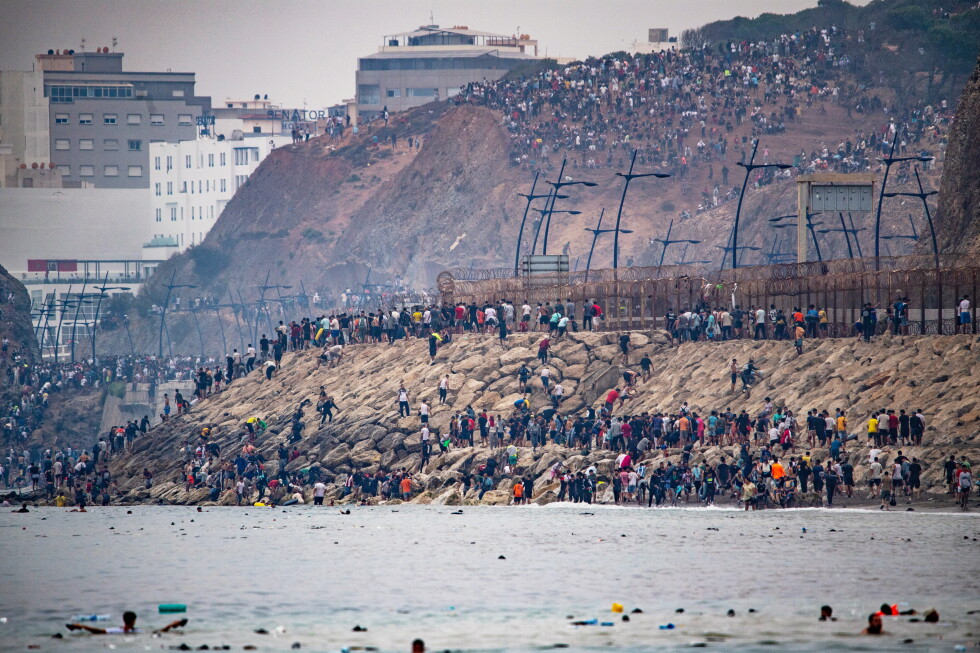
Reports indicate that approximately 60,000 migrants entered Ceuta, a number nearly equal to 70% of the territory’s population. However, the Spanish government confirmed that most had returned to Morocco by Friday evening. The overwhelming arrival sparked a humanitarian crisis in the region.
Some migrants undertook perilous journeys, swimming several miles and facing resistance from authorities using water cannons and tear gas. The fatalities included drownings and deaths from a stampede at a border checkpoint.
Spain’s Response to the Ceuta Crisis
The Spanish government deployed additional police and military forces to Ceuta, located at the entrance to the Mediterranean Sea, to restore order. Across the border in Morocco, security forces engaged with migrants attempting to cross, leading to clashes.
European nations like Italy and France have since pledged to enhance their border controls in response to the situation in Spain.
“The situation that Ceuta is going through is absolutely unsustainable,” stated Ceuta President Juan Jesús Vivas.
Simultaneously, migrants attempted to enter Melilla, Spain’s other North African territory, resulting in confrontations with local police.
Prime Minister’s Stance on the Border Breach
Upon visiting Ceuta, Spanish Prime Minister Pedro Sánchez condemned the mass crossing, labeling it as “a violation of Spain’s territorial integrity.” He attributed the crisis to human smugglers, who he accused of misleading migrants and endangering their lives.
The Spanish Interior Ministry reported that about 50,000 individuals had crossed from Morocco since Thursday, with 48,300 having returned by Friday night.
Rachid Sbihi, a local Civil Guard officers’ representative, described the scenario as “a serious humanitarian crisis,” noting that many migrants, including unaccompanied children, were left without shelter.
International Reactions and European Commission’s Statement
European Commission President Ursula von der Leyen called the images from Ceuta “unacceptable,” emphasizing the need for adherence to EU rules and the dismantling of smuggling networks.
She stated, “We cannot allow anyone to come to our Union without abiding by our rules. Dangerous crossings must stop immediately.”
Meanwhile, the Moroccan Interior Ministry did not comment on the statistics released by Spain. However, Morocco’s ambassador to Spain, Karima Benyaich, expressed that the situation was not in line with Morocco’s policies, which favor legal and safe migration.
Humanitarian and Legal Context
The crisis also highlighted legal nuances, as authorities linked the border surge to a Spanish Supreme Court decision that migrants arriving by sea could not be immediately deported like those crossing by land.
Prime Minister Sánchez assured that this ruling was misinterpreted by smugglers, who spread misinformation rapidly, exacerbating the situation.
In response, Italy temporarily reinstated border controls with Spain, and France announced plans to enhance border checks.
Spain’s Immigration Policy Debate
Prime Minister Sánchez has previously faced criticism for his pro-migration stance, which included granting residency permits to many undocumented migrants already in Spain, arguing it benefits the economy and addresses demographic concerns.
Critics, however, argue that such policies attract more migrants, with Spanish conservative politician Isabel Díaz Ayuso stating, “Sánchez allows Spain to be invaded through Ceuta.”
The U.S. Department of State expressed support for Spain, condemning the situation as a violation of sovereignty and human rights.
As the situation evolves, Spanish authorities continue to manage the crisis while addressing international and domestic ramifications.