Venezuela’s Interim Leadership Exceeds Constitutional Limit Amidst Political Uncertainty
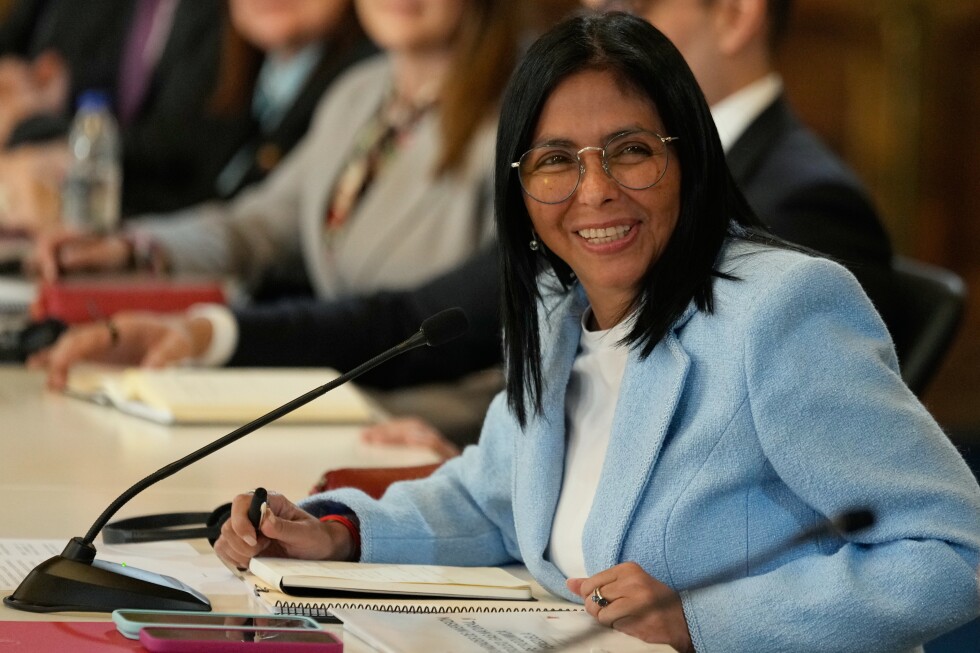
CARACAS, Venezuela — Delcy Rodríguez continues to serve as the acting president of Venezuela, surpassing the constitutional 90-day limit on her temporary leadership role. This extension follows the capture of Nicolás Maduro by U.S. authorities, which occurred in January.
Despite the deadline passing last Friday, the national assembly has yet to hold a public vote to extend Rodríguez’s mandate. According to judicial rulings, Maduro remains the official president, with his absence being attributed to a “kidnapping,” thus preventing him from executing his responsibilities.
Venezuelan law stipulates that in the event of a temporary presidential vacancy, the vice president should assume the role for up to 90 days, with possible extensions granted by the national assembly. Rodríguez, previously the vice president, has occupied the interim position since Maduro’s detention.
The National Assembly, dominated by Rodríguez’s political faction, holds the power to initiate a snap election should they declare the presidency permanently vacant. Meanwhile, the government’s press office has remained silent on the issue, despite requests for comments.
Ronal Rodríguez, a scholar at the Venezuela Observatory of Colombia’s Universidad del Rosario, commented on the government’s historical approach to legal interpretations to maintain power. He suggested that the current situation might see a similar strategy employed, possibly justified by unique explanations such as holiday observances or counting discrepancies, all likely sanctioned by the Supreme Tribunal of Justice.
Maduro and his spouse, Cilia Flores, were seized in Caracas on January 3, and are now in New York facing charges related to drug trafficking. Both have pleaded not guilty. Rodríguez and other leaders from the ruling party have labeled their detention as a kidnapping, a sentiment reflected in numerous public displays across Caracas.
The Trump administration’s decision to engage with Rodríguez instead of the political opposition surprised many Venezuelans. Since then, Rodríguez has collaborated with the U.S. on a phased strategy to address Venezuela’s ongoing crisis. This has involved courting international investors, opening the energy sector to private investment, and replacing key officials loyal to Maduro.
Recently, the U.S. Treasury Department lifted sanctions imposed on Rodríguez, and the U.S. State Department acknowledged her as the “sole Head of State” of Venezuela. This follows the U.S.’s 2019 decision to cease recognizing Maduro as Venezuela’s leader, after a controversial election in which opposition parties were excluded.
For further updates on Latin America and the Caribbean, visit AP News Latin America.