Former South Korean President Yoon Suk Yeol Appeals Life Sentence
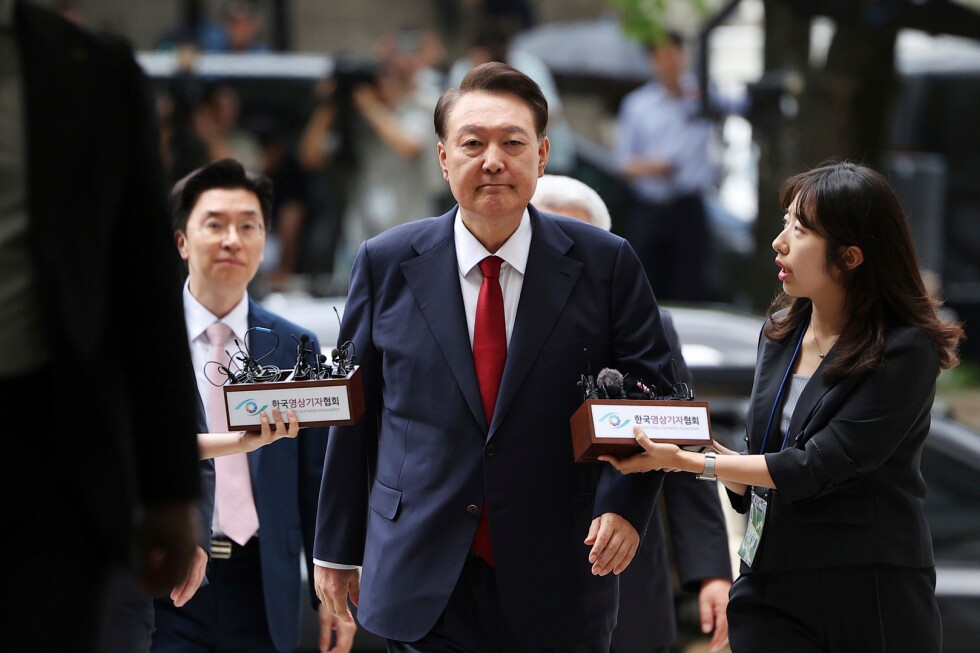
In a significant legal move, Yoon Suk Yeol, the former president of South Korea, has decided to challenge his life sentence for rebellion. The sentence was handed down following his brief imposition of martial law in December 2024, as confirmed by his legal team on Tuesday.
Yoon, who is embroiled in several legal battles related to his power grab, has remained defiant after his recent conviction by the Seoul Central District Court. He criticized the ruling as “illogical” and defended his actions as being “solely for the sake of the nation and our people,” while accusing the presiding judge of bias.
Yoon’s legal representatives have expressed their intention to highlight what they consider as “errors in fact-finding and misinterpretations of the law” from last Thursday’s decision. The case is now set to be reviewed by a specialized panel at a Seoul High Court, a body created under recent legislation to address cases involving serious charges like rebellion and treason.
“We will never be silent about what we view as an excessive indictment by a special prosecutor, the contradictory judgment rendered by the lower court based on that premise, and its political circumstances,” stated Yoon’s legal team.
On December 3, 2024, Yoon declared martial law, which lasted only about six hours. The decree was overturned when lawmakers, overcoming a blockade by armed forces at the National Assembly, voted to lift the measure.
Following these events, Yoon was suspended from his presidential duties on December 14, 2024, through an impeachment by the liberal-controlled legislature and was officially removed in April 2025 by the Constitutional Court. Arrested again in July, Yoon now faces a series of eight trials, with the rebellion charge bearing the most severe penalties.
Yoon’s brief martial law declaration led to one of South Korea’s most intense political crises in recent decades, affecting both domestic politics and international diplomacy, and causing economic instability. The situation stabilized after Lee Jae Myung secured an early presidency last June.
Yoon has maintained that the martial law was a necessary legal measure against what he described as “anti-state” liberal forces hampering governmental operations by impeaching officials, cutting budgets, and obstructing his policies.
Nevertheless, the Seoul Central District Court concluded that Yoon’s actions constituted organized rebellion, as he deployed military and police forces unlawfully in an attempt to seize control of the legislature, apprehend political adversaries, and enforce rule without checks for an extended period.
The special prosecutor, who had initially investigated Yoon’s charges, argued for the death penalty, citing the significant threat his actions posed to democratic governance. Following the court’s decision, Jang Woo-sung, part of the special prosecutor’s team, hinted at a possible appeal, citing “reservations” about certain aspects of the court’s findings and the imposed sentence severity.
While South Korea has not executed a death-row inmate since 1997, due to a de facto moratorium and growing public opposition to capital punishment, Yoon’s case remains noteworthy. He is the first former president since Chun Doo-hwan, who received a life sentence for his role in a 1979 coup and the 1980 crackdown on pro-democracy demonstrators, which resulted in numerous casualties.