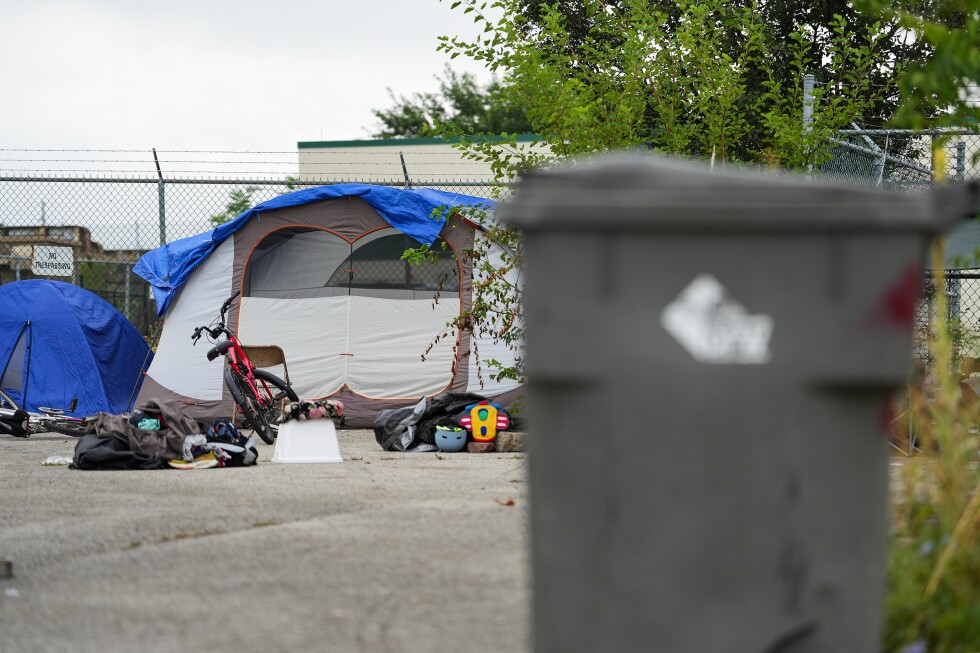
Facing the chill of a Monday morning, Jason Sargent, 42, sat outside a coffee shop, trying to keep warm with his hood up and hand warmers in his gloves. Unbeknownst to him, discussions were taking place just two blocks away at the Indiana Statehouse regarding his future on the sidewalk as Republican lawmakers consider legislation to prohibit sleeping and camping on public property.
“It would be horrible,” Sargent, who has been homeless for a year, commented on the potential ban.
Proponents of the proposed “camping ban” argue that it addresses what they perceive as a growing issue of homelessness. Sen. Cyndi Carrasco, R-Indianapolis, who authored the bill, stated in a January committee meeting, “It is not compassionate to allow our neighbors to die on the streets.”
However, critics view the legislation as an effort initiated by an external think tank to criminalize homelessness, barely a year after nearly 90 individuals were housed through a local Indianapolis initiative.
“Please don’t inhibit our progress,” said Sen. Greg Taylor, D-Indianapolis, after his proposal to safeguard the ongoing program was rejected.
The program in question, Streets to Home Indy, aims to transition approximately 300 homeless individuals into housing by summer, offering services like rental assistance and mental health support. Carrasco supports the initiative and suggests that the ban could complement it. Despite repeated attempts, Carrasco did not respond to requests for an interview.
There are concerns about the timing, as it currently takes an average of 26 days to secure housing for someone through Streets to Home, whereas the ban would provide a mere 48-hour notice for relocation.
Implementation of the Ban
As detailed in Senate Bill 285, individuals like Sargent would face a Class C misdemeanor, resulting in potential jail time of up to 60 days and a $500 fine following an initial warning. Similar laws have been enacted elsewhere, such as in Kentucky, where over 400 charges were filed within a year of their statewide ban, and Denver, which has enforced a ban since 2022.
In Indiana, the legislation would require a 300-foot relocation, with police officers providing resource information. Despite the intention to prevent encampment formation, the Coalition for Homelessness Intervention and Prevention, which leads Streets to Home, opposes the bill. CEO Chelsea Haring-Cozzi acknowledged Carrasco’s willingness to address concerns about the program’s impact, leading to an amendment permitting cities to offer housing options in lieu of arrest.
Stephen Luce of the Indiana Sheriffs’ Association has expressed concerns about potential jail overcrowding, a current issue in Indianapolis due to detentions for U.S. Immigration and Customs Enforcement. Luce stated, “I don’t want to see the jail be the final resting place for these people.”
Adding a misdemeanor to someone’s record can deter landlords from renting to them, which Taylor Hughes from Indy Chamber highlighted during a committee meeting. Despite these concerns, the chamber supports the bill, citing homelessness as a primary concern among its members.
Rachael Sample from the Indianapolis Foundation argued that fines and jail threats undermine progress, emphasizing that “anything that takes focus away from housing people makes all of this work more challenging.”
The Cicero Institute’s Role
The Texas-based Cicero Institute advocates for the camping ban, offering a model bill on its website. This has raised concerns about applying a “one-size-fits-all” approach to Indiana, as noted by Haring-Cozzi.
Despite these concerns, Cicero Institute’s Paul Webster insists the bill is a “compassionate measure for people living in public spaces in Indiana.” He acknowledged the criticism but maintains that his goal is to provide solutions.
Next Steps
Senate Bill 285 passed the Senate in January, largely along party lines. It now awaits a hearing in the House Courts and Criminal Code Committee, though a date has not yet been set.