Costa Rica’s Election: A Decision Between Continuity and Change
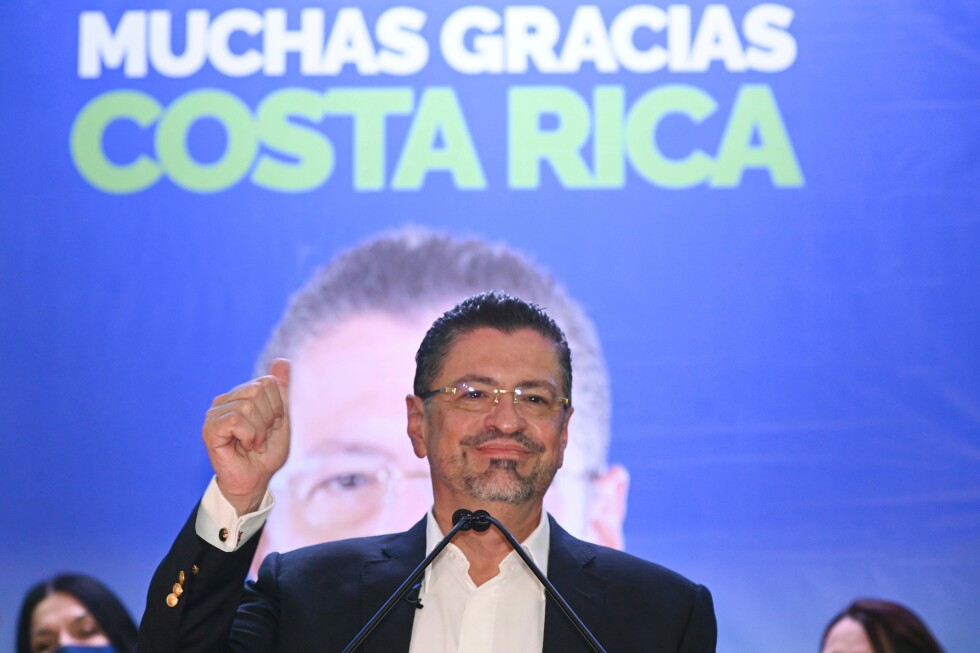
In the midst of political anticipation, Costa Ricans are heading to the polls to decide between sustaining the policies of the current administration or opting for new leadership. The choice hinges on whether to elect the successor favored by outgoing conservative populist President Rodrigo Chaves or to support parties that aim to redefine their establishment image.
As the nation grapples with a notable rise in crime rates, the electoral outcome may heavily depend on public perception of Chaves’ tenure, which some criticize for failing to curb violence. However, others view his confrontational approach as potentially effective in addressing the issue.
Laura Fernández, representing the Sovereign People’s Party, emerges as a prominent figure in this election. Having served as Chaves’ minister of national planning and economic policy and later as his minister of the presidency, Fernández pledges to continue Chaves’ political strategy. Her standing in the polls suggests a strong lead, but the election will reveal if she can secure an outright victory with a minimum of 40% of the vote or if a runoff on April 5 will be necessary.
While voters also prepare to select members for the 57-seat National Assembly, the expectation is that Chaves’ party will gain seats, though achieving a supermajority remains uncertain. A supermajority would empower the party to make significant decisions, such as appointing Supreme Court magistrates.
Of the 20 presidential candidates, Fernández is the only one consistently polling in double digits. Trailing her are several candidates, including economist Álvaro Ramos of the National Liberation Party and former first lady Claudia Dobles from the Citizen Agenda Coalition. They could potentially advance to the second round if Fernández does not secure a decisive win.
With approximately 3.7 million Costa Ricans eligible to vote, the electoral process commenced at 6 a.m. Sunday and will continue until 6 p.m. Ronald Loaiza, an electrical engineer, was among the early voters in Cartago, braving the rain and cold to cast his vote before accompanying his father to another polling station later. “I hope that it’s a democratic celebration, that the people come out to vote,” he expressed. “It’s very important that we exercise the right that this country gives us, that we’re conscious of our democracy.”
Four years prior, Chaves’ outsider campaign succeeded against traditional parties, painting them as corrupt and self-serving in a context of high unemployment and a burgeoning budget deficit. Constantino Urcuyo, a political-science professor at Costa Rica University, points out that this upheaval is not isolated, drawing parallels with similar populist shifts in countries like Argentina, Ecuador, and the United States.
Urcuyo notes the pivotal nature of the election, framing it as a choice between radical systemic change and reform. “The election is crucial,” Urcuyo stated. “It is between people who want a radical change of the system and those who want to reform the system.”