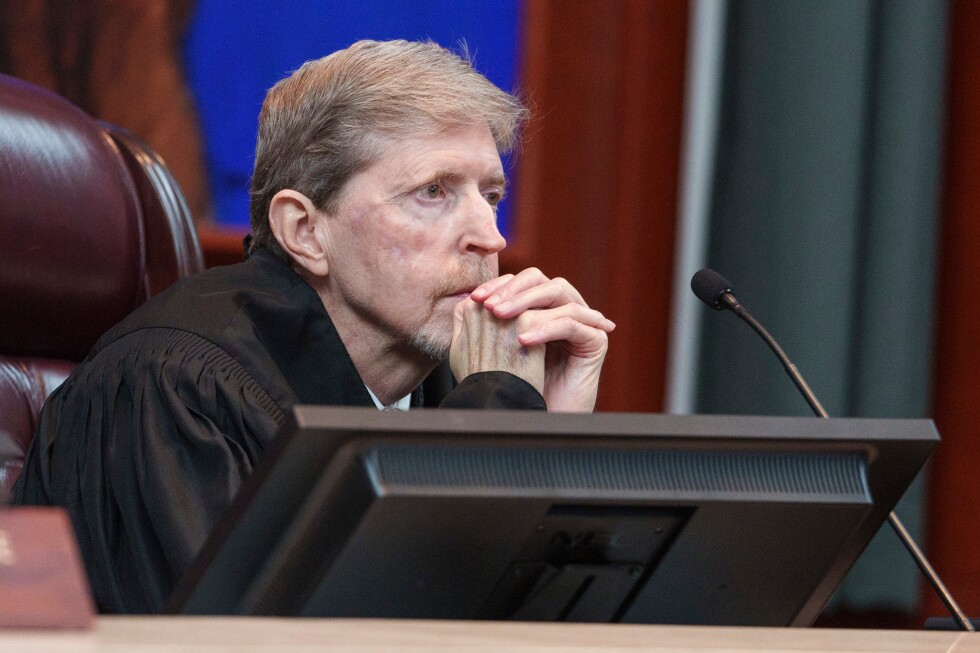
Utah Supreme Court Expansion Sparks Controversy
In a significant political move, Utah Governor Spencer Cox has signed into law a bill that increases the number of justices on the state Supreme Court from five to seven. This decision comes amid growing dissatisfaction among Republican lawmakers regarding recent court rulings.
Proponents of the expansion argue it will enhance the court’s efficiency. However, legal experts caution that the increase could have adverse effects and potentially set a troubling precedent during a period of heightened intergovernmental tension. Importantly, the judiciary had not requested any additional justices.
The timing of the bill, which was unanimously opposed by Democrats, has raised suspicions. The legislature is currently appealing a decision that potentially favors Democrats in seizing one of Utah’s four Republican-controlled congressional seats in the upcoming elections. With the new justices potentially in place, the court’s ruling on this issue could be influenced.
The bill was passed with more than two-thirds approval from the legislature, allowing it to take effect immediately after Governor Cox’s signature, thereby circumventing the usual waiting period for adding new justices.
In Utah, the governor appoints justices, who are then confirmed by the state Senate, unlike many states where justices are elected. Governor Cox, a Republican, asserts that the court expansion aligns Utah with other comparably sized states and denies any political motivations, highlighting that Republican officials have made recent appointments.
Upon filling the new positions, Cox will have appointed five of the seven justices on the bench. Recently, Republican legislators transferred the authority to appoint the chief justice from the state Supreme Court justices to the governor.
House Majority Leader Casey Snider, a Republican and sponsor of the bill, stated, “Seven sets of eyes reviewing the most complex and difficult issues our state has ever faced is better than having only five sets of eyes.”
Contrarily, John Pearce, a recently retired associate chief justice, expressed skepticism about the efficiency improvements, remarking, “The more sets of comments you have to take into account, the longer the process takes.”
Arizona and Georgia have previously expanded their courts with similar efficiency arguments. Arizona’s court saw reduced efficiency initially, though it now issues slightly more rulings annually, while Georgia’s output has decreased slightly.
Utah Chief Justice Matthew Durrant previously informed legislators that the Supreme Court experienced “essentially no backlog” and advocated for adding judges to lower courts where the need was more pressing. In response, bill sponsors added lower court judges and clerks.
The Utah State Bar has expressed concerns about the expansion and other proposals potentially undermining judicial independence, including the creation of a new trial court to handle constitutional challenges, where judges would be appointed by the governor and confirmed by the Senate.