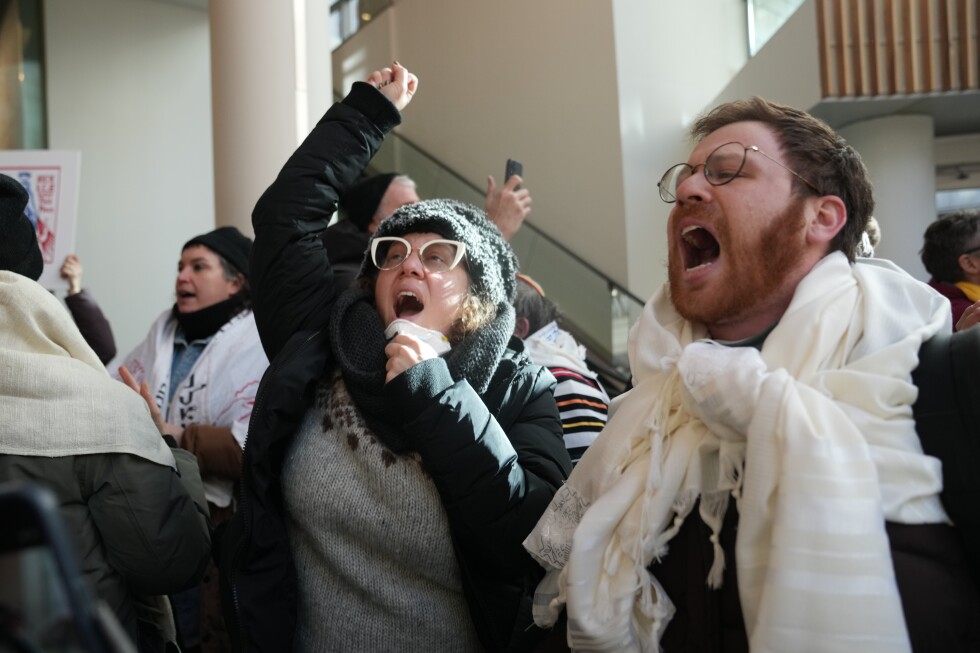
Political demonstrations within religious spaces are uncommon in American history, highlighting the unique nature of a recent protest in St. Paul, Minnesota. The event unfolded at Cities Church, a Southern Baptist congregation, where protestors interrupted a service to oppose U.S. Immigration and Customs Enforcement (ICE). Arrests were made, resulting in federal charges for three individuals.
Charles C. Haynes, a senior fellow at the Freedom Forum, emphasized that such disruptions of worship services are unlawful, an aspect that aligns with the protestors’ intent to draw attention through civil disobedience. Historically, movements like those led by Martin Luther King Jr. have utilized such tactics to spotlight critical issues.
Civil rights attorney Nekima Levy Armstrong, prior to her arrest, framed the protest in a religious context, declaring on Facebook, “It’s time for judgment to begin and it will begin in the House of God!!!”
Haynes stated, “Absolutely, in my view, civil rights law should be invoked when people interfere with the religious freedom of others in their house of worship.” Nonetheless, protestors often deem their causes too urgent to avoid drastic measures.
Protests typically occur outside religious sites, such as recent anti-Israel demonstrations at New York synagogues. Legal experts like Vikram Amar and Alan Brownstein have discussed the complexities of managing protest-free zones around sensitive locations in their analysis for Verdict.
Historical Precedents of Worship Disruptions
Disruptions during worship have historical roots. Radical Quakers in colonial times and Black worshippers in the 18th century have similarly challenged established religious practices. The famous 1989 “Stop the Church” protest by ACT UP in New York disrupted a Mass at St. Patrick’s Cathedral to criticize the government and the Catholic Church’s handling of the AIDS crisis.
In Pittsburgh, 1984 saw church services disrupted to protest the impact of the steel industry collapse. Although the reactions were mixed, the actions highlighted the protestors’ desperation. Contrastingly, the Westboro Baptist Church’s protests, while controversial, adhered to legal boundaries by staying outside worship spaces.
Recent protests against Israel’s actions in Gaza have led to proposed legislation in New York, aiming to keep demonstrations 25 feet from houses of worship. Such buffer zones are part of broader efforts to balance free speech and religious freedom.
Reactions to the Cities Church Protest
The disturbance at Cities Church, where Pastor David Easterwood is employed by ICE, has not garnered widespread support among religious groups, despite their opposition to ICE activities. Kevin Ezell, of the Southern Baptists’ North American Mission Board, condemned the disruption, stating, “No cause — political or otherwise — justifies the desecration of a sacred space.”
Clergy like Brian Kaylor have expressed mixed feelings, recognizing the complexities of such protests. Episcopal Bishop Mariann Budde, despite her past criticisms of immigration policies, also stressed the importance of safe worship environments, emphasizing, “We must protect the sanctity of every sacred space and the safety of all who gather in prayer.”
Amidst increasing security concerns, many religious institutions have enhanced their safety protocols. The federal stance allowing immigration arrests in sensitive locations like churches has further heightened tensions, although no raids have been reported during services yet.
Potential Legal Repercussions
The legal consequences for the St. Paul protestors could be significant. They face charges under a post-Civil War law intended to combat groups like the Ku Klux Klan. The law, applicable to various constitutional violations, carries penalties of up to 10 years in prison, with harsher sentences possible if injuries or property damage occur.