Iran Proposes Talks Amidst Unrest
The United States President Donald Trump announced that Iran has suggested negotiations following his threat of military action against the Islamic Republic due to its severe measures against protesters. Currently, activists report that the death toll in these demonstrations has reached a minimum of 544 individuals.
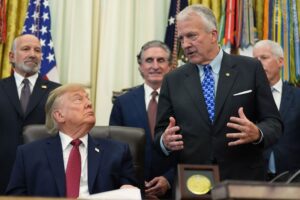
President Trump, along with his national security advisors, is evaluating several potential actions against Iran, which include cyberattacks and direct military strikes possibly involving the U.S. or Israel. This information comes from two anonymous individuals familiar with the White House’s internal discussions.
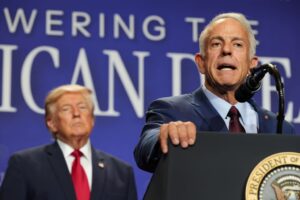
“The military is looking at it, and we’re looking at some very strong options,” Trump stated to reporters aboard Air Force One. When questioned about Iran’s potential retaliation, he remarked, “If they do that, we will hit them at levels that they’ve never been hit before.”
The President also mentioned that the U.S. is in discussions to arrange a meeting with Tehran, although he warned of the possibility of acting first as the number of casualties in Iran rises and the government continues arresting demonstrators.
Trump commented, “I think they’re tired of being beat up by the United States. Iran wants to negotiate.” He added, “The meeting is being set up, but we may have to act because of what’s happening before the meeting. But a meeting is being set up. Iran called, they want to negotiate.”
There has been no immediate response from Iran regarding the proposed meeting. The significant U.S. military presence in the Caribbean is a consideration for the Pentagon and national security strategists. Iran has warned that American military and Israeli targets would be “legitimate” if the U.S. uses force to protect demonstrators. Trump, however, insisted that Iran has reached out for negotiations.
The U.S.-based Human Rights Activists News Agency, which has reliably reported on previous unrest in Iran, stated that over 10,600 individuals have been detained over two weeks of protests. According to this agency, 496 of the deceased were protesters, while 48 belonged to security forces.
With internet services disrupted and phone lines down in Iran, assessing the scale of protests from outside the country has become challenging. The Associated Press has been unable to independently verify the casualty figures, and Iran’s government has not released an official casualty report.
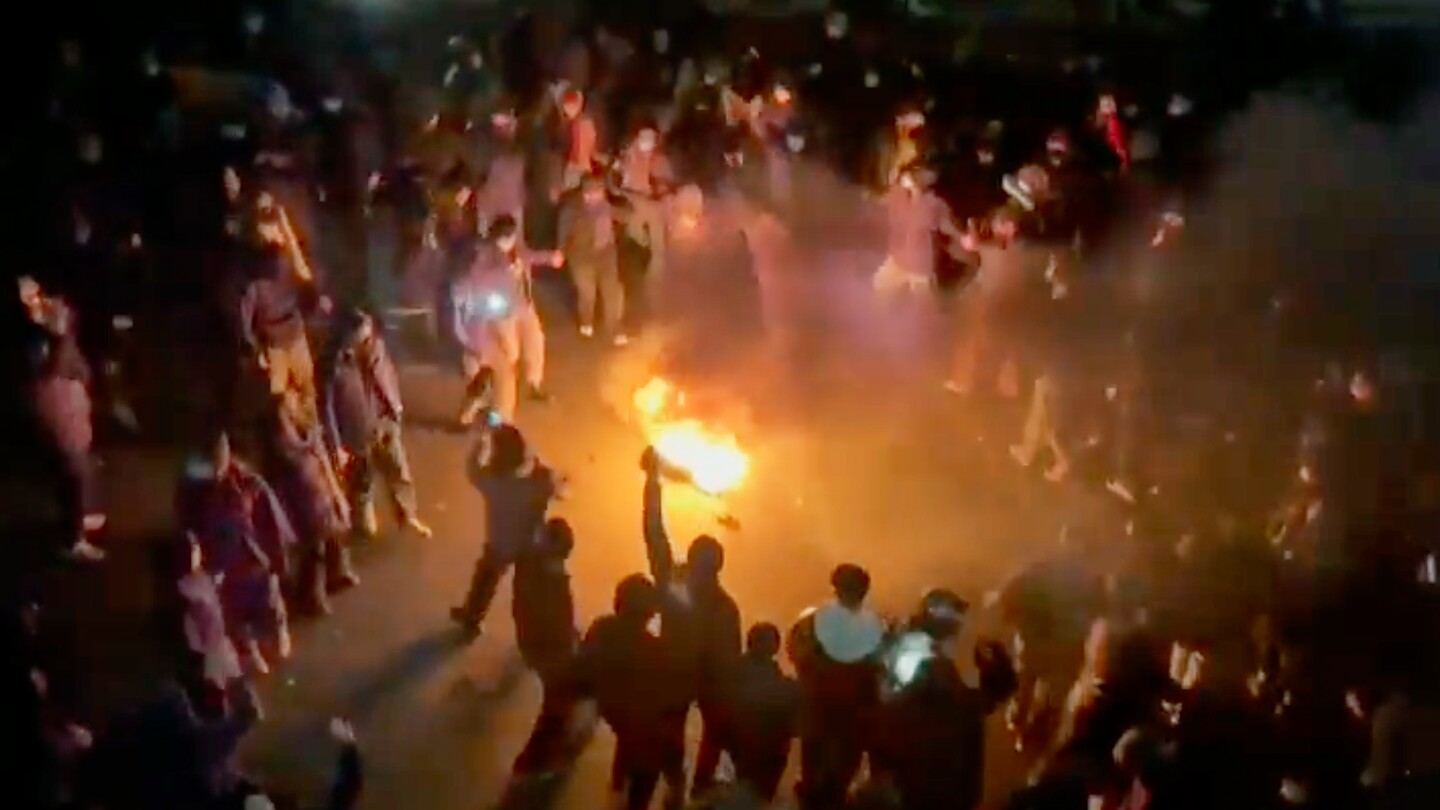
Amidst these developments, Tehran and Mashhad, Iran’s second-largest city, have seen a surge in protests. Videos shared online, potentially via Starlink satellite equipment, show gatherings with demonstrators waving mobile phones and fireworks lighting the sky. In Mashhad, footage reportedly shows protesters facing off with security forces.
Global Reactions and Statements
In response to these events, Iranian parliamentary speaker Mohammad Baagher Qalibaf issued a warning during a speech, stating that both the U.S. military and Israel would be targeted if Iran is attacked. Qalibaf declared, “In the event of an attack on Iran, both the occupied territory and all American military centers, bases and ships in the region will be our legitimate targets.”
Qalibaf’s address met with a strong reaction in parliament, with lawmakers chanting “Death to America!” However, the seriousness of Iran’s potential military response remains uncertain, especially after its air defenses were compromised during a recent conflict with Israel.
Internationally, Israeli Prime Minister Benjamin Netanyahu has expressed admiration for the “tremendous heroism of the citizens of Iran.” Meanwhile, Pope Leo XIV has called for dialogue and peace, expressing hope for a resolution to the ongoing tensions.
United Nations Secretary-General Antonio Guterres expressed shock at the reports of violence, urging Iranian authorities to exercise restraint and restore communications. Demonstrations in support of Iranian protesters have also taken place in several international capitals.
The Iranian protests initially erupted on December 28 due to the collapse of the national currency, the rial, which now trades at over 1.4 million to $1. The economic strain, exacerbated by international sanctions over Iran’s nuclear program, has fueled these protests, which have evolved into broader challenges against the country’s theocratic regime.