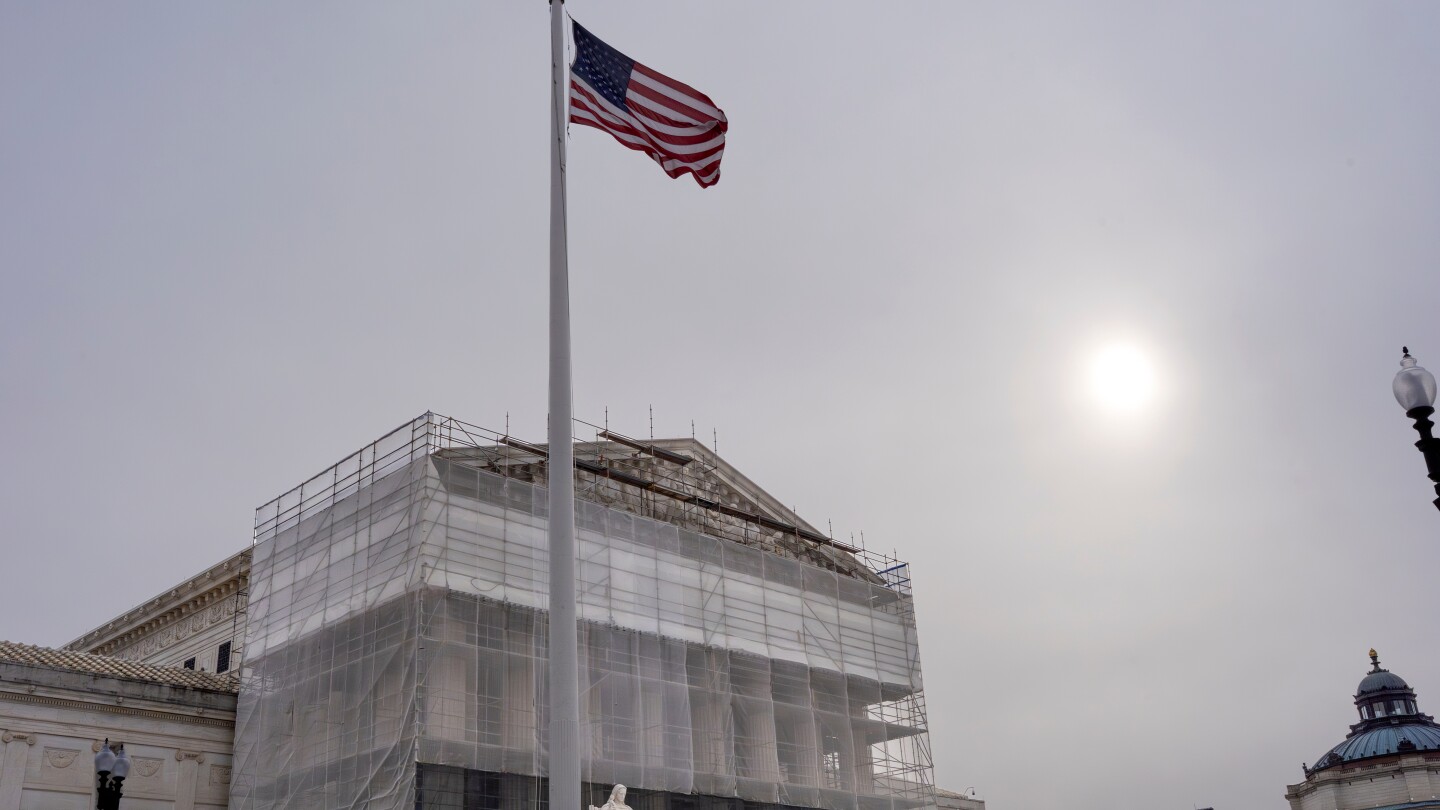
WASHINGTON (AP) — The resilience of the U.S. Constitution was underscored by Chief Justice John Roberts, who emphasized its enduring strength despite a challenging year for the judiciary. His remarks come at a time when the Supreme Court is poised to make significant decisions.
In his annual letter to the judiciary, Roberts referenced President Calvin Coolidge, asserting that the founding documents are “firm and unshaken.” He stated, “True then; true now,” drawing on historical sentiments to reinforce the Constitution’s stability.
The letter follows a period marked by concerns from legal experts and Democrats about a potential constitutional crisis, as supporters of Republican President Donald Trump contested various legal rulings that hindered his conservative policies.
Roberts notably intervened in March, when he criticized Trump’s call to impeach a judge who ruled against him regarding the deportation of Venezuelan migrants accused of gang affiliations. This rare public statement from Roberts signaled a defense of judicial independence. Roberts weighed in during this contentious period.
In his address, Roberts highlighted historical precedents, specifically an early 19th-century case emphasizing that Congress should not remove judges based on controversial decisions. He urged judges to fulfill their roles impartially, adhering to the Constitution and ensuring equal rights for all.
Despite facing challenges in lower courts, the Trump administration achieved approximately two dozen victories through the Supreme Court’s emergency docket. The conservative majority on the court allowed the administration to proceed with actions such as banning transgender individuals from military service, reclaiming billions in federal funds, and making significant changes in immigration policy and federal agency leadership.
Nevertheless, the Supreme Court also delivered setbacks to Trump, notably in his attempt to deploy the National Guard in U.S. cities. Looking ahead, the court is expected to tackle important issues in 2026, such as the potential end of birthright citizenship and the president’s authority to impose tariffs globally.
Roberts’ letter, while not extensively addressing these upcoming challenges, opened by reflecting on Thomas Paine’s 1776 pamphlet “Common Sense” and concluded with Coolidge’s advice to seek comfort in the Constitution and the Declaration of Independence amidst political strife.