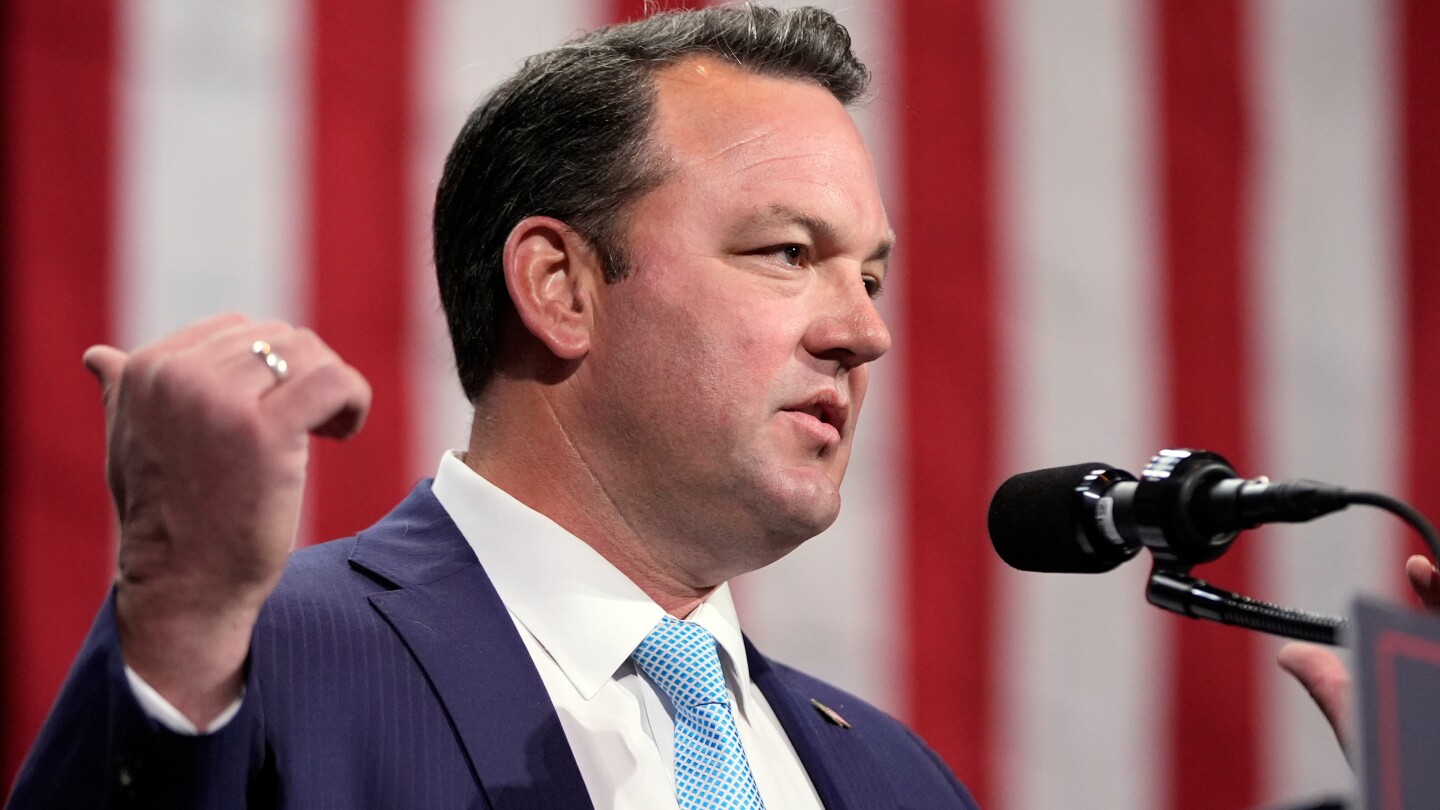
ATLANTA (AP) — In a puzzling turn of events in Georgia’s political landscape, a mysterious group has launched a financial attack on Republican Lt. Gov. Burt Jones. This group, identified as “Georgians for Integrity,” has invested approximately $5 million in television advertisements, mailers, and text messages. The campaign accuses Jones, who has the backing of former President Donald Trump in his forthcoming gubernatorial bid, of exploiting his position for personal gain.
These advertisements have become a regular feature on television screens for many Georgians, especially during football games, since Thanksgiving. The ads mark the beginning of the public contest for the Republican gubernatorial nomination, to be decided in May’s primary. The situation highlights the growing influence of dark money in state politics, mirroring trends observed at the national level, as anonymous entities spend large sums to shape public perception.
Jones’ campaign has not taken these allegations lightly, threatening legal action against broadcasters airing what they term “demonstrably false” and defamatory content. Despite these threats, the advertisements continue to be broadcasted.
“They want to be anonymous, spend a lot of money, and create a lot of lies about myself and my family,” Jones stated to WSB-AM on December 16, labeling the material as “fabricated trash.”
Attorney General Chris Carr and Secretary of State Brad Raffensperger—Jones’ main opponents in the Republican race—deny any involvement in the smear campaign. All three candidates are vying to succeed Republican Gov. Brian Kemp, who is barred from running due to term limits. Meanwhile, several Democrats are also in the race for the governorship.
Dark Money’s Influence Expands
The Georgia Republican Party has taken the issue to the State Ethics Commission, arguing that the ads breach Georgia’s campaign finance law by failing to register and disclose donors. “There are far-reaching consequences to allowing this activity to go forward unchecked,” said state Republican Party Chairman Josh McKoon to The Associated Press, emphasizing the potential impact beyond the May primary.
The controversy reflects the broader implications of the U.S. Supreme Court’s 2010 Citizens United decision, which significantly increased independent political spending. According to Shanna Ports, senior legal counsel for the Campaign Legal Center, “Dark money is becoming more and more the norm in races, up and down the ballot, and at early times.”
Allegations of self-dealing against Jones are not new, with Carr having raised similar concerns for months. The situation escalated after the incorporation of Georgians for Integrity in Delaware on November 24, positioning itself as a nonprofit social welfare organization under federal tax law, allowing it to conceal its donors.
Jones’ campaign argues that the ad misleads viewers into believing he facilitated the government’s use of eminent domain to benefit his family’s interests in a significant data center project in his home county. Although Jones supported a 2017 law enabling specific exceptions for conveying condemned property to private developers, eminent domain is reportedly not being utilized for the $10 billion development, which could encompass 11 million square feet of data centers, according to government filings.
Tracing the Source of Funds
Georgians for Integrity’s local address points to a mailbox in an Atlanta office supply store, according to paperwork submitted to TV stations. The documents also name Alex Roberts, a media buyer with a Park City, Utah address, and Kimberly Land, a lawyer from Columbus, Ohio, as contacts. Neither Roberts nor Land has responded to inquiries from the AP, leaving the source of the group’s funding undisclosed.
The Georgia Republican Party insists that Georgians for Integrity should be classified as an independent committee under state law, which would necessitate registration and donor disclosure. However, the law defines such committees as aiming to influence election outcomes or advocate for or against candidates. The advertisements targeting Jones do not explicitly state his gubernatorial candidacy or the 2026 election, instead urging viewers to contact Jones with the message, “Tell Burt, stop profiting off taxpayers.”
McKoon argues that these are merely “semantic games,” asserting that the ads are clearly intended to sway voter opinion. “If you are funding a message that is designed to impact an election—and I think it strains credulity to argue that that is not the case here—then you ought to have to comply with the campaign finance laws that the legislature has seen fit to pass,” McKoon stated.