Judge Considers Denying Halt on White House Ballroom Project
A federal judge in Washington is contemplating rejecting a preservationist group’s plea to suspend President Donald Trump’s controversial White House ballroom project temporarily. The group, the National Trust for Historic Preservation, has been unable to demonstrate that the project would cause “irreparable harm” if it proceeds, according to U.S. District Judge Richard Leon.
Judge Leon stated that a ruling on the restraining order could be forthcoming by Wednesday. However, he plans further proceedings in January to deliberate on the Trust’s request to delay the ballroom construction until it undergoes independent reviews and obtains Congressional approval. Meanwhile, Leon cautioned against making any decisions concerning underground utilities that could define the future scope of the ballroom’s development.
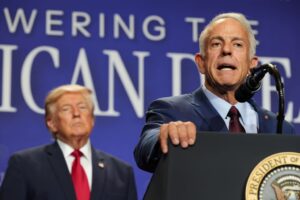
President Trump, addressing attendees at a Hannukah event, praised the judge’s “courage in making the proper decision.” He mentioned the ballroom’s cost as $400 million, contrasting previous estimates of $300 million.
Carol Quillen, the National Trust’s president and CEO, reaffirmed the organization’s dedication to ensuring the project complies with legal requirements and involves public input through the National Capital Planning Commission.
The ballroom project, initiated by Trump prior to consultations with federal review bodies like the National Capital Planning Commission and the Commission of Fine Arts, has stirred controversy. The planning commission includes allies of Trump, including Chairman Will Scharf, who anticipates receiving the project’s plans soon.
Judge Leon noted the administration’s two-week timeframe to submit plans. Adam Gustafson, principal deputy assistant attorney general, indicated that outreach to the review panels has begun, though no specific dates are set.
Following Trump’s dismissal of the fine arts panel members, replacements have yet to be announced. During the hearing, Gustafson argued that the Trust lacks legal standing in this case and emphasized the necessity of underground construction for undisclosed national security reasons. He also pointed out that federal laws cited by the Trust may not apply to the president.
Gustafson suggested that potential harm is not evident as the ballroom plans remain unfinalized and surface construction is slated to start no earlier than April. On behalf of the Trust, attorney Tad Heuer contended that advancing construction without independent assessments compromises transparency about the ballroom’s design.
“It’s not about the need for a ballroom. It’s about the need to follow the law,” Heuer stated.
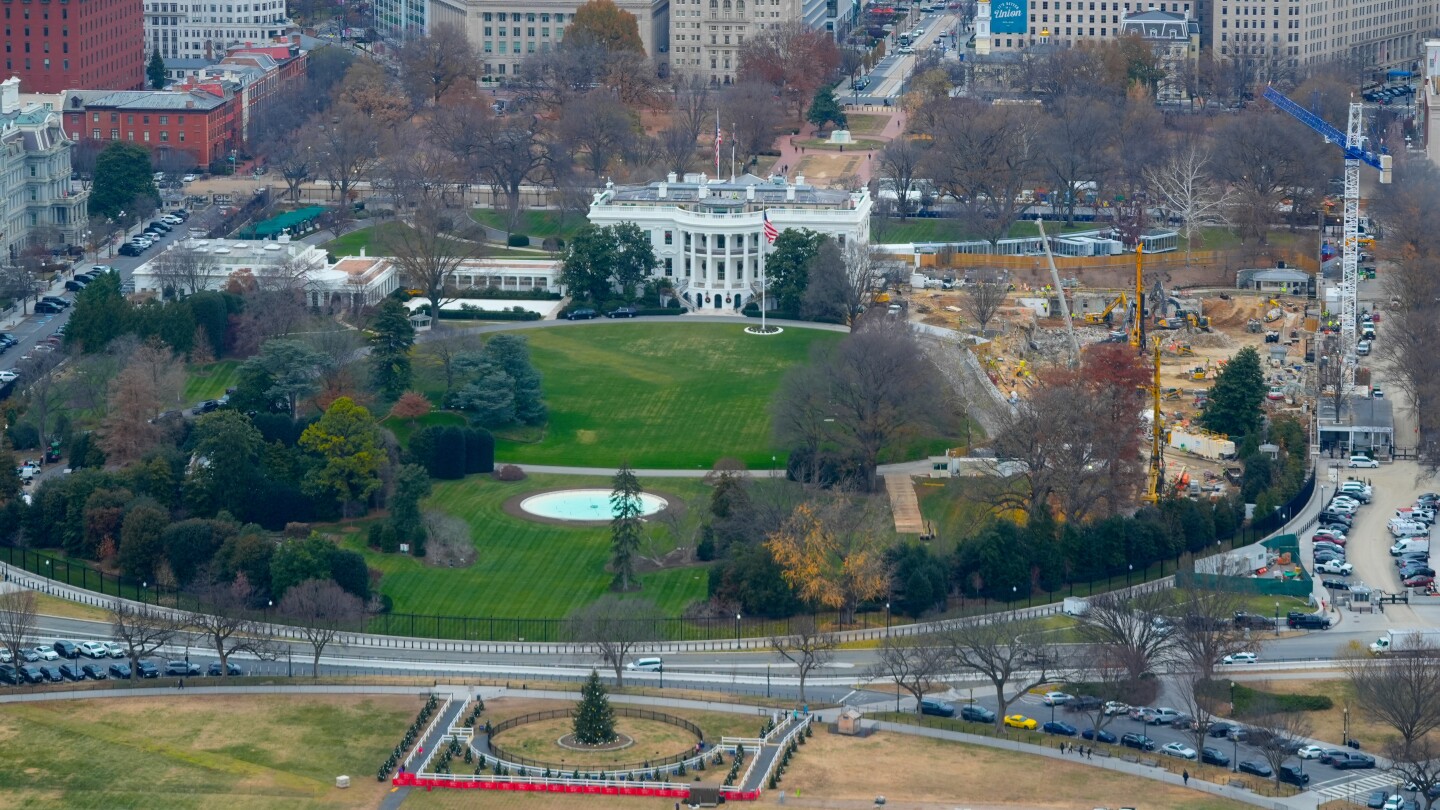
The White House unveiled the ballroom initiative over the summer, with Trump demolishing the East Wing by October to make way for a ballroom accommodating 999 people, estimated at $300 million in private funding.