The Supreme Court Faces a Landmark Decision on Presidential Tariff Powers
A historic Supreme Court case is set to unfold as justices prepare to hear Learning Resources v. Trump, a pivotal case concerning the limits of presidential authority. This comes decades after the court’s renowned decision in Youngstown Sheet & Tube Co. v. Sawyer, which checked President Harry Truman’s power by blocking his attempt to seize steel mills during the Korean War.
In 1952, as American forces were entrenched in the Korean War, President Truman attempted to avert a strike by steelworkers by taking control of the steel industry, a decision that was later thwarted by the Supreme Court. This landmark decision underscored the limitations of presidential power, even as all justices were appointees of Truman or his predecessor, Franklin D. Roosevelt.
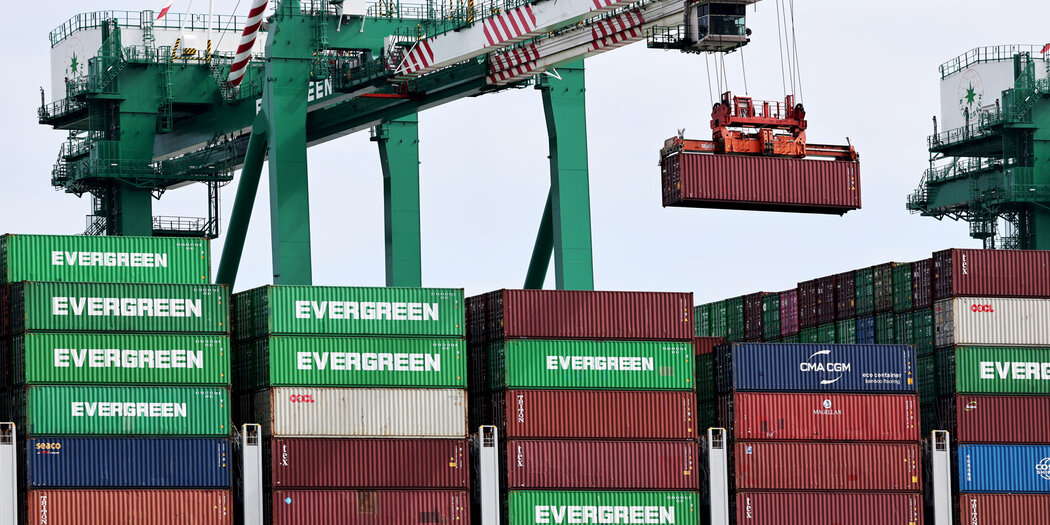
Today, the issue at hand involves President Trump’s imposition of expansive tariffs, an action that has stirred global economic unrest. Former federal judge Michael McConnell regards this case as “the most significant case on presidential power since the steel seizure case in 1952.”
The constitutionality of the tariffs is under scrutiny, especially since the Constitution delegates tariff-setting powers to Congress, albeit with allowances for presidents to act within certain constraints. Thus far, lower courts have unanimously deemed Trump’s tariff actions illegal.
The Trump administration argues that the International Emergency Economic Powers Act and the National Emergencies Act provide the president with the authority to broadly implement tariffs. However, as Elizabeth Goitein of the Brennan Center notes, these laws aim to restrict rather than expand presidential response to emergencies. They were not designed for the imposition of blanket tariffs in non-emergency situations.
The Brennan Center for Justice has submitted a friend-of-the-court brief expressing concern that allowing such presidential actions could enable future administrations to sidestep Congressional authority using emergency powers.
George F. Will, a prominent columnist for The Washington Post, highlighted these concerns in a recent column, questioning the implications for the Court’s role in overseeing political branch excesses. The case has drawn widespread attention, with numerous briefs from lawmakers, former officials, economists, and policy groups like the Cato Institute and Goldwater Institute.
This case presents another critical juncture for the Supreme Court, which has previously emphasized the need for Congressional decision-making on “major questions.” Yet, the same court has extended significant immunities to presidents, complicating expectations.
President Trump’s approach to tariffs, viewed by many as illegal, underscores a broader strategy to challenge checks on executive authority. Despite existing laws granting some tariff-setting powers, Trump opted for a more radical approach, raising tariffs multiple times on Chinese goods and prompting reflection on the role of legality in presidential decision-making.
Justice Robert Jackson, notable for his role in the Nuremberg trials, wrote a concurring opinion in the Youngstown case advocating for executive subordination to law. His words resonate as the current Court navigates the complex interplay of executive power and legislative oversight.