Trump’s Nuclear Testing Proposal Sparks Confusion and Concern
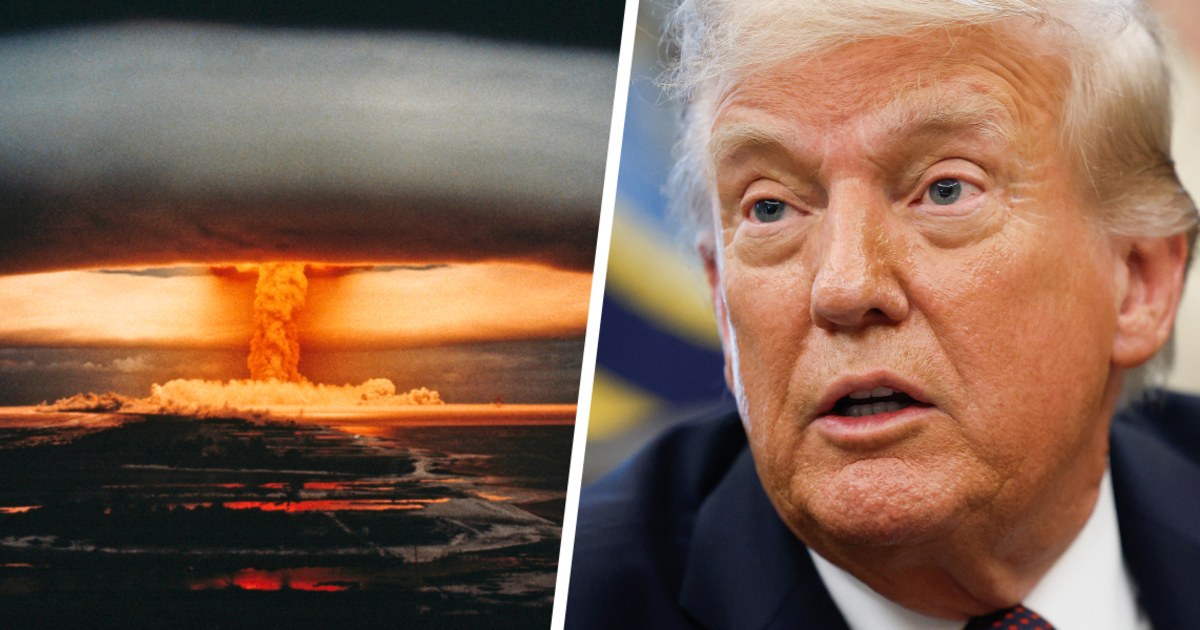
President Donald Trump recently caused a stir with a statement on his Truth Social platform, suggesting that the United States would “immediately” resume nuclear weapons testing. This announcement came just before a meeting with China’s President Xi Jinping, leaving many puzzled about its intent and implications.
Trump’s declaration left officials and the public questioning its meaning. Speaking aboard Air Force One, he stated, “We don’t do testing. We’ve halted it years, many years ago. But with others doing testing, I think it’s appropriate that we do also.” This left observers wondering if the U.S. planned to restart tests at the Nevada test site, which hasn’t been used for such purposes in over three decades.
Historically, the United States has conducted 1,054 nuclear tests since 1945, culminating in a deep scientific understanding of nuclear processes. This knowledge led to the cessation of U.S. nuclear testing in 1992, a move followed by other nations. By 1996, the Comprehensive Nuclear-Test-Ban Treaty (CTBT) was negotiated, prohibiting nuclear explosive tests globally. This treaty, signed by 187 countries, has seen no breaches this century except by North Korea between 2006 and 2017.
Modern advancements allow for nuclear simulations without actual detonations, thanks to sophisticated supercomputers and “sub-critical” experiments. These methods enable the U.S. to ensure the safety and reliability of its nuclear arsenal without real-world explosions.
Trump’s remarks drew swift reactions, especially from Nevada’s congressional representatives. Rep. Dina Titus, D-Nev., expressed her opposition, stating, “Absolutely not,” and vowed to introduce legislation preventing the resumption of testing. Similarly, Sen. Jacky Rosen, D-Nev., highlighted that such testing contradicts assurances from Trump nominees and administration officials.
The global ramifications of resuming nuclear testing are significant. Russian spokesman Dmitry Peskov responded to Trump’s comments with skepticism, noting, “Until now, we were not aware that anyone was testing anything.” He further remarked on potential Russian actions if the moratorium were lifted. Other nations like China, India, and Pakistan might also consider restarting their own tests.
Questions remain regarding Trump’s understanding of the current nuclear landscape. The Nevada test site, now the Nevada National Security Site, would require extensive refurbishment before any potential tests. Additionally, recent Russian tests involved experimental delivery vehicles without nuclear warheads, raising questions about Trump’s awareness of these details.
While some view Trump’s statement as a rhetorical move, others fear it might signal a shift influenced by nuclear hawks within the Pentagon and conservative groups. This development could potentially reignite a global nuclear arms race, raising concerns about the stability and security of international relations.