Supreme Court Reviews Key Voting Rights Act Provision
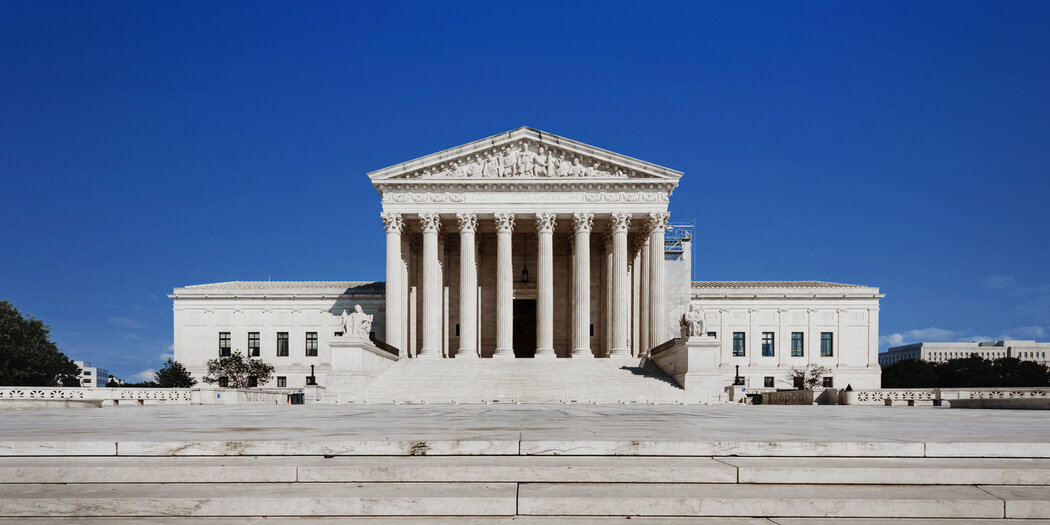
The Supreme Court recently deliberated a pivotal case that could significantly impact one of the primary enforcement mechanisms of the historic Voting Rights Act, a law established to ensure voting equality regardless of race.
In March 1965, a momentous march in Selma, Alabama, significantly influenced the creation of the Voting Rights Act. Nonviolent demonstrators, attempting to secure equal voting rights, faced brutal resistance on the Edmund Pettus Bridge. This event, broadcasted widely, prompted President Lyndon Johnson and Congress to enact the Voting Rights Act, a bipartisan effort to outlaw racial discrimination in voting practices. Subsequent amendments addressed both overtly and inadvertently discriminatory policies.
Recognized as part of the “Second Reconstruction,” the Voting Rights Act was instrumental in fulfilling the promises of the 14th and 15th Amendments, fundamentally reshaping political representation at all levels of government. The Act has been a tool against discriminatory policies and has enabled voters of color to contest laws that undermine their electoral influence. Repeatedly supported by both parties, it was last reauthorized in 2006 during a Republican-controlled government.
However, the Act has faced challenges, particularly from the Supreme Court. In the 2013 Shelby County v. Holder decision, the Court invalidated Section 5, which required certain states to obtain federal approval for changes in voting laws. Justice Ruth Bader Ginsburg, in her dissent, criticized this move, equating it to “throwing away your umbrella in a rainstorm because you are not getting wet.”
Following this decision, several states have enacted laws complicating voting processes. A Brennan Center report highlights an increasing racial turnout gap, which was 18 percentage points in the 2022 midterm elections, particularly in areas previously under Section 5 scrutiny.
The Supreme Court, in its prior decision, upheld Section 2 as an enforcement mechanism of the Voting Rights Act, a point now under scrutiny in the Louisiana v. Callais case. This case questions the constitutionality of Section 2, which has been essential in challenging discriminatory practices since the Act’s inception.
The current case involves Louisiana’s congressional map drawn in 2020, which diluted the Black voting bloc in a state where Black residents constitute a third of the population. Despite a court mandate and proposal for alternative maps, state lawmakers persisted with a map aligning with partisan interests. Subsequently, a group of white voters contested the map, arguing it violated the Equal Protection Clause by being predominantly race-based.
Last year, the Supreme Court postponed its decision on this challenge, inviting discourse on whether Section 2 holds constitutional validity. Louisiana now contends that states should not consider race in redistricting, a stance suggesting a regression to pre-Voting Rights Act practices that excluded racial minorities from political representation.
Instances of racial discrimination in voting remain prevalent, notably in states like Louisiana where courts have discovered intentional discrimination and vote dilution. During recent Supreme Court arguments, some justices appeared receptive to limiting or potentially nullifying Section 2. Such a decision could lead to widespread disruption in redistricting, especially with upcoming national elections, as noted in a friend-of-the-court brief.
The core issue remains the protection of voting rights for all Americans. The efforts of activists during the 1965 Selma march serve as a reminder of the ongoing fight for electoral equality. Continued engagement and advocacy are crucial in upholding these constitutional principles today.