Supreme Court’s Potential Impact on Voting Rights Act
WASHINGTON (AP) — The Supreme Court may be on the verge of a ruling with significant political ramifications, particularly favoring Republicans in their bid to hold onto a majority in the House of Representatives. The court’s conservative majority has shown interest in potentially limiting the use of race-based legislative districts under Section 2 of the Voting Rights Act. This law mandates that legislative districts be drawn in a way that enables minorities to elect representatives of their choice, resulting in majority-Black and Latino districts that vote predominantly Democratic in some conservative states.
In Louisiana, plaintiffs are challenging a federal judge’s order to redraw the state’s congressional map to include a second majority-Black district, which was won by a Democrat last year. A ruling in favor of the plaintiffs could potentially revert that district to Republican control and even affect another Democratic seat created under the Voting Rights Act. This outcome might influence similar districts across the South, where the Democratic group Fair Fight identified 19 VRA-mandated seats held by Democrats that Republicans could attempt to redraw.
“I’m really worried that, given the political climate that we’re in and the conservative nature of this court, and then rolling back affirmative action and giving more executive power to the president, that this will not end well for us,” said Rep. Terri Sewell, an Alabama Democrat.
Potential GOP Gains Amid Voting Rights Debate
Republicans have expressed concerns about Section 2, arguing it forces them to factor race into redistricting or face lawsuits for not adequately considering racial groups that tend to vote Democratic. Louisiana Attorney General Elizabeth Murrill stated, “We are damned if we do and damned if we don’t.”
Should the court side with Louisiana, some Democrats hope the decision will be specific to that case rather than a broad weakening of the Voting Rights Act. Even with a wider decision, significant redistricting changes might not occur before the 2026 midterm elections, with fewer districts possibly swinging to the GOP than anticipated. However, with the House majority often decided by narrow margins, each seat remains critical.
“It makes it harder for Democrats to create a majority if they are eliminating only Democratic districts,” said Jonathan Cervas, a political scientist at Carnegie Mellon University. He warned against predicting the extent of Republican gains, noting limits on potential advantages. “None of us can even know this,” Cervas added, emphasizing that there are still constraints on GOP benefits.
Gerrymandering Concerns and Democratic Worries
Even if Section 2 is weakened, Democratic-leaning voters remain, forcing Republican mapmakers to position them in Democratic districts. An example is Tennessee, where a partisan map yields seven Republican seats and one Democratic, Voting Rights Act-compliant district in Memphis. According to Cervas, attempts to alter the Memphis district would likely make nearby GOP districts more competitive.
In states like Missouri and South Carolina, similar dynamics exist with lone Democratic seats. Meanwhile, more substantial changes might be achievable in states such as Mississippi and larger states like North Carolina and Florida, where Republicans might redraw maps to their advantage without maintaining majority-minority districts.
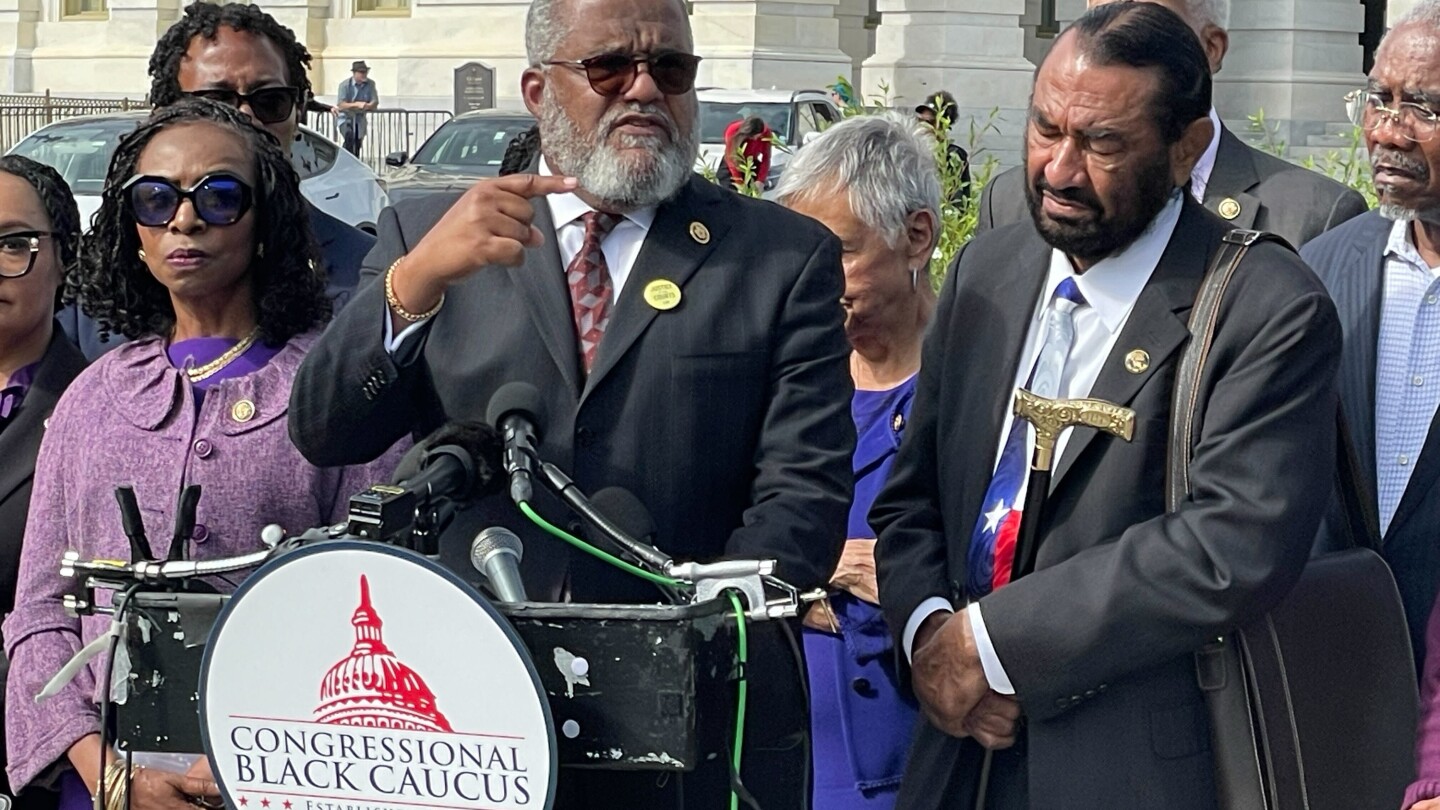
The Congressional Black Caucus expressed concerns that eliminating Section 2 could lead to extreme gerrymandering and diminish representation for Black voters. Rep. Troy Carter, a Louisiana Democrat, stated, “If you take away the elements that create the opportunity for it to look like its people, it won’t be a democracy as we hoped it would be.”
Future Congressional Map Changes
Amid national redistricting efforts, Republicans are working to secure winnable seats to prevent losing the House of Representatives in 2026, as the president’s party typically loses seats in midterms. However, it remains uncertain when the Supreme Court will issue its decision, possibly after 2026 congressional race filing deadlines.
Many changes might not be implemented until 2028 and beyond, leaving Democrats apprehensive. Rep. Sheila Cherfilus-McCormick remarked, “If they were to strip Section 2, I think that’s going to give license for us to see a more aggressive redistricting.”
House Minority Leader Hakeem Jeffries emphasized the ongoing relevance of the Voting Rights Act, stating, “The Voting Rights Act is the most important piece of civil rights legislation ever enacted.” Kareem Crayton from the Brennan Center for Justice noted that changes would most impact state and local government offices, which are crucial for traditional political engagement.