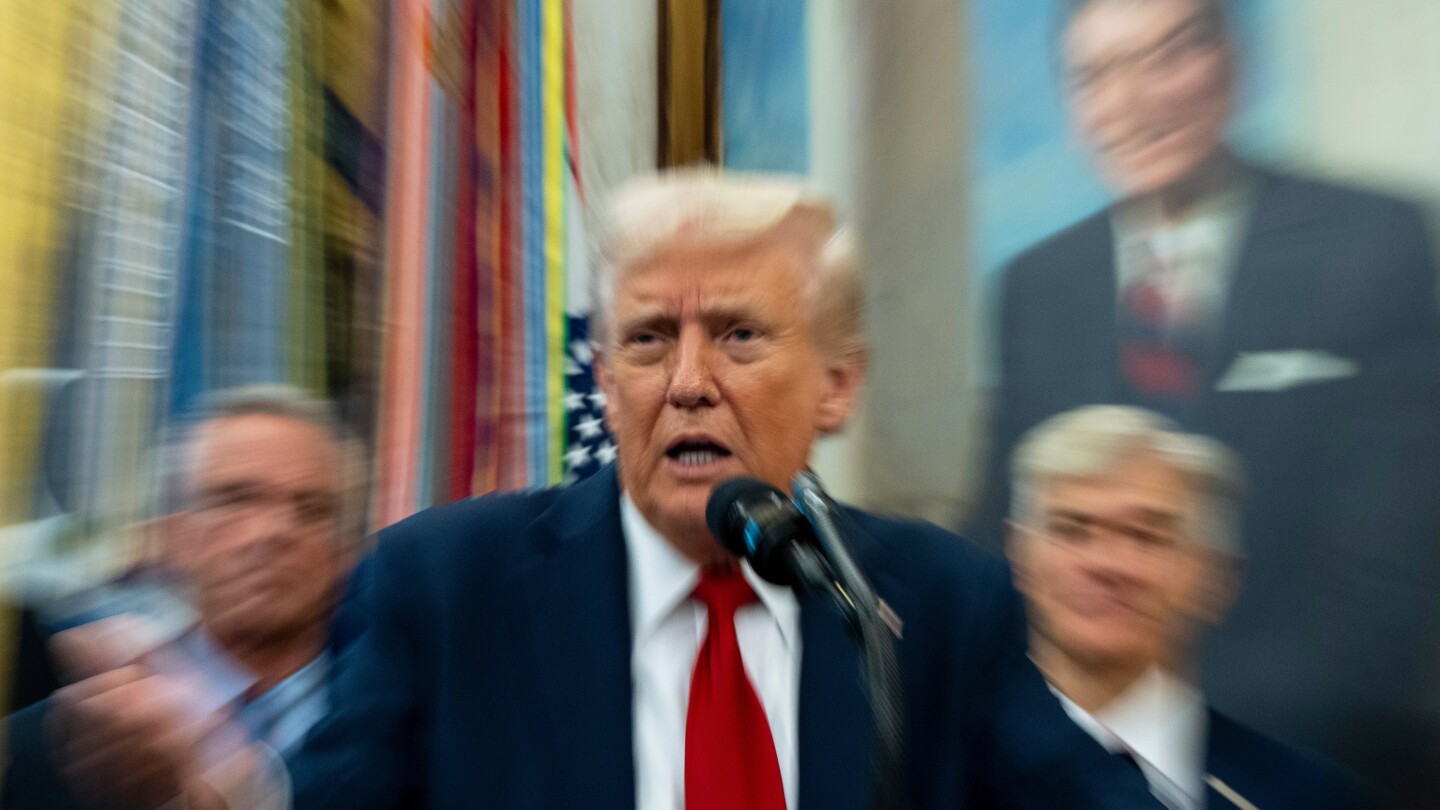
In a series of legal challenges over the summer, President Donald Trump’s executive order aimed at ending automatic citizenship for children born to individuals in the U.S. illegally or temporarily faced significant opposition in the federal courts. Four federal courts rejected the order, and a fifth court recently joined the ranks.
The 1st U.S. Circuit Court of Appeals in Boston, consisting of a three-judge panel, issued a unanimous decision against the enforcement of the executive order. This decision aligns with previous rulings from other courts that have blocked the order nationwide.
The issue of birthright citizenship, a principle deeply embedded in U.S. law, is likely heading to the U.S. Supreme Court, which has been asked by the Trump administration to review the case. Despite the administration’s legal arguments, lower federal courts have consistently found the executive order in conflict with established Supreme Court precedents and constitutional interpretation.
The 14th Amendment
The 14th Amendment to the U.S. Constitution, ratified in 1868, is the cornerstone of birthright citizenship in America. Originally designed to ensure citizenship for Black individuals, including former slaves, the amendment’s citizenship clause asserts that all persons born or naturalized in the United States, and subject to its jurisdiction, are citizens.
The current administration argues that the phrase “subject to the jurisdiction thereof” implies that children must have primary allegiance to the U.S., a condition they claim is unmet by children of those in the country illegally or temporarily. This interpretation, however, is challenged by legal scholars who assert that the amendment’s framers intended a broad application of birthright citizenship, excluding primarily Native Americans on tribal lands and children of foreign diplomats.
White House spokesperson Abigail Jackson criticized the 1st Circuit’s interpretation of the 14th Amendment, while legal experts maintain that historical context and Supreme Court rulings undermine the administration’s stance.
Judicial Precedents
A landmark Supreme Court decision in 1898 affirmed the citizenship of a child born in the U.S. to Chinese immigrants, reinforcing the principle of birthright citizenship. Though the court has not explicitly ruled on the clause’s application to children of those in the U.S. illegally, a 1982 decision suggests no distinction between these children and those born to legal foreign residents.
Earlier this year, the Supreme Court addressed a related legal challenge but avoided a direct ruling on the executive order’s constitutionality, instead limiting lower courts’ power to impose nationwide injunctions.
Decisions from Lower Courts
Federal courts, starting with a ruling in New Hampshire, have uniformly blocked the executive order, citing the logistical and financial burdens a patchwork implementation would impose on states. Courts have noted the potential complications arising from interstate movement and childbirth in different states, which would necessitate an overhaul of eligibility systems for government benefits dependent on citizenship status.
The 1st Circuit decisively rejected the order, with Chief Judge David Barron stating, “The length of our analysis should not be mistaken for a sign that the fundamental question that these cases raise about the scope of birthright citizenship is a difficult one. It is not.”
White House’s Position
Despite setbacks, the White House remains optimistic about prevailing in the Supreme Court. Abigail Jackson expressed confidence in the administration’s position and outlined the procedural changes needed to enforce the order, such as verifying parental citizenship or immigration status for Social Security numbers and passports.