Federal Judge Orders Restoration of Suspended UCLA Research Grants
In a significant legal development, a federal judge in California has mandated the Trump administration to reinstate 500 National Institutes of Health grants that were suspended at UCLA. This move comes amidst claims that the university allows antisemitism on its campus, leading to a demand for a $1.2 billion settlement by the Trump administration.
Judge Rita Lin’s decision offers a reprieve to researchers at UCLA, as university leaders contest the settlement demands, which they argue are “misguided and punitive” according to a public letter signed by over 600 Jewish members of the University of California community. The letter emphasized that cutting off research funds would not contribute to making UCLA safer for Jewish individuals or reduce antisemitism globally.
In response to the settlement demands, several UC faculty groups and unions have taken legal action to halt what they describe as an “unlawful threat of federal funding cuts” aimed at coercing the university into suppressing free speech and academic freedom.
Judge Lin’s recent order is the latest in a series since June, which have gradually restored hundreds of UC research grants from various agencies. Her injunction is preliminary, as the trial continues.
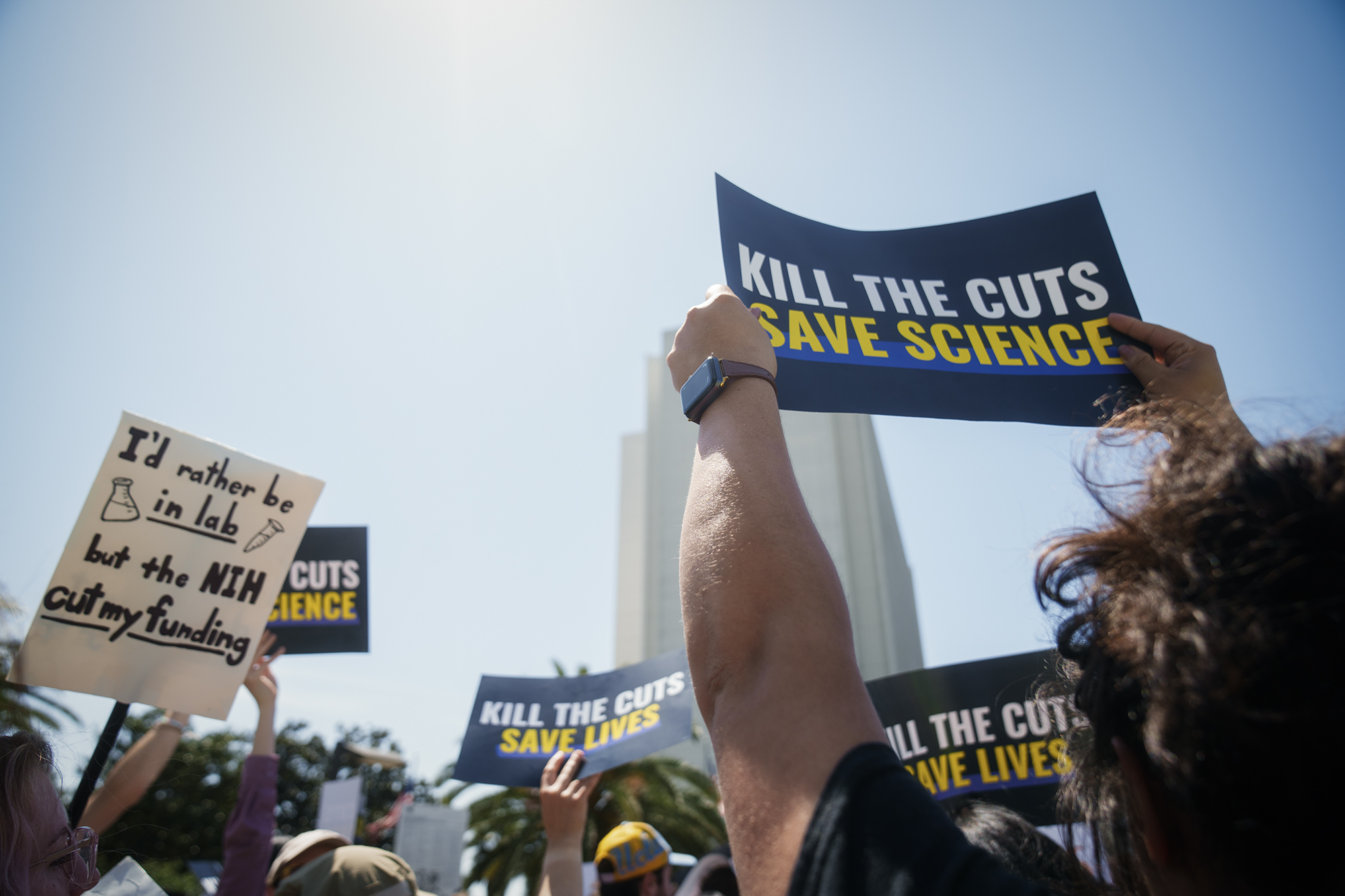
The reinstated grants, which were previously frozen, are valued at over $500 million and support research into critical areas such as life-saving drugs, heart disease, and robotics education. The suspension of these grants had severely impacted the research enterprise at UCLA, which is a major recipient of federal research funding.
Lin’s ruling also reinstates grants from the Department of Transportation and the Department of Defense that were terminated earlier this year. The Trump administration has until September 29 to confirm compliance with the restoration order.
Impact of Supreme Court Decision
Lin’s ruling potentially opens avenues for other researchers to challenge grant terminations, despite a recent U.S. Supreme Court decision that appeared to complicate such processes. According to the Supreme Court’s August decision, disputes over defunded grants should be addressed in the Court of Federal Claims, not district courts. However, Lin determined that this decision does not apply to UC researchers due to the nature of research grants as contracts between universities and the federal government.
Lin emphasized that district courts remain the appropriate venue for UC researchers to defend their constitutional and statutory rights, rejecting the federal government’s argument that only universities could pursue such lawsuits.
Trump Administration’s Justification
The Trump administration justified the suspension of grants in July, citing alleged race-based admissions practices and insufficient actions against antisemitism at UCLA. Despite California’s prohibition on race-based admissions since 1996, federal agencies argued that UCLA’s admissions process indirectly incorporated racial considerations.
The criticisms align with Trump’s broader policy initiatives to reshape higher education and governmental practices through executive actions, as outlined in the Project 2025 publication.
UCLA’s Response to Antisemitism Allegations
The suspension of grants followed a Department of Justice report criticizing UCLA’s handling of antisemitism, especially during pro-Palestine protests. In response, UCLA has initiated a task force to address antisemitism and has committed to implementing its recommendations.
Jewish advocacy groups, including the Jewish Public Affairs Committee of California, argue that the settlement demand does not enhance the safety of Jewish students. They acknowledge the progress made by UC and UCLA in promoting safer campuses and addressing antisemitism.