In eastern Afghanistan, a powerful earthquake late Sunday night left devastation in its wake, with the Taliban government reporting approximately 800 fatalities and over 2,500 injuries. The tremor, registering a magnitude of 6.0, struck near Jalalabad in Nangarhar province, impacting towns in the neighboring Kunar province.
In the Nurgal district, one of the hardest-hit areas, a resident recounted the destruction, stating that the village was almost entirely destroyed. “Children are under the rubble. The elderly are under the rubble. Young people are under the rubble,” said the villager, who chose to remain anonymous. “We need help here,” he urged, emphasizing the need for assistance in rescuing those trapped beneath debris.
The earthquake’s epicenter was located 27 kilometers east-northeast of Jalalabad at a depth of 8 kilometers, according to the U.S. Geological Survey. Shallow quakes often result in significant damage, and this one was followed by several aftershocks.
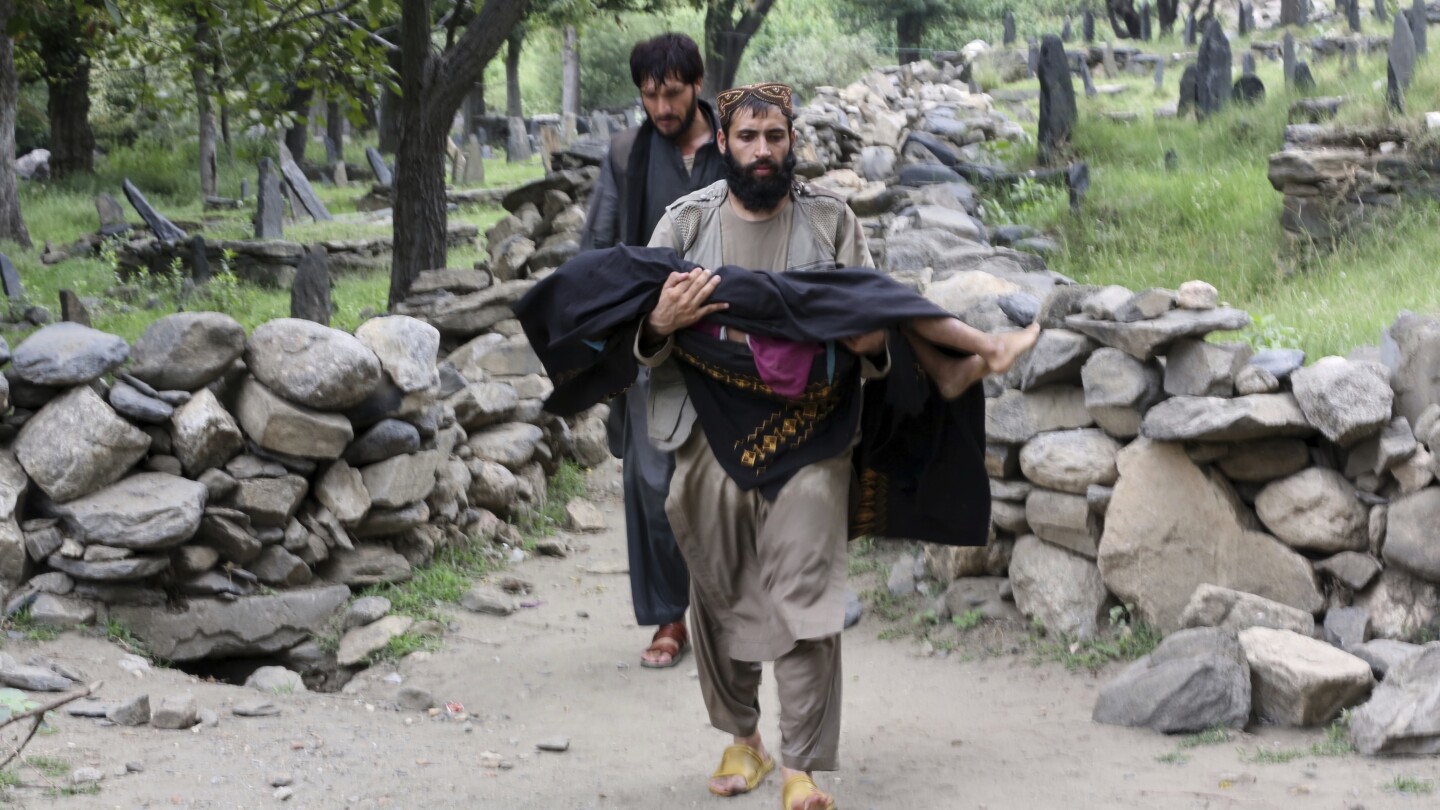
Rescue operations are underway, with footage showing rescuers transporting injured individuals from collapsed buildings to helicopters. Taliban spokesperson Zabihullah Mujahid confirmed the death toll and injuries, noting that Kunar suffered the highest casualties.
Widespread Damage and Chaos
In the mountainous terrain of eastern Afghanistan, the earthquake disrupted communications and blocked roads, making access to affected areas difficult. Many aid workers have had to travel on foot for hours to reach survivors. Numerous flights have transported the injured to hospitals from Nangarhar Airport.
In Afghanistan, buildings, particularly in rural areas, are often constructed with mud bricks and wood, making them vulnerable to collapse. A survivor described the scene as homes crumbled and people cried for help. Sadiqullah, a resident of Maza Dara in Nurgal, shared his harrowing experience of being buried under debris, losing family members, and eventually being rescued after several hours.
Escalating Response Efforts
Efforts to rescue and treat the injured are ongoing, with medical teams from various regions converging in the affected areas. Health ministry spokesman Sharafat Zaman indicated that casualty figures could rise as more reports come in. Mujahid noted the challenges in reaching certain villages due to blocked roads, emphasizing that the injury and death toll might increase.
Filippo Grandi, the United Nations High Commissioner for Refugees, highlighted the compounded humanitarian challenges in Afghanistan, urging international donors to support relief efforts. “This adds death and destruction to other challenges including drought and the forced return of millions of Afghans from neighboring countries,” Grandi remarked on X.
International Aid and Support
With entire communities cut off from aid, there is an urgent need for search and rescue support, medical supplies, food, and clean water. The International Federation of Red Cross and Red Crescent Societies stressed the importance of restoring road access to isolated communities.
Pakistan’s Prime Minister Shehbaz Sharif expressed condolences and offered support, stating, “Our hearts go out to the victims and their families. We are ready to extend all possible support in this regard.” However, recent expulsions of Afghan refugees from Pakistan have strained relations between the two countries.
Previous seismic activity in Afghanistan, such as the 6.3 magnitude quake in October 2023, had already inflicted severe damage, with varying death toll estimates provided by the Taliban and the U.N. Sunday’s earthquake is expected to surpass the humanitarian needs of previous disasters, according to the International Rescue Committee.
———
Reporting by Associated Press journalist Suzan Fraser from Ankara, Turkey contributed to this article.