Debate Intensifies Over National Guard Deployment to Washington, D.C.
Ohio veterans and families of active-duty personnel are expressing growing concerns about the recent deployment of National Guard units to Washington, D.C. The deployment, intended for law enforcement and beautification, is being scrutinized for potentially overstepping legal boundaries and affecting community trust.
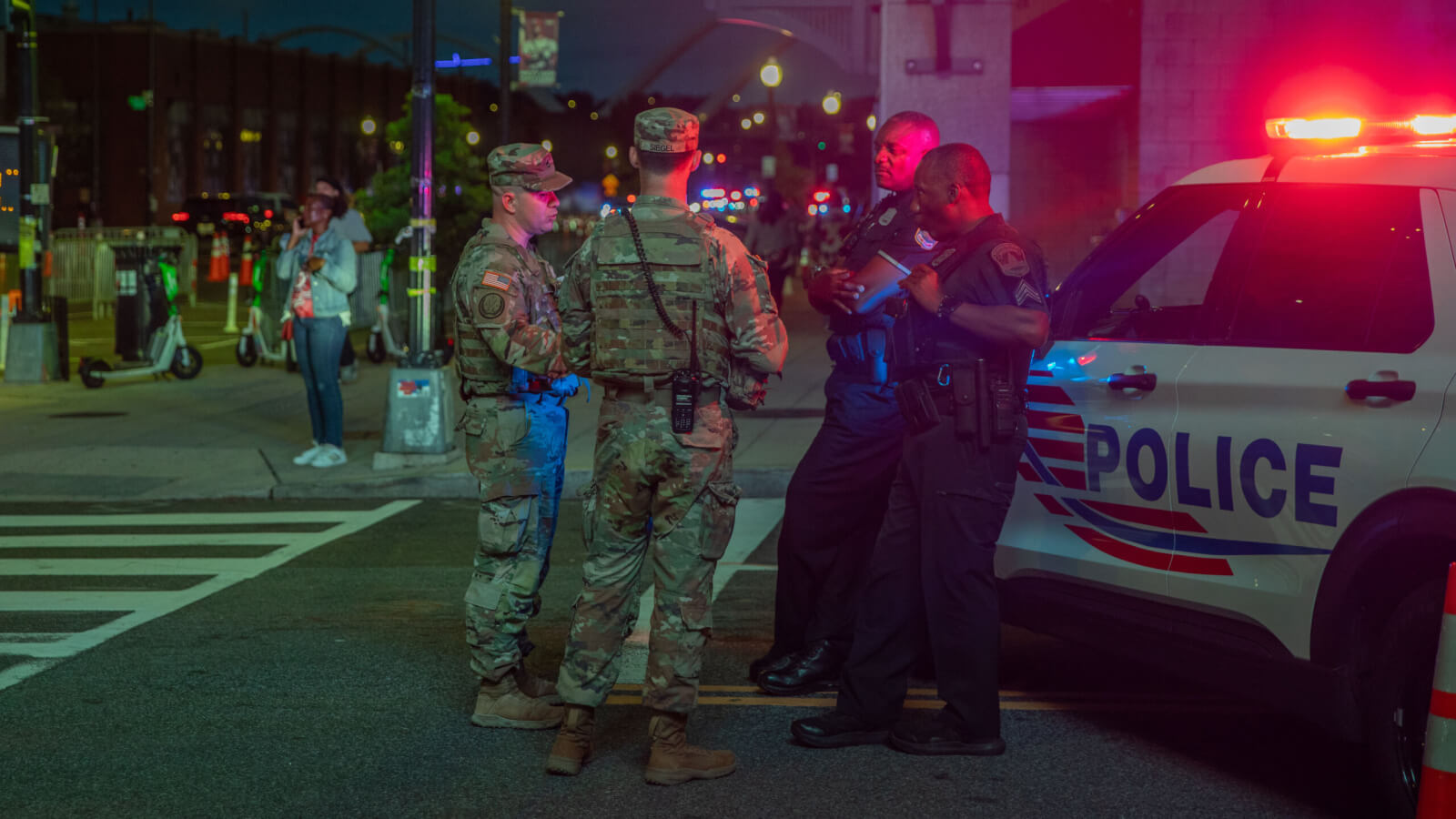
On August 16, Ohio Governor Mike DeWine authorized the dispatch of 150 military police from the Ohio National Guard to the nation’s capital. These troops are part of the Joint Task Force District of Columbia (JTF-DC), a coalition of nearly 1,900 guardsmen from seven states, including North Carolina, Tennessee, and West Virginia. This decision follows President Donald Trump’s August 11 executive order declaring a crime emergency in D.C.
Chris Purdy, a veteran of the Army National Guard and CEO of The Chamberlain Network, criticized the governor’s decision. Purdy remarked, “These are the military of each state effectively. If the president wants to federalize the National Guard, then that’s a fight he can have. For governors to go along with something they know is wrong, is a real dereliction of duty on their part.”
The deployment aligns with a subsequent executive order issued on August 25, which directs U.S. Secretary of Defense Pete Hegseth to prepare state National Guard units as a “quick reaction force” for national deployments. This force is designed to assist both federal and local law enforcement in managing civil disturbances and ensuring public safety.
After a ten-day deployment, the president noted a significant reduction in crime, highlighting that Washington, D.C. had experienced seven consecutive days without a homicide and an over 80 percent decrease in crime rates. However, Dan Maurer, an associate professor at Ohio Northern University College of Law, argues that extending National Guard deployments beyond their state duties contravenes the Posse Comitatus Act of 1878, which limits military involvement in civilian affairs except under extraordinary circumstances such as those described in the Insurrection Act.
“Assuming the crime rate is statistically lower than it was a week ago — and that you can attribute it to the National Guard — the end is justifying the means and that’s not what the law says,” Maurer explained. “The law prohibits the use of the military even if it’s sufficient, even if it’s successful, unless certain conditions exist that warrant it.”
Furthermore, veterans are concerned that the presence of National Guard units might erode trust between the military and local communities. Retired Army Brig. Gen. Christopher Dziubek emphasized the unique role of police in fostering community trust, which could be undermined when military personnel are engaged in law enforcement roles.
Navy veteran Kenneth Harbaugh voiced worries about the potential politicization of service members, particularly when National Guard troops are seen in concert with governmental bodies like U.S. Immigration and Customs Enforcement (ICE). “National Guard troops are not covering their faces, they are not ashamed of serving in uniform,” Harbaugh stated. “But they are being associated unfairly with other government organizations — levers of power — that are not behaving as professionally.”
In a recent press release, JTF-DC announced that U.S. Army Brig. Gen. Leland D. Blanchard III, interim commanding general of the D.C. National Guard, has authorized guard members to carry their service-issued weapons “after careful consideration of the security environment.” Blanchard stated, “This decision is not something taken lightly. We are in coordination with our law enforcement partners and all appropriate review processes are in place.”