Supreme Court’s Silent Nod Allows Trump to Move Against Department of Education
The Supreme Court has quietly enabled a significant shift in presidential power by allowing President Donald Trump to proceed with plans to essentially dismantle the Department of Education. This decision comes as a part of the Court’s increasing use of the “shadow docket,” where orders are issued without full briefings or arguments.
In a recent order related to the Department of Education, the Supreme Court reversed two lower court decisions that had blocked Trump’s initiative. The Court’s decision, delivered without public argument or detailed explanation, permits the administration to continue its plan, which involves significant downsizing of the department’s workforce.
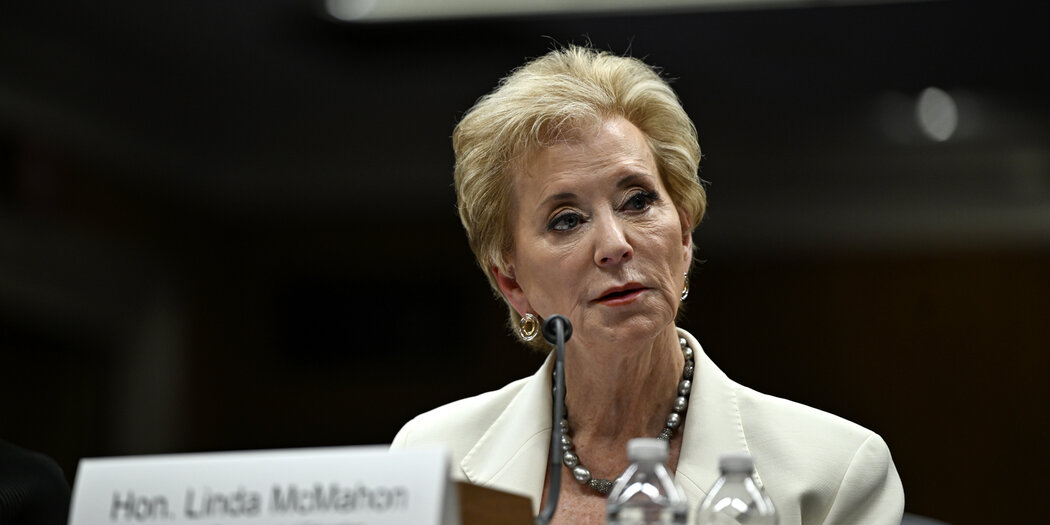
President Trump, who has long aimed to “put herself out of a job” by abolishing the department, instructed Education Secretary Linda McMahon to drastically reduce staff numbers. McMahon has already cut 1,300 employees, effectively halving the department’s workforce, according to reports.
This move aligns with Trump’s executive order intended to dismantle the department, despite the fact that the Department of Education was established by Congress in 1979 to enhance educational quality and ensure equal access. The department manages a $150 billion budget as allocated by Congress.
The use of the shadow docket has allowed the Supreme Court to avoid public scrutiny and detailed justification in this case. Steve Vladeck, a Georgetown professor and authority on the shadow docket, has criticized this approach for its lack of transparency and clarity, describing these rulings as occurring “both literally and figuratively in the shadows.”
Justice Sonia Sotomayor, with Justices Elena Kagan and Ketanji Brown Jackson, strongly dissented. Sotomayor stated, “When the Executive publicly announces its intent to break the law, and then executes on that promise, it is the Judiciary’s duty to check that lawlessness, not expedite it.”
This decision reflects a concerning pattern where the Supreme Court has utilized the shadow docket to permit significant executive actions without comprehensive judicial review. Recent instances include allowing the president to dismiss independent agency heads and approving controversial military policies.
As the Court permits the Trump administration to proceed with the reduction in workforce at the Department of Education, it may be too late for any future rulings to reverse the impact. Education experts have discussed potential countermeasures at the state court level, as highlighted in a recent event hosted by the Brennan Center.
This approach to executive power poses risks to various federal agencies and comes amid Trump’s undisguised intent to dismantle several governmental structures. With the Supreme Court’s acquiescence, the balance of power among federal branches appears increasingly skewed, raising significant constitutional concerns.