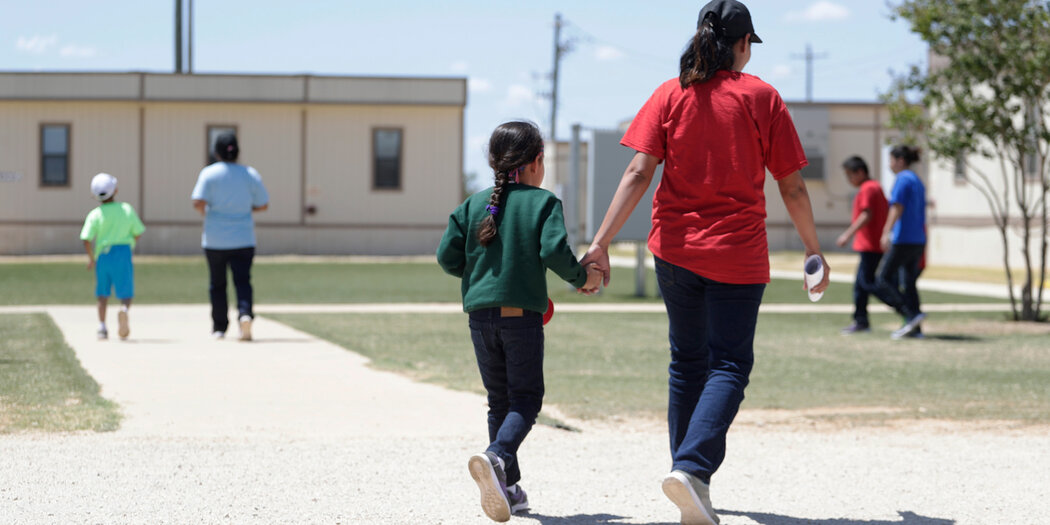
On July 1, a new budget bill was passed by Congress, allocating an unprecedented $45 billion to the construction of new immigration detention centers, including facilities specifically for families. This decision comes amidst growing concern over the conditions faced by undocumented children in detention. The bill’s enactment raises critical questions about the treatment of families and the implications for the Flores settlement, a 1997 legal agreement that governs the treatment of immigrant children in U.S. custody.
Does Immigration and Customs Enforcement put families into detention?
Under President Biden’s administration in 2021, the practice of detaining families with children was largely halted, shifting instead to alternatives to detention such as electronic monitoring and case management programs. These alternatives have shown success, notably with a 99 percent compliance rate among families for immigration check-ins, at a lower cost than detention.
The Trump administration, however, plans to reinstate widespread family detention, including changes that are expected to increase the number of children entering federal custody. These changes include ending certain legal entry programs and terminating the Temporary Protected Status for individuals from several countries. Policies have been altered to permit arrests in previously off-limits locations such as churches, schools, and court hearings.
Who is in family detention?
In the context of immigration, “families” typically refer to mothers and their children, as fathers are often separated and detained in adult facilities. Public health experts highlight the significant physical and mental health impacts of detention on children, with a study at Texas’s Karnes County detention center identifying issues such as inadequate medical care and malnutrition. The study concluded that “there is no humane way to detain children.”
Despite these concerns, the report acknowledged the likely continuation of child detention, recommending improved pediatric healthcare, screening for infectious diseases, and nutrition checks within detention facilities.
Are children in immigration detention receiving adequate care?
Evaluating the care of undocumented children in federal custody is challenging due to administrative resistance to oversight. The Department of Homeland Security (DHS) has closed internal offices that previously monitored detention conditions. The Office of Civil Rights and Civil Liberties has recorded due process abuses and other issues, but many investigations have stalled.
A DHS spokesperson indicated that the Office of the Immigration Detention Ombudsman is being streamlined to “remove roadblocks to enforcement.” The office has been active in investigating complaints and conducting facility inspections, but oversight remains challenging as Congress faces blocked access to facilities.
What is the Flores settlement?
The Flores settlement, established in 1997, provides protections for immigrant children, such as limiting detention to 20 days and ensuring safe and sanitary conditions. The agreement is supervised by Judge Dolly Gee and requires ICE facilities to follow 2020 Family Residential Standards.
Does the Flores settlement still govern the treatment of undocumented children in custody?
The Biden administration implemented new regulations for unaccompanied migrant children, terminating the Flores settlement’s applicability to the Department of Health and Human Services. However, the terms applicable to ICE remain in effect, though the Trump administration has moved to end the agreement entirely.
Immigration lawyers have filed a lawsuit to preserve the Flores settlement, citing human rights concerns such as medical neglect reports from detainees. The latest budget bill does not adhere to some Flores terms, notably the 20-day detention limit.
Who will be responsible for the new detention facilities?
Primarily for-profit companies.
Even before the budget increase, ICE had contracted with private prison firms to expand detention capacities. As of June 2025, ICE facilities held 57,861 detainees, marking a 51 percent increase from June 2024. About 90 percent of detainees are in facilities managed by for-profit companies.
In March, CoreCivic and Geo Group, major private prison firms, announced plans to reopen and modify facilities for family detention, estimating significant revenue increases. CoreCivic’s South Texas Family Residential Center aims to house 2,400 detainees, while Geo Group’s Karnes County Center will accommodate mixed populations.