Legal Challenges Arise as Fifth Circuit Reviews Alien Enemies Act Invocation
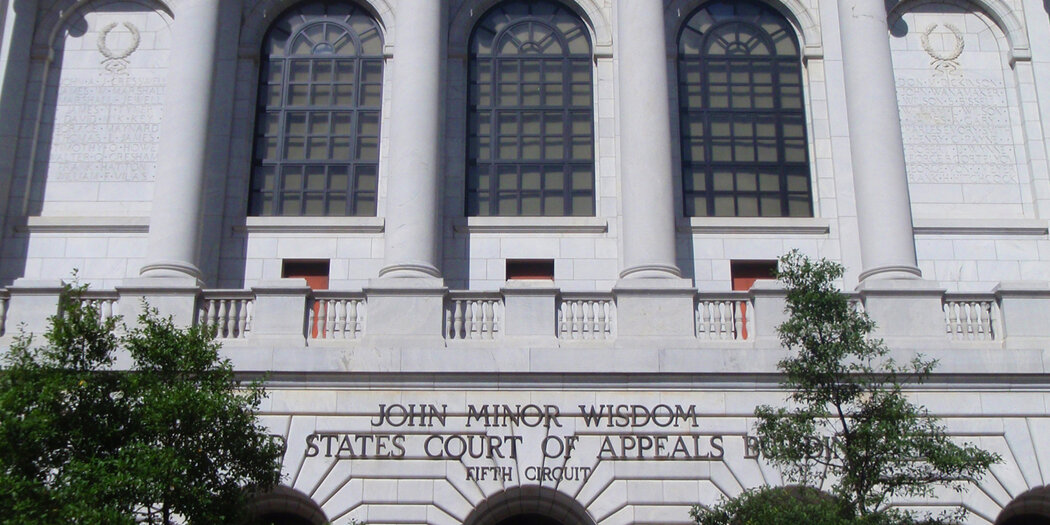
On Monday, the Fifth Circuit Court of Appeals engaged in oral arguments for W.M.M. v. Trump, marking a significant judicial review of the Alien Enemies Act without the urgency of an emergency motion. This case, propelled to the Fifth Circuit under the directive of the Supreme Court, questions the legitimacy of former President Trump’s use of the 1798 law to deport numerous immigrants alleged to be members of the Venezuelan Tren de Aragua gang.
The Alien Enemies Act, a wartime statute, grants the president significant authority over noncitizens from hostile nations, including regulation, detention, and deportation. Such powers are triggered by a congressional declaration of war or a “foreign nation or government” initiating or threatening an “invasion” or “predatory incursion” on U.S. soil. On March 15, Trump labeled the activities of Tren de Aragua, which include unlawful migration and drug trafficking, as an “attack” akin to “irregular warfare,” attributing these actions to Venezuela, described as a “hybrid criminal state.”
Despite these assertions, administration leaders such as the CIA Director and the Chairman of the Joint Chiefs have consistently informed Congress that gang violence does not equate to warfare nor does it constitute a national invasion. Nonetheless, the government maintains that the courts should “defer” to the presidential proclamation, arguing that such matters are steeped in political judgment, effectively placing them beyond judicial intervention.
Judicial deference doctrines, including the “political question doctrine,” frequently limit court interference in sensitive cases involving foreign policy and national security. The Fifth Circuit judges deliberated on the extent of their review authority, with Judge Oldham questioning whether any Supreme Court ruling supports the judiciary’s power to override the president’s armed conflict determinations or reassess a chief executive’s identification of events like invasions.
Lee Gelernt, counsel for the petitioners and representative of the ACLU, highlighted that the Supreme Court has repeatedly affirmed the judiciary’s role in evaluating the proper invocation of the Alien Enemies Act. Gelernt also referenced Court cases concerning the detention of enemy combatants at Guantanamo Bay, underscoring the judiciary’s part in assessing the legitimacy of detainee classifications.
Historical precedents, such as Sterling v. Constantin, reinforce the courts’ authority to overturn executive measures in critical issues of war and public safety. In Sterling, the Supreme Court nullified a Texas governor’s martial law imposition, establishing that the governor exceeded his authority as there was no “actual riot, tumult, or insurrection.”
The use of the Alien Enemies Act during World War II, which saw the internment of 31,000 noncitizens of Japanese, German, and Italian origin, underscores the historical gravity of this law. This application was overshadowed by Executive Order 9066, which led to the incarceration of over 120,000 Japanese Americans on the West Coast. The judicial interventions in cases like Schueller v. Drum and Ebel v. Drum prevented the application of such measures against German Americans on the East Coast, affirming the judiciary’s critical role in safeguarding civil liberties.
Further, Ex parte Milligan exemplifies the court’s capacity to counter unauthorized power exercises, overriding presidential military commission approvals in Indiana due to a lack of prevailing opposition to federal authority. Such cases are extensively discussed in an amicus brief submitted to the Fifth Circuit.
The precedent set by Sterling, alongside Schueller and Ebel, carries weight in this context, particularly given the Alien Enemies Act’s historical usage and the expansive executive power currently pursued outside wartime. A Department of Justice memorandum regarding the current invocation underscores the potential for warrantless raids and expedited deportations, bypassing refugee protections. Given the clarity of facts and potential for significant judicial deference, the courts must diligently exercise independent judgment to prevent enduring legal and national repercussions.