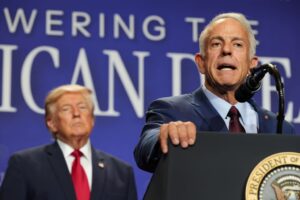
Trump Administration Considers Suspension of Habeas Corpus After Court Setbacks
In light of recent judicial hurdles encountered by President Trump’s immigration initiatives, the administration is contemplating a suspension of habeas corpus. This legal action serves as a crucial instrument for individuals contesting their detention by the government, whether they are citizens or non-citizens.
Understanding Habeas Corpus
Habeas corpus, a Latin term meaning “you should have the body,” is a legal process that demands the government justify the detention of any individual before a judge. This procedure, also known as the Great Writ, was established in 1215 with the Magna Carta to prevent wrongful imprisonment by the state.
The U.S. Constitution enshrines this right, stating, “The Privilege of the Writ of Habeas Corpus shall not be suspended, unless when in Cases of Rebellion or Invasion the public Safety may require it” (source).
Applications of Habeas Corpus
Habeas corpus is primarily utilized in criminal justice scenarios. It is often employed when a state prisoner believes their confinement violates federal law, such as infringements on the right to a fair trial or due process. Although approximately 12,000 habeas petitions are filed each year, success rates are low, with only about 10% success in capital cases and less than 1% in others.
Limitations and Challenges in Habeas Corpus Petitions
The scope of habeas corpus has been narrowed by both legislative and judicial actions. Courts typically do not consider arguments previously raised at trial or those that could have been presented in state appellate courts. Moreover, a 1996 law restricts federal courts from overturning state convictions unless they significantly deviate from Supreme Court precedents.
Habeas Corpus in Immigration Law
Historically, habeas corpus was a tool to challenge deportation orders. However, Congressional actions in the 1990s and 2000s have limited its use, although immigrants can still file habeas petitions against unlawful detention conditions.
Under the Trump administration, habeas petitions have been crucial in contesting immigration policy, particularly regarding the Alien Enemies Act of 1798. Courts have granted relief to Venezuelan immigrants, preventing their deportation under this law due to improper peacetime application and constitutional issues.
Presidential Authority on Habeas Corpus Suspension
Legal experts overwhelmingly agree that the President cannot unilaterally suspend habeas corpus. The power to suspend lies with Congress, as outlined in Article I of the Constitution, and can only occur in instances of rebellion or invasion.
Historical Precedents of Habeas Corpus Suspension
The historical record includes four instances of habeas corpus suspension. President Lincoln’s Civil War suspension led to a notable constitutional contention resolved only when Congress ratified it two years later. Other suspensions occurred in South Carolina (1871), the Philippines (1905), and Hawaii (1941).